
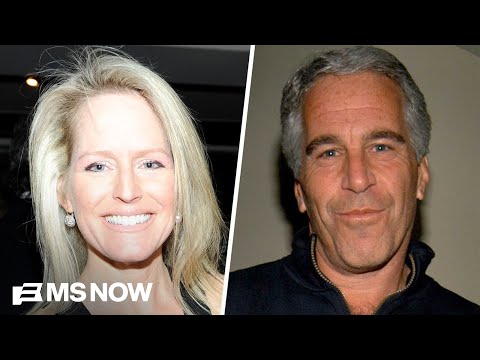
A Democratic Oversight speaker argues that Leslie Groff, Jeffrey Epstein’s longtime assistant, is not credible when she claims she knew nothing about abuse, and says the Epstein files and testimony remain politically potent because they cut across party lines.
Watch on YouTube ›Get the market thesis, key claims, assets, contradictions, and follow-up questions from any financial video — then unlock a version personalized to your portfolio, watchlist, and favorite speakers.
The transcript centers on a sharp criticism of Leslie Groff, described as Jeffrey Epstein’s assistant for 18 years. The speaker argues that Groff’s claim that she never suspected Epstein was abusing women and girls is implausible given the volume and nature of the scheduling and communications she handled. The speaker points to an email from January 27, 2014 in which a redacted recipient says she has school until 10 p.m. and orchestra rehearsal for a concert on Friday, using it as an example of why the file raises suspicion about the people Epstein and his aides were interacting with. The core thesis is that Groff’s testimony is “not remotely credible,” because she was allegedly embedded in Epstein’s operation for years, handled massage appointments, meetings, travel, and payments, and would have been exposed to office conversation that should have revealed more than she admits. …
Near term, the main setup is a credibility battle around Epstein-related testimony, especially Groff, Blanche, and the Gates-adviser angle. The immediate risk is further optics damage from more revelations or confirmation-hearing pressure rather than any market-relevant catalyst.
Over the next few weeks, the story likely remains a recurring political headline if Senate questioning and file-release disputes intensify. The view would weaken only if disclosures become substantive enough to shift the focus from credibility attacks to verified new facts.
Structurally, the segment frames Epstein as a long-lived institutional-trust problem that keeps resurfacing whenever transparency, elite influence, and accountability collide. The durable implication is reputational and political rather than market-based, with DOJ and congressional credibility remaining under pressure.
Leslie Groff said she knew nothing and never suspected Epstein was abusing women and girls.
The speaker directly characterizes Groff’s testimony and repeats her denial of knowledge.
Groff handled repeated scheduling of massages, meetings, travel, and payments for young women over many years.
The speaker argues that her role was operationally deep and therefore implausible to be unaware.
The Jan. 27, 2014 email suggests a redacted recipient may have been a school-age girl with orchestra rehearsal.
The speaker uses the email to imply the meeting involved a minor or young victim, though the recipient is redacted.
What did Leslie Groff help us understand about the relationship between Epstein and key principals, including Donald Trump?
The answer was that Groff claimed ignorance despite years of proximity to Epstein and extensive involvement in scheduling and logistics.
Do we know who the redacted email recipient was, and was this person a high school student?
The speaker says they do not know who the redacted person was and have not personally seen the file identifying them.
Do you believe Leslie today?
No; the speaker does not believe Groff's testimony.
Unlock the full claims, asset map, scores, related transcripts, follow-up questions, and AI chat — shaped around your portfolio, watchlist, favorite speakers, and risks.
