
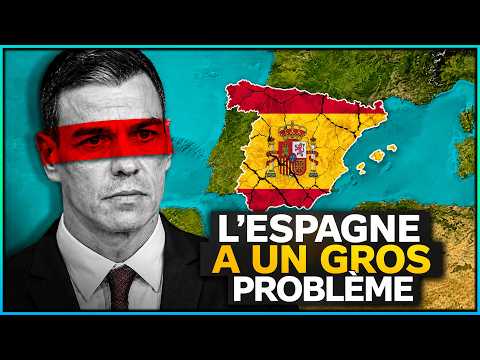
The video argues that Spain is simultaneously one of Europe’s strongest macro performers and one of its most politically combustible countries. The speaker says growth, tourism, lower borrowing costs, and labor-market reform have improved headline indicators, but housing costs, youth unemployment, social resentment toward tourism, and corruption scandals around Pedro Sánchez are driving mass protests and weakening his legitimacy.
Watch on YouTube ›Get the market thesis, key claims, assets, contradictions, and follow-up questions from any financial video — then unlock a version personalized to your portfolio, watchlist, and favorite speakers.
The core thesis is that Spain presents a “two-faced” picture: strong macro data on one side, and deep social/political anger on the other. The speaker frames Pedro Sánchez as the central figure in this contradiction—an embattled prime minister whose government benefits from solid growth and market confidence, yet whose legitimacy is increasingly challenged by street protests, corruption probes, and a fragmented parliament. The video repeatedly emphasizes that Spain looks healthy “on paper” while many Spaniards feel materially worse off. On the supportive side, the speaker points to several headline indicators. Spain is described as growing 2.8% in 2025, roughly double the eurozone average, with unemployment below 10% for the first time since 2008. Tourism is said to be booming, with more than 100 million visitors expected and receipts up 7.4%. …
Near term, the setup is politically fragile: protests, corruption headlines, and parliamentary blockage can keep pressure on Sánchez even if macro data stay firm. The immediate risk is more volatility in Spanish political sentiment than any sudden macro deterioration.
Over the next few months, the base case is continued erosion of Sánchez’s governing capacity unless scandals fade and coalition support stabilizes. If housing anger and youth discontent remain elevated, the market-friendly growth story may stop offsetting the political damage.
Structurally, the transcript argues Spain shows how a country can post strong growth while still entering a legitimacy crisis if gains are concentrated and housing becomes unaffordable. The longer-run implication is that social distribution matters as much as headline GDP for political stability and EU market confidence.
Spain is simultaneously one of Europe’s strongest economies and one of its most politically divided societies.
This is the video’s overarching thesis, repeated throughout the narration.
Spain’s growth, tourism, labor reform, and lower borrowing costs show real economic improvement under Sánchez.
The speaker cites multiple macro indicators as proof that the economy has genuinely improved.
Housing costs and youth unemployment mean many Spaniards do not feel the benefits of macro growth.
The video repeatedly says national growth has not translated into better living conditions.
Unlock the full claims, asset map, scores, related transcripts, follow-up questions, and AI chat — shaped around your portfolio, watchlist, favorite speakers, and risks.
