TranscriptAgent
Try it free
TRANSCRIPTAGENT.AI · transcript analysis

Hank Paulson Warns of Debt Crisis He Helped Create

Channel: Peter Schiff Published: 2026-04-17 21:39
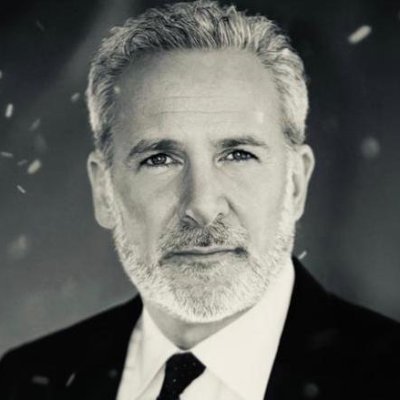
Peter Schiff

Peter Schiff argues that the recent market rally is being driven by fragile geopolitical relief and lower oil prices, while inflation, Fed balance-sheet growth, and U.S. debt still point toward a looming sovereign debt and currency crisis. He uses Hank Paulson’s warning as confirmation, attacks wealth taxes and government intervention, and reiterates his bullish case for gold, silver, miners, international stocks, and emerging markets over U.S. assets.

Watch on YouTube ›

Get the market thesis, key claims, assets, contradictions, and follow-up questions from any financial video — then unlock a version personalized to your portfolio, watchlist, and favorite speakers.

Detailed summary

This episode is a solo Peter Schiff podcast recorded from Puerto Rico after travel through Panama and San Juan. Schiff opens by reviewing a strong week for risk assets: the S&P 500 and Nasdaq hit record highs, Bitcoin jumped, and oil sold off sharply on news tied to Iran, the Strait of Hormuz, and ceasefire developments involving Israel and Lebanon. He argues the market is overreacting to political headlines and to the idea that lower oil prices might reduce pressure on the Fed, while ignoring that inflation is still elevated and real rates are falling because the Fed has not tightened enough. He spends substantial time on the latest producer price data, saying the March PPI print and revisions were welcomed by markets but still show inflation running well above the Fed’s target. …

🔒 The full detailed summary continues — read all of it free with an account. Read the full summary →

Main takeaways

  1. The near-term rally in risk assets is, in Schiff’s view, being driven by fragile geopolitics and oil-price relief rather than durable fundamentals.
  2. He sees March PPI and other inflation data as evidence that inflation remains too high and that the Fed is still behind the curve.
  3. Hank Paulson’s warning about Treasury-market stress is treated as validation of Schiff’s long-running sovereign debt warning.
  4. Schiff argues that U.S. debt, war spending, and continued Fed balance-sheet growth are accelerating a debt/currency crisis.
  5. He remains bullish on gold, silver, miners, emerging markets, and international stocks, and bearish on U.S. stocks and bonds over time.
  6. He argues that taxes on wealth, nonresident property, and government-run grocery stores are economically distortive and self-defeating.

Market read by horizon

Short term

Tactically, the market is vulnerable to a snapback if geopolitics deteriorate or if the inflation narrative reasserts itself; Schiff thinks the current rally is too reliant on headline relief. Near-term attention should stay on oil, Treasury demand, and whether gold can keep firm despite risk-on flows.

  • Watch whether the Iran/Israel/Lebanon ceasefire and Strait of Hormuz headlines hold; Schiff thinks the market is trading on unstable news flow.
Show more
  • Oil’s sharp drop is helping the current equity rally, but Schiff says that setup can reverse quickly if the conflict re-escalates.
  • Gold and silver pulled back from intraday highs but still rallied on the week; Schiff prefers them as the war/inflation hedge.
Mid term

Over the coming weeks and months, Schiff expects inflation to stay sticky and confidence in U.S. fiscal policy to erode further, which would favor gold, silver, miners, and foreign assets. If Treasury-market stress becomes more visible, the current equity leadership could shift sharply.

  • Over the next several weeks to months, Schiff expects inflation to remain sticky and to keep real rates under pressure.
Show more
  • If Treasury demand weakens further, he thinks sovereign-debt stress could become the dominant macro narrative.
  • He expects gold, silver, miners, and foreign assets to outperform if the market shifts from headline-driven optimism to fiscal and inflation fears.
Long term

Structurally, Schiff’s view is that the U.S. is moving deeper into a debt- and currency-debasement regime where fiat assets face chronic risk. In that environment, hard assets and non-U.S. exposures become the durable store of value.

  • Schiff’s structural thesis is that the U.S. is heading into a sovereign debt and currency crisis driven by chronic deficits, war spending, and monetized fiscal policy.
Show more
  • He believes the Fed’s post-2008 regime normalized QE and inflationary finance, making the system more vulnerable to a confidence break in Treasuries.
  • In his framework, gold and silver serve as the durable hedge against fiat-currency debasement and policy failure.
Unlock the full horizon read See the full short-term, mid-term, and long-term implications with confirmation and invalidation signals. Unlock horizon read

Key claims (9)

BULLISH geopolitics and risk assets S&P 500 / NASDAQ

The latest equity rally was driven by ceasefire and Iran-related headlines, especially a possible reopening of the Strait of Hormuz.

He explicitly links the rally to White House/Iran news, ceasefire continuation, and Hormuz developments.

BEARISH oil and geopolitics crude oil

Oil prices collapsed sharply, which helped risk assets, but Schiff thinks the market is overreacting to potentially unreliable political statements.

He cites a ~$10/bbl drop and says he does not believe Trump’s claims.

BEARISH inflation and rates Fed policy

The Fed is still too loose because real interest rates are falling while inflation rises.

He argues the Fed has done nothing, allowing inflation to rise without matching hikes.

Unlock 6 more claims See the full bullish, bearish, and counter-consensus argument map extracted from the transcript. Unlock all claims

Assets discussed (10)

S&P 500
BULLISH index

He says it closed at new all-time highs as part of the risk-on rally.

NASDAQ
BULLISH index

He says it hit a new all-time high and posted a 13-day winning streak.

Unlock the full asset map (8 more) See all assets mentioned, their directional bias, and the exact reasoning. Unlock asset map

Where this transcript pushes against consensus

  • Schiff assumes the ceasefire and Hormuz-related oil relief is temporary, but he gives little evidence beyond distrust of headlines and Trump’s credibility.
  • He treats Hank Paulson’s warning as proof of inevitability, but Paulson’s actual recommendation is a contingency plan, not a forecast of imminent collapse.
  • His claim that government grocery stores would raise food prices rests on a strong assumption that public ownership necessarily creates extreme inefficiency; he does not engage with any mixed-model or regulatory counterexamples.
  • He says taking all supermarket profits out would only cut grocery prices by about 2%, which is presented as if it were broadly representative rather than highly variable by category and geography.
  • His property-tax argument ignores the possibility that local services and land value appreciation can justify some recurring tax even on owner-occupied homes.
  • He implies that wealthy people always create broad social value, but does not address cases where wealth is concentrated through monopoly power, rent extraction, or regulatory capture.

Topics

U.S. debt crisisTreasury demandgold and silverinflation and PPIFed balance sheet and QEMiddle East conflict and oilNew York taxation politicsgovernment grocery storesproperty taxesemerging markets

Create your free research agent

Unlock the full claims, asset map, scores, related transcripts, follow-up questions, and AI chat — shaped around your portfolio, watchlist, favorite speakers, and risks.
  • Full claims and asset map
  • Personalized relevance to your watchlist
  • Follow-up questions you can track
  • Related transcripts from your workspace
  • AI chat about this video
Create your free research agent
TRANSCRIPTAGENT.AI