TranscriptAgent
Try it free
TRANSCRIPTAGENT.AI · transcript analysis

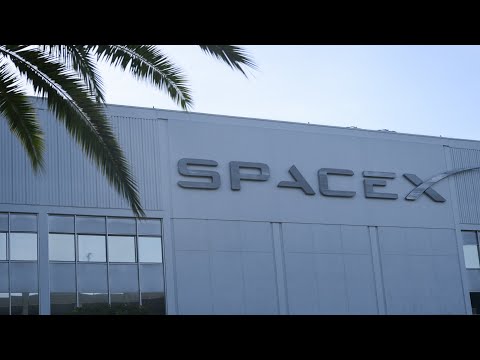
Concerns Raised Over Corporate Governance in SpaceX's Historic IPO

Channel: Bloomberg Television Published: 2026-06-12 07:17
Bloomberg Television

The transcript is a largely one-sided critique of SpaceX’s IPO governance structure. The speakers argue that Elon Musk’s control rights, board protections, related-party transactions, and index inclusion create an unusually shareholder-unfriendly setup that could become a template for other founders if left unchecked.

Watch on YouTube ›

Get the market thesis, key claims, assets, contradictions, and follow-up questions from any financial video — then unlock a version personalized to your portfolio, watchlist, and favorite speakers.

Detailed summary

The discussion centers on corporate governance concerns around SpaceX’s historic IPO and, more specifically, the way control is structured to favor Elon Musk over outside shareholders. The main point is that a conventional public offering is supposed to trade capital for meaningful investor rights — voting, proxy access, recourse through the board, and legal protections — but that those protections are described here as effectively stripped away. One speaker says the company’s governance has been “obliterated” by the offering, with Musk effectively serving as “CEO for life” and able to prevent meaningful challenge from the board or shareholders. A second major thread is the claim that the valuation and market access are being supported by unusually insider-friendly arrangements. …

🔒 The full detailed summary continues — read all of it free with an account. Read the full summary →

Main takeaways

  1. The core thesis is that SpaceX’s IPO gives investors capital exposure without normal shareholder rights.
  2. Musk’s control is framed as unusually entrenched, with the board and shareholders having little real recourse.
  3. Related-party and self-dealing concerns are treated as central to the valuation debate, not peripheral.
  4. Index inclusion may force passive investors into the stock even if they dislike the governance setup.
  5. The speakers worry this could become a template for other founder-controlled companies.
  6. They see a broader erosion of proxy rights, disclosure standards, and shareholder protections.
  7. The long-run risk is a higher cost of capital and less trust in public markets if this model spreads.

Market read by horizon

Short term

Near term, this is a reputational and governance overhang rather than a classic price-call setup. The stock may still find buyers because the exposure is to Musk, but pushback from institutions or index providers could create tactical volatility.

  • Immediate focus is the governance controversy itself: board control, voting power, and investor recourse.
Show more
  • Watch for further reactions from pension funds, index providers, and large passive managers.
  • Any official disclosure on related-party transactions or lease/asset transfers matters tactically.
Mid term

Over the next several weeks to months, the market will likely test whether governance concerns become a sustained discount or are overwhelmed by demand for the name. Confirmation would come from continued institutional ownership despite criticism; invalidation would be stronger regulatory or index-level resistance.

  • Over the next few weeks or months, the key question is whether institutions push back or simply absorb the stock.
Show more
  • If the IPO trades well despite the criticism, the market may validate the view that governance is secondary to Musk exposure.
  • If regulators or index providers tighten standards, the thesis of easy founder control would be weakened.
Long term

The structural takeaway is that public markets may tolerate increasingly founder-centric control structures, especially in high-profile growth names. If that persists, the lasting effect is weaker shareholder power and a higher trust premium embedded in future IPO pricing.

  • Structurally, the transcript argues that public markets are drifting toward founder-dominant control regimes.
Show more
  • If SpaceX becomes a successful template, other high-growth founders may seek similar protections.
  • The enduring implication is a weaker compact between capital providers and public companies: less voting power, less transparency, and less recourse.
Unlock the full horizon read See the full short-term, mid-term, and long-term implications with confirmation and invalidation signals. Unlock horizon read

Key claims (6)

BEARISH corporate governance SpaceX

SpaceX’s IPO strips away normal shareholder protections that public investors usually expect.

The speaker contrasts ordinary IPO rights with the current structure, saying investors get little or no say.

BEARISH founder control SpaceX

Elon Musk has effectively entrenched himself as CEO for life and controls the voting power.

This is the central governance accusation, phrased very forcefully.

BEARISH related-party transactions SpaceX

The company’s related-party and third-party transactions are unusually opaque and may be used to inflate valuation.

The speaker cites lease deals, bolted-on properties, and self-dealing as valuation support.

Unlock 3 more claims See the full bullish, bearish, and counter-consensus argument map extracted from the transcript. Unlock all claims

Assets discussed (8)

SpaceX
MIXED other

The company is presented as a high-value IPO with serious governance objections, but not a direct financial thesis on fundamentals.

Nasdaq — NDAQ
NEUTRAL other

Mentioned in connection with forcing index-rule changes and potentially including the stock despite objections.

Unlock the full asset map (6 more) See all assets mentioned, their directional bias, and the exact reasoning. Unlock asset map

Speakers

SPEAKER Unknown speaker 1 SPEAKER Unknown speaker 2

Interview (5 Q&A)

corporate governance

What are the corporate governance issues with SpaceX's IPO structure, particularly around shareholder rights and the ability to remove the CEO?

The guest explains that all of capitalism depends on trust and investor protections like voting proxies, selling stock, and suing — all of which have been obliterated by this offering. Elon Musk appointed himself CEO for life, cannot be removed even by his board, and received a grant of over a billion shares with ten votes each, giving him total voting control. He built a moat with alligators around himself, which is bad for shareholders.

self-dealing concerns

What about the third-party relationships, self-dealing, and lack of transparency in SpaceX's arrangements?

The guest says Elon Musk is using the company like a piggy bank — borrowing money at sweetheart rates, putting his Twitter investment into it to reduce debt, and now possibly adding Tesla. He calls it a weird collection of assets. The transactions from recent years are very sketchy, with few fairness opinions or independent arm's-length transactions, and these are being used to boost valuations.

founder imitation risk

Are you concerned that other founders will copy the governance model Elon Musk has created with SpaceX?

The guest is very concerned, noting that when one company adopted a poison pill during the takeover era, every company had one 18 months later. Every law firm in America is writing memos to clients saying 'look what Elon has' and asking if they want the same. He also highlights key man risk — Musk is one guy with 14 children who could inherit the company.

Unlock the full interview (2 more Q&A) Every question, answer summary, and YouTube timestamp. Unlock full Q&A

Where this transcript pushes against consensus

  • The transcript offers strong assertions about self-dealing and governance abuse, but little hard evidence beyond rhetoric.
  • Claims like Musk being able to remove himself or run the company “for life” are presented as shorthand and may oversimplify the actual legal structure.
  • The argument that index inclusion or passive ownership necessarily worsens governance is plausible but not demonstrated in the transcript.
  • The speakers assume other founders will copy the model, but do not show concrete evidence of imminent adoption.
  • The notion that public investors will ultimately be protected by institutions like BlackRock or Vanguard is asserted, not proven.

Topics

SpaceX IPOcorporate governanceElon Musk controlshareholder rightsrelated-party transactionsindex inclusionpassive investingSEC regulationfounder controlcost of capital

Create your free research agent

Unlock the full claims, asset map, scores, related transcripts, follow-up questions, and AI chat — shaped around your portfolio, watchlist, favorite speakers, and risks.

  • Full claims and asset map
  • Personalized relevance to your watchlist
  • Follow-up questions you can track
  • Related transcripts from your workspace
  • AI chat about this video
Create your free research agent
TRANSCRIPTAGENT.AI