TranscriptAgent
Try it free
TRANSCRIPTAGENT.AI · transcript analysis

A Complete Meltdown Is Coming

Channel: Peter Schiff Published: 2026-06-12 20:45
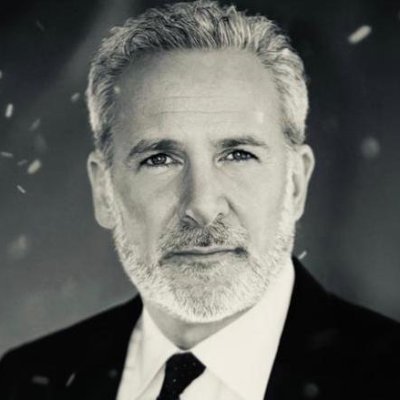
Peter Schiff

Peter Schiff argues that the Fed is boxed in and cannot defeat inflation without triggering a debt crisis, and he uses the week’s CPI/PPI, deficit, and market action to say a larger US sovereign and dollar crisis is approaching. He also says the recent SpaceX IPO is a peak-mania example of bubble valuations, while gold, silver, and mining stocks are setting up as the better long-term trade versus overowned tech and crypto.

Watch on YouTube ›

Get the market thesis, key claims, assets, contradictions, and follow-up questions from any financial video — then unlock a version personalized to your portfolio, watchlist, and favorite speakers.

Detailed summary

Peter Schiff’s core thesis is that the US is heading toward a financial break because inflation, deficits, and interest costs are compounding faster than policymakers can manage. He argues the Fed has “lost the fight against inflation” not because it needs to be tougher, but because it cannot raise rates enough without blowing up federal debt service. He ties that to the latest deficit data, the May budget deficit jump, and the surge in annualized interest expense to $1.6 trillion and rising, which he presents as evidence that a sovereign debt crisis or dollar crisis is getting closer. He spends the first major section on SpaceX as a symbol of bubble excess. He describes a highly anticipated IPO, says it raised a record amount, and highlights the company’s roughly $2 trillion valuation after a first-day pop. He contrasts Elon Musk’s paper wealth with J.D. …

🔒 The full detailed summary continues — read all of it free with an account. Read the full summary →

Main takeaways

  1. Schiff’s central call is that the Fed cannot truly defeat inflation without detonating the debt burden.
  2. He sees the May deficit and rising interest expense as the clearest sign that the fiscal math is breaking down.
  3. SpaceX is used as a poster child for late-cycle bubble valuation and elite speculative excess.
  4. He thinks gold, silver, and miners are being misread tactically and remain favored because war and deficits are inflationary.
  5. He is bearish Bitcoin/Strategy and thinks the structure depends on dilution and financial engineering.
  6. He expects the long-term winners to be hard assets rather than tech or crypto.

Market read by horizon

Short term

Near term, Schiff wants viewers positioned for a metals bounce and wary of any “peace” narrative that hits oil or gold; he sees the FOMC as the immediate catalyst and the recent gold retest as constructive, not bearish. He also sees Strategy/Bitcoin as tactically vulnerable if the market keeps focusing on dilution and weak support levels.

  • Watch the next FOMC meeting as the near-term catalyst for gold, silver, and rates.
Show more
  • Gold retested a prior low and recovered; Schiff treats that as a successful shakeout unless the lows fail decisively.
  • Silver and miners held up better than the metals, which he views as a constructive divergence.
Mid term

Over the next few months, his base case is sticky inflation, rising debt-service pressure, and a Fed that cannot tighten enough without worsening fiscal stress. If inflation prints stay hot and Treasury markets remain fragile, he expects metals to outperform and risk assets tied to cheap money to lose credibility.

  • Over the next several weeks or months, Schiff expects inflation data to stay hot because prior monetary/fiscal excess is still feeding through the system.
Show more
  • He believes the Fed will remain trapped: tighter policy would aggravate interest costs, while easier policy would worsen inflation.
  • If the Iran conflict drags on or leaves behind supply disruptions, he thinks energy and metals could move higher again.
Long term

Structurally, Schiff is arguing that the US is moving toward a debt-and-dollar regime break in which hard assets regain leadership. The durable implication is that capital preservation increasingly depends on owning real assets rather than financial claims whose value depends on continuous monetary accommodation.

  • Schiff’s structural thesis is that the US is moving toward a dollar and sovereign-debt crisis driven by compounding deficits and interest expense.
Show more
  • He believes the current era rhymes with the post-dot-com / post-bubble rotation into hard assets, not with a durable tech-led regime.
  • He sees the bond market’s sensitivity and the Fed’s constraints as signs that monetary control is weakening.
Unlock the full horizon read See the full short-term, mid-term, and long-term implications with confirmation and invalidation signals. Unlock horizon read

Key claims (9)

BEARISH inflation vs debt Fed

The Fed has lost the fight against inflation because it cannot raise rates enough to beat it without triggering a debt crisis.

He explicitly says the Fed cannot fight hard enough and is boxed in by government debt service.

BEARISH bubble valuation SpaceX

SpaceX is a prime example of a bubble valuation because it traded to roughly a $2 trillion value despite being a money-losing company.

He emphasizes the IPO pop, the implied valuation, and the fact that it loses money.

BULLISH war inflation gold

War in Iran is bullish for gold and silver because wars are financed through deficits and monetization.

He says investors are wrong to think war is bearish for precious metals and instead links war to inflationary financing.

Unlock 6 more claims See the full bullish, bearish, and counter-consensus argument map extracted from the transcript. Unlock all claims

Assets discussed (19)

SpaceX — SPACEX
BULLISH stock

He says the IPO popped sharply and lifted the implied valuation above $2 trillion, but he discusses it mainly as a bubble example rather than an investment recommendation.

NASDAQ — IXIC
MIXED index

He notes the NASDAQ was down on the week even as SpaceX traded, using it as evidence the broader market was weak.

Unlock the full asset map (17 more) See all assets mentioned, their directional bias, and the exact reasoning. Unlock asset map

Where this transcript pushes against consensus

  • The SpaceX valuation discussion mixes IPO mechanics, market cap comparisons, and income claims in a way that is rhetorically strong but only partially sourced in the transcript.
  • His claim that the Fed has effectively lost the inflation fight is plausible as a thesis, but he does not quantify the exact transmission path from rates to deficits versus inflation expectations.
  • He assumes the Iran war will remain a durable inflationary driver, but also acknowledges the administration may be signaling de-escalation; that makes the near-term path uncertain.
  • The Bitcoin/Strategy critique rests heavily on interpretation of management intent and balance-sheet optics rather than hard evidence of a true liquidation spiral.
  • He presents a very deterministic view of future crisis timing, but the transcript itself leaves open whether the break comes through inflation, rates, funding stress, or political surprise.

Topics

Fed policyUS deficitsinterest expenseinflationSpaceX IPOElon Muskgold and silvermining stocksIran warBitcoin and Strategy

Create your free research agent

Unlock the full claims, asset map, scores, related transcripts, follow-up questions, and AI chat — shaped around your portfolio, watchlist, favorite speakers, and risks.
  • Full claims and asset map
  • Personalized relevance to your watchlist
  • Follow-up questions you can track
  • Related transcripts from your workspace
  • AI chat about this video
Create your free research agent
TRANSCRIPTAGENT.AI