
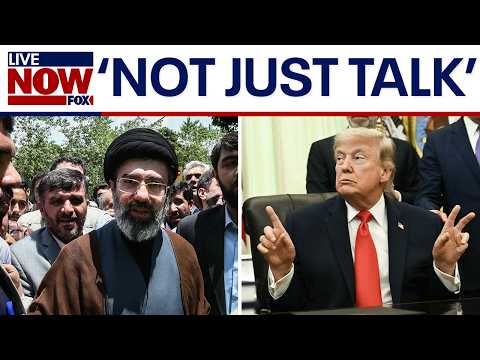
Reuters reporter Phil Stewart says the Trump administration is signaling an imminent Iran memorandum of understanding, but he stresses that even if one is signed, it would only be an initial framework and not a final settlement. He highlights uncertainty around the nuclear issue, Iran’s missile program, proxy forces, Israeli security concerns, and internal political resistance inside Iran.
Watch on YouTube ›Get the market thesis, key claims, assets, contradictions, and follow-up questions from any financial video — then unlock a version personalized to your portfolio, watchlist, and favorite speakers.
Bill Stewart of Reuters frames the moment as one where the U.S. is actively socializing an Iran agreement with allies, after Trump and the U.K. prime minister reportedly discussed it earlier in the day. His core view is that an agreement may be close and the weekend feels meaningfully different, but he repeatedly warns that a signed memorandum of understanding would still be only an initial step rather than a resolution to the conflict. A central part of his reasoning is political and procedural rather than purely diplomatic. He says there are “initial reports out of Iran” of anti-agreement protests and even possible clashes with security forces, which he takes as evidence that the issue is being treated seriously inside Iran. …
Tactically, this is a headline-driven geopolitical setup: an Iran MOU could briefly ease risk premia, but any disappointment on timing or scope can reverse the move quickly. Watch for confirmation of the signing and whether the market interprets it as real de-escalation or just optics.
Over the next few weeks, the base case is a fragile negotiation process with repeated uncertainty around what the framework actually contains. The key validation is whether contentious issues like missiles, proxies, and Israel’s security concerns are folded into something workable; otherwise the optimism fades.
Structurally, the transcript points to a Middle East regime where headline agreements may not eliminate underlying conflict drivers. If proxy networks, missile deterrence, and domestic legitimacy problems persist, geopolitical risk around Iran remains durable even after any initial accord.
Even if an MOU is signed, the actual final resolution of the conflict could be many weeks away and may never happen.
Stewart cautions that the MOU is just an initial agreement and it is unclear whether Iran will ultimately agree to all US terms.
There are anti-agreement protests going on inside Iran right now, which indicates the Iranian public is taking the negotiations seriously and there are political headwinds.
Stewart cites initial unconfirmed reports of protests inside Iran against a potential US agreement, suggesting significant internal opposition.
It will be very difficult for a final US-Iran agreement to exist given serious unresolved issues between Israel and Iranian proxies throughout the region.
Stewart notes Israel's statement that it will not withdraw forces from Lebanon or Syria under any US-Iran deal, highlighting a major structural obstacle.
What were President Trump and the UK's Prime Minister discussing on their call about Iran?
They were discussing the imminent agreement on Iran that President Trump says will be signed tomorrow, though there is no confirmation from Iranians yet. The US is socializing the agreement with allies, and the UK has said that once an agreement is in place, it would help ensure free flow of commerce through the Strait of Hormuz.
Why has it taken so many weeks for diplomacy on this Iran deal to happen, and does this weekend feel different?
Phil says this weekend feels different, but warns no one is out of the woods yet — the MOU is just an initial agreement, and the actual resolution could be many weeks away and may never happen. He notes there are initial reports of anti-agreement protests inside Iran and opposition from Iranian state media close to the IRGC, indicating the issue is being taken seriously and there are headwinds.
How important are the internal political dynamics within Iran — if there's unrest in the streets, how does that factor into the top leadership's decisions?
Phil says political headwinds will be very important inside Iran. He notes there were serious clashes last year that led to thousands of deaths of protesters, and that internal stability will be a real challenge for the government once any agreement is reached, given the political chasm inside Iran.
Unlock the full claims, asset map, scores, related transcripts, follow-up questions, and AI chat — shaped around your portfolio, watchlist, favorite speakers, and risks.
