TranscriptAgent
Try it free
TRANSCRIPTAGENT.AI · transcript analysis

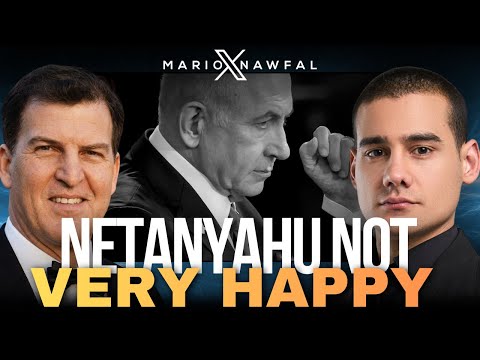
MOSSAD TO MERGE WITH CIA PERMANENTLY - w/ Anthony Aguilar

Channel: Mario Nawfal Published: 2026-06-13 19:51
Mario Nawfal

Mario Nawfal interviews Anthony Aguilar about two proposed U.S.-Israel defense and intelligence provisions, arguing they would deepen integration between U.S. and Israeli military/intelligence structures. The discussion centers on House resolution provision 224 and Senate intelligence provision 622, with Aguilar warning they could make Israeli access to U.S. intelligence and technology far harder to unwind and could create major sovereignty and oversight risks.

Watch on YouTube ›

Get the market thesis, key claims, assets, contradictions, and follow-up questions from any financial video — then unlock a version personalized to your portfolio, watchlist, and favorite speakers.

Detailed summary

This transcript is an interview about proposed U.S.-Israel defense and intelligence legislation, not a broad market discussion. Mario Nawfal frames the topic as a major and undercovered policy risk, saying he wants to understand claims that Congress is moving to “merge” U.S. and Israeli military and intelligence functions. Anthony Aguilar, presented as the best person to explain it, argues that section/provision 224 in the NDAA-style defense language and section 622 in the Senate intelligence bill together create a structural fusion between the two countries’ defense and intelligence ecosystems. Aguilar’s core thesis is that these provisions are not merely cooperation agreements but legal and bureaucratic mechanisms that could hard-wire Israel into U.S. military and intelligence structures. …

🔒 The full detailed summary continues — read all of it free with an account. Read the full summary →

Main takeaways

  1. The interview argues that two legislative tracks—defense provision 224 and intelligence provision 622—could deepen U.S.-Israel integration across military and intelligence structures.
  2. Anthony Aguilar’s central warning is that these provisions would be hard to unwind once embedded in authorization law, making the arrangement durable and opaque.
  3. He frames the issue as a sovereignty and oversight problem: a country U.S. intelligence allegedly treats as a critical threat should not be pulled closer into core U.S. intelligence systems.
  4. The discussion says the practical effect could be broader access to intelligence, technology, and potentially more intertwined operational decision-making.
  5. The latter half of the conversation shifts to ceasefire and escalation risk in Lebanon and Iran, with Aguilar arguing Israel is unlikely to truly stand down.
  6. There is no direct asset thesis here; the relevance is geopolitical and policy-driven rather than price-action driven.

Market read by horizon

Short term

Near term, this is a headline-risk setup around committee language and any public confirmation that the intelligence-sharing provision survives markup. The tactical risk is more political and geopolitical than market-specific, with Israel-Iran or Lebanon escalation the main external catalyst.

  • The immediate catalyst is the emerging Senate Intelligence Authorization Act language, especially section 622, which is still in committee and not fully public.
Show more
  • Watch for any committee movement, public markup, or reporting on whether the intelligence-sharing language survives in final form.
  • The host and guest frame section 622 as potentially more important once it becomes harder to track by section number and is embedded in broader bill language.
Mid term

Over the next few months, the relevant question is whether the provisions become normalized in law or get diluted under scrutiny. If they advance, the base case in the interview is a gradual hardening of U.S.-Israel security integration; if not, the alarm fades into another stalled bill story.

  • Over the next several weeks or months, the key question is whether the defense and intelligence provisions move from committee language into enacted law.
Show more
  • If they do, Aguilar expects the architecture of U.S.-Israel cooperation to become more institutionalized and much harder to reverse.
  • The base case in the interview is not immediate, visible “merger,” but a slow normalization of deeper access, more joint procedures, and more closed-door coordination.
Long term

Structurally, the transcript argues that repeated authorization of exceptional security cooperation can create a durable intelligence-and-defense regime that is difficult to reverse. The long-run implication is a permanent widening of alliance-based access norms, with sovereignty and oversight becoming the lasting friction point.

  • The structural thesis is that defense and intelligence authorization law can create enduring state-to-state integration that outlasts headlines and individual administrations.
Show more
  • Aguilar argues this would represent a lasting shift in U.S. sovereignty and oversight, because once embedded in Titles 10 and 50, the arrangement becomes part of the permanent security state.
  • He also implies a regime change in intelligence-sharing norms: if a state deemed a threat is absorbed into core U.S. systems, the meaning of alliance and access changes for everyone else.
Unlock the full horizon read See the full short-term, mid-term, and long-term implications with confirmation and invalidation signals. Unlock horizon read

Key claims (11)

BEARISH US-Israel intelligence merger

Section 622 of the Senate Intelligence Authorization Act, proposed by Senator Tom Cotton, would functionally merge US and Israeli intelligence agencies so that Israel no longer needs to request access to US intelligence but can take it freely.

The speaker explains that unlike current arrangements requiring requests and authorization, this provision would make US intelligence accessible to Israeli agencies like Mossad without permission, like a 'community refrigerator'.

BEARISH US-Israel military merger

Section 224 of the NDAA merges the US and Israeli militaries by linking the Israeli military into Title 10, the US law establishing the armed forces.

The speaker notes that House Resolution 8800 (the NDAA) contains this provision, which synchronizes the two militaries and ties Israel into Title 10.

BEARISH US-Israel intelligence relations

Section 622 would merge Mossad with the CIA, eliminating the normal give-and-take authorization between the two agencies.

The speaker explains that the provision goes beyond simple intelligence sharing to a full merger.

Unlock 8 more claims See the full bullish, bearish, and counter-consensus argument map extracted from the transcript. Unlock all claims

Speakers

HOST Mario Nawfal GUEST Anthony Aguilar

Interview (8 Q&A)

section 622

Can you explain what section 622 is and how it works in practice?

He says the FY27 Senate Intelligence Authorization Act is still in committee, so the public may not see the details yet. He explains it as the funding and authorization framework for intelligence operations under Title 50, where Congress appropriates money for collection, analysis, dissemination, and other covert or compartmentalized programs.

Mossad access

Does section 622 permanently give Mossad access to CIA intelligence?

He rejects the wording of 'gives' and says the provision would merge the intelligence apparatuses so they function as one, eliminating the normal give-and-take or permission structure. He compares it to a shared refrigerator where people can take what they want without asking.

Merger implications

If Israel merges with the CIA, what would that involve in terms of access?

The guest explains that the merger is concerning because Israel was recently classified by U.S. intelligence as a 'critical threat' — alongside China, Russia, Iran, and Cuba — and is not trusted enough to be in the Five Eyes intelligence-sharing community. He argues that if the U.S. merges Israel into its intelligence apparatus via Section 622, other Five Eyes nations would exclude the U.S. from their intelligence-sharing collective, which would be a net loss since intelligence comes from a collective, not one source.

Unlock the full interview (5 more Q&A) Every question, answer summary, and YouTube timestamp. Unlock full Q&A

Where this transcript pushes against consensus

  • Aguilar repeatedly states the provisions amount to a de facto merger, but the transcript does not show the exact statutory text or final bill language needed to verify that strong interpretation.
  • The claim that Israel is officially labeled a critical threat by U.S. intelligence is asserted, but no document or direct citation is shown in the transcript.
  • The leap from intelligence-sharing authorization to broad access to American citizens’ intelligence is plausible as a concern, but the transcript leaves the legal boundaries somewhat vague.
  • The suggestion that Five Eyes partners would likely kick the U.S. out is speculative and not supported with any evidence or past precedent in the discussion.
  • The exchange treats ceasefire failure as near-certain based on history, but that is more a rhetorical stance than an evidenced forecast.

Topics

U.S.-Israel defense cooperationSenate Intelligence Authorization ActNDAA provision 224section 622Title 10 and Title 50CIA and MossadFive Eyes intelligence sharingPatriot Act analogyLebanon ceasefire riskIsrael-Iran escalation

Create your free research agent

Unlock the full claims, asset map, scores, related transcripts, follow-up questions, and AI chat — shaped around your portfolio, watchlist, favorite speakers, and risks.
  • Full claims and asset map
  • Personalized relevance to your watchlist
  • Follow-up questions you can track
  • Related transcripts from your workspace
  • AI chat about this video
Create your free research agent
TRANSCRIPTAGENT.AI