TranscriptAgent
Try it free
TRANSCRIPTAGENT.AI · transcript analysis

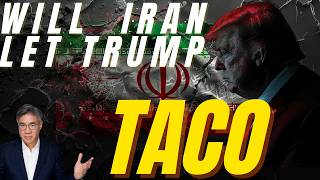
What’s the Market Missing on Iran and Oil

Channel: David Woo Unbound Published: 2026-06-14 06:05
David Woo Unbound

The speaker argues that the market is underestimating the odds that Trump chooses an Iran off-ramp rather than renewed escalation, and that this creates a bullish setup for oil and a bearish setup for equities. He says Trump’s recent comments suggest limited appetite for major bombing, while Iran is likely to exploit that to demand more concessions on sanctions relief, frozen assets, and security guarantees.

Watch on YouTube ›

Get the market thesis, key claims, assets, contradictions, and follow-up questions from any financial video — then unlock a version personalized to your portfolio, watchlist, and favorite speakers.

Detailed summary

The core thesis is that investors are misreading the Iran situation: Trump may want a political exit more than a military escalation, and Iran understands that leverage. The speaker frames Trump as using optics around the U.S. 250th anniversary to package a watered-down deal as a victory, but thinks the market is too confident that a deal will arrive on Trump’s terms. His conclusion is explicit: he is still long oil and short equities, with a preference for Brent over WTI because an oil export embargo remains a plausible tactical move. He builds that view by citing several Trump statements from the prior week. Trump’s comments about taking enriched uranium, not wanting to send men into danger, and the cost of another bombing campaign are presented as evidence that he has little appetite for resuming a serious military operation. …

🔒 The full detailed summary continues — read all of it free with an account. Read the full summary →

Main takeaways

  1. The speaker thinks Trump wants a politically usable Iran off-ramp, not a deepening war.
  2. Recent Trump comments are interpreted as evidence of low appetite for major escalation.
  3. Iran is seen as having leverage because it can delay talks and pressure the Strait of Hormuz.
  4. The speaker believes oil is underpricing geopolitical risk, especially Brent.
  5. Equities are viewed as vulnerable if the market keeps assuming a quick, benign deal.
  6. A key unresolved issue is sequencing: strait access, sanctions relief, frozen assets, and nuclear limits are all tied together.

Market read by horizon

Short term

Near term, the market looks vulnerable to a sharp oil repricing if Trump signals either an embargo, a limited deal, or fresh de-escalation that still preserves geopolitical risk. The immediate risk is complacency around headline-driven diplomacy.

  • Immediate setup: the market is treating diplomacy as the base case, but the speaker thinks that may be too complacent.
Show more
  • Near-term catalyst: any Trump move that looks like a limited deal, embargo, or de-escalatory signal could support oil and hurt equities.
  • Key tactical risk: if Trump uses the 250th anniversary window to sell a watered-down agreement, the consensus trade may unwind fast.
Mid term

Over the next few weeks to months, the likely path is prolonged bargaining with Iran pressing for sanctions relief and security concessions while Trump seeks a politically sellable exit. If talks keep stalling, oil should stay bid and equities remain exposed; a durable resolution would require visible progress on both the strait and the nuclear file.

  • Over the next several weeks to months, the base case is continued brinkmanship rather than a clean resolution.
Show more
  • The speaker expects Iran to keep extracting concessions as long as inventory pressure and political urgency build.
  • Confirmation would come from persistent failure to close gaps on sanctions relief, security guarantees, and nuclear restrictions.
Long term

Structurally, the piece argues that Iran remains a recurring oil-market risk because the Strait of Hormuz, sanctions, and nuclear policy are linked bargaining chips. Even if the current crisis fades, the region’s energy leverage can keep reappearing as a regime-level source of oil volatility.

  • Structurally, the transcript argues that the Strait of Hormuz and Iran’s nuclear program are inseparable bargaining domains.
Show more
  • The broader regime implication is that energy markets remain vulnerable to political manipulation whenever regional security and sanctions policy overlap.
  • The speaker implies that any durable deal must be more restrictive than the 2015 Obama agreement to be politically survivable for Trump.
Unlock the full horizon read See the full short-term, mid-term, and long-term implications with confirmation and invalidation signals. Unlock horizon read

Key claims (4)

BULLISH Iran / portfolio positioning Brent crude oil

The speaker is long Brent crude oil and short equities because they are not convinced Trump will pay the price Iran demands for a deal.

The speaker explicitly states their portfolio positioning based on the view that a deal is not certain and risks remain.

NEUTRAL Iran nuclear / energy security

There is unlikely to be a deal on the Strait of Hormuz without a deal on Iran's nuclear program.

The speaker explains a sequencing problem where Iran won't reopen the strait without concessions and the US won't give concessions without nuclear progress.

BEARISH geopolitical risk / Iran negotiations

Iran will try to squeeze the US for everything it is worth because it sees Trump as desperate for a deal.

The speaker argues Iran can see Trump's unwillingness to escalate and his repeated promises of a deal, giving Iran leverage.

Unlock 1 more claim See the full bullish, bearish, and counter-consensus argument map extracted from the transcript. Unlock all claims

Assets discussed (4)

Oil
BULLISH commodity

Speaker says he is still long oil because the market is underpricing Iran risk and possible embargo/escalation.

Equities
BEARISH index

Speaker says he is short equities due to geopolitical risk and the chance the market is too optimistic on a deal.

Unlock the full asset map (2 more) See all assets mentioned, their directional bias, and the exact reasoning. Unlock asset map

Interview (3 Q&A)

Trump decision calculus

Will mounting economic pressure push Trump towards greater concessions or will he decide restoring deterrence matters more?

Iran negotiation obstacles

What are the remaining obstacles in US-Iran negotiations and how difficult would they be to overcome?

Trump's next move

What is Trump going to do about the Iran situation?

Where this transcript pushes against consensus

  • The thesis depends heavily on reading Trump’s rhetoric as genuine reluctance rather than deliberate negotiating theater.
  • The speaker offers no hard evidence that Iran will successfully force a higher price beyond bargaining logic and timing.
  • The claim that the market is too optimistic is plausible, but the transcript does not quantify positioning or valuation support.
  • The preferred Brent-vs-WTI trade is asserted, but the mechanism for an export embargo remains speculative.
  • The argument assumes political constraints will dominate Trump’s decision-making, which may not hold if security events intensify.

Topics

Iranoil pricesStrait of HormuzTrump foreign policysanctions reliefnuclear negotiationsBrent crudeequity market riskinventory drawsgeopolitical leverage

Create your free research agent

Unlock the full claims, asset map, scores, related transcripts, follow-up questions, and AI chat — shaped around your portfolio, watchlist, favorite speakers, and risks.

  • Full claims and asset map
  • Personalized relevance to your watchlist
  • Follow-up questions you can track
  • Related transcripts from your workspace
  • AI chat about this video
Create your free research agent
TRANSCRIPTAGENT.AI