
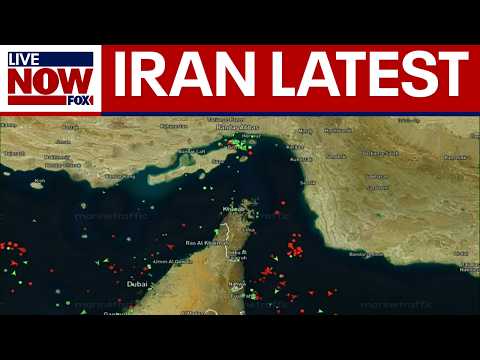
A LiveNOW from FOX segment on reported U.S.-Iran de-escalation is framed by Mark Chandler as a partial, highly conditional understanding rather than a real peace deal. He says the key immediate issues are whether Iran actually signs today, whether the Strait of Hormuz reopens safely, and whether any nuclear commitments are verifiable over the next 60 days.
Watch on YouTube ›Get the market thesis, key claims, assets, contradictions, and follow-up questions from any financial video — then unlock a version personalized to your portfolio, watchlist, and favorite speakers.
This segment centers on a reported U.S.-Iran understanding and what it would actually mean if signed. The guest, Mark Chandler, argues repeatedly that the public language is overstating the development: it is not a peace agreement, not a final settlement, and not evidence that Iranian aggression or nuclear risk has been resolved. In his view, the president wants a signature now, while Iran is trying to preserve leverage and present the deal as favorable to itself. Chandler says the contradiction between Trump, Pakistan as mediator, and Iran’s denials reflects messaging struggles inside Iran, especially between hardliners and the IRGC. He suggests the most important near-term signal is whether a Qatari team can persuade Tehran to sign electronically today. …
Tactically, this is a headline-sensitive setup: if Iran signs and Hormuz stays open, risk appetite can improve quickly; if shipping or proxies flare, the entire read can flip fast.
Over the next several weeks, the market will care less about the announcement itself than about inspections, shipping normalization, and whether Iran follows through. The base case here is a fragile process that can still unravel if Tehran stalls, extracts concessions, or keeps proxy pressure alive.
Structurally, the transcript argues Iran remains a durable regional and economic risk because its coercive tools survive any paper agreement. The long-run implication is that diplomacy matters only if it materially reduces the regime’s missile, drone, nuclear, and Hormuz leverage.
The deal being discussed is not a final peace deal or agreement; it is merely a memorandum of understanding (an agreement to talk) with conditions over the next 60 days, and it will not end Iranian nuclear weapons program or aggression.
The speaker repeatedly stresses that the deal is a process-based, conditions-based MOU with a 60-day timeline, not a final settlement on nuclear weapons or Hormuz.
Even after any final deal, Iran will retain missiles that can range the entire Middle East, a drone inventory in the low thousands, and the ability to control the global economy by closing the Strait of Hormuz, meaning the deal is strategically insufficient.
The speaker lists Iran's retained strategic capabilities post-deal — missiles, drones, and Hormuz leverage — to argue that any deal leaving these intact still threatens American lives and the global economy long-term.
Iran will sign any deal only if it is purely in Iran's favor, and hardliners led by the IRGC are pushing for stricter terms to ensure messaging is all favorable to Iran.
The speaker describes internal Iranian dynamics where hardliners want the messaging and terms of any deal to be one-sided in Iran's favor, which explains the conflicting signals.
What do you make of the conflicting information between President Trump saying a deal will be signed with Iran, Pakistan confirming it, and Iran saying that's not going to happen?
Chandler says the conflicting information reflects President Trump's strong desire to get something signed and Iran's dual messaging strategy. Iran wants to show the deal is in their favor while internally there's struggle between hardliners led by the IRGC pushing for stricter terms. The importance of signing today is illustrated by the Qatari team flying into Tehran to push Iran to sign.
What is the significance of President Trump's meeting with other leaders at the G7 summit regarding the Iran situation?
Trump will try to rally support for the deal and needs outside support. The Strait of Hormuz is technically open but Iran's military threats effectively close it. The US needs to assure safe passage of commercial shipping, demine the strait (Iran's IRGC placed 10-30 mines), and get insurance companies to provide relief. He will try to get buy-in especially from UK and France who said they would help after fighting stops.
How does the IDF strike on a Hezbollah command center in Beirut factor into the Iran deal, given Iran said any deal must include Hezbollah in Lebanon and the US said that's probably not going to happen?
Chandler says the US must delink anything in Lebanon with Hezbollah from the US-Iran deal, because Lebanese Hezbollah are Iran's number one proxy whose goal is to destroy Israel. Hezbollah said two weeks prior they wouldn't agree to a deal. Israel will do reactive and proactive responses. The IDF has said they will stop forward movement in southern Lebanon to facilitate a positive US-Iran deal but will not withdraw.
Unlock the full claims, asset map, scores, related transcripts, follow-up questions, and AI chat — shaped around your portfolio, watchlist, favorite speakers, and risks.
