TranscriptAgent
Try it free
TRANSCRIPTAGENT.AI · transcript analysis

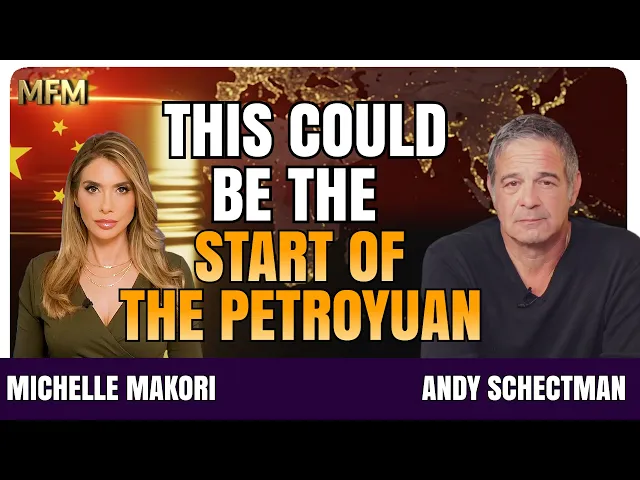
This Could Be the Start of the Petroyuan

Channel: Miles Franklin Media Published: 2026-04-07 19:05
Miles Franklin Media

The video argues that the Iran conflict may accelerate a shift from the petrodollar toward a partially yuan-linked oil trade system, especially through China-backed payment infrastructure and gold convertibility. The speaker frames this as a broader challenge to dollar dominance, Treasury demand, and the current global trade/energy settlement order.

Watch on YouTube ›

Get the market thesis, key claims, assets, contradictions, and follow-up questions from any financial video — then unlock a version personalized to your portfolio, watchlist, and favorite speakers.

Detailed summary

This transcript is a focused argument that the Iran conflict could become a catalyst for the 'petroyuan' thesis. The speaker says Deutsche Bank has warned that Iran-related disruption is testing the dollar’s role in global oil trade and may prompt more use of Chinese yuan. He claims media reports show Iran may allow ships through the Strait of Hormuz if oil payments are made in yuan, and interprets this as evidence that the petrodollar system is under pressure. The discussion then turns to how the traditional petrodollar arrangement works: oil priced in dollars, dollar revenues recycled into US assets, and that recycling supporting Treasury demand and lower US rates. …

🔒 The full detailed summary continues — read all of it free with an account. Read the full summary →

Main takeaways

  1. The core thesis is that Iran-related disruption may accelerate dollar diversification in oil settlement.
  2. The speaker sees China’s yuan infrastructure and gold convertibility as the practical backbone of the petroyuan.
  3. He argues the petrodollar’s real support came from recycling oil dollars into Treasuries, not just dollar invoicing.
  4. Saudi Arabia and Gulf participation in yuan/gold-linked systems is presented as a major sign of regime change.
  5. The macro risk framing is inflationary: higher oil could lift energy, interest rates, and global supply-chain costs.
  6. The argument is highly geopolitical and structural, but several claims are stated confidently without independent verification in the transcript.

Market read by horizon

Short term

Near term, the trade is around headline risk: Iran, Hormuz, and any confirmation of yuan-priced oil flows can quickly spike energy prices and reinforce the petroyuan narrative. If tensions ease or the reports prove thin, the setup loses urgency fast.

  • Watch for headlines on Iran, the Strait of Hormuz, and any oil-payment conditions tied to yuan.
Show more
  • Near-term market risk is an oil spike if shipping/security deteriorates or infrastructure is hit.
  • If the conflict de-escalates quickly, the petroyuan narrative could fade as a headline-driven trade.
Mid term

Over the next few months, the key question is whether yuan settlement and BRICS-linked payment rails show real adoption beyond crisis headlines. The base case in the video is gradual dollar marginalization in energy trade, but that view only strengthens if Saudi/Gulf diversification becomes visible and persistent.

  • Over the next several weeks or months, the thesis needs visible adoption of yuan settlement or BRICS-linked payment rails to gain credibility.
Show more
  • A sustained rise in oil trade outside the dollar would support the view that the dollar’s share is eroding at the margin.
  • If Saudi Arabia and other Gulf producers keep diversifying payment currency mix, the narrative becomes more durable.
Long term

The long-run thesis is a slow erosion of dollar-centered energy settlement in favor of a more multipolar system with gold and regional rails as neutral anchors. If that regime shift continues, US leverage through Treasury recycling and sanctions would matter less than it has historically.

  • Structurally, the video frames a regime shift away from unilateral dollar privilege toward a multipolar settlement system.
Show more
  • The lasting implication would be less automatic global demand for Treasuries if petrodollar recycling weakens.
  • Gold is presented as the neutral anchor for a future monetary network that reduces sanction vulnerability.
Unlock the full horizon read See the full short-term, mid-term, and long-term implications with confirmation and invalidation signals. Unlock horizon read

Key claims (8)

BEARISH dollar hegemony Petrodollar system

The Iran conflict is accelerating discussion of a petroyuan and challenging the petrodollar system.

The speaker repeatedly links the conflict to more yuan-denominated oil trade and pressure on dollar hegemony.

BEARISH oil settlement US dollar

Deutsche Bank warned the conflict is testing the dollar’s role in global oil trade and could shift more oil settlement into Chinese yuan.

Directly attributed to Deutsche Bank as cited by the speaker.

BULLISH shipping and energy flow Chinese yuan

Iran may allow ships through the Strait of Hormuz if oil payments are made in yuan.

This is presented as a media-report-based condition tied to safe passage.

Unlock 5 more claims See the full bullish, bearish, and counter-consensus argument map extracted from the transcript. Unlock all claims

Assets discussed (9)

US dollar
BEARISH fx

The speaker argues the dollar’s role in oil trade, reserves, and global settlement is being challenged by yuan-based alternatives.

Chinese yuan
BULLISH fx

Presented as the beneficiary of greater oil settlement usage and infrastructure expansion.

Unlock the full asset map (7 more) See all assets mentioned, their directional bias, and the exact reasoning. Unlock asset map

Speakers

GUEST Andy SPEAKER Miles Franklin Media speaker

Interview (2 Q&A)

petro-yuan

Does the Iran conflict further strengthen the case for a petro-yuan, and what would need to happen for it to become systemic?

He says yes, it does, especially because of the infrastructure China is building around yuan settlement and gold convertibility. He argues that broader geopolitical instability and erosion of confidence in dollar-based trade make alternatives like yuan-and-gold settlement more attractive.

MBridge

How does MBridge work, and how does gold function as the neutral reserve asset in it?

He explains that MBridge is a basket system rather than a single-currency setup: 60% BRICS-plus currencies and 40% physical or digital gold, held in vaults and deliverable to central banks on demand. He says this makes the system less dependent on the dollar or any one national currency.

Where this transcript pushes against consensus

  • The transcript treats media reports about Iran accepting yuan for passage as established fact, but no primary source is shown.
  • Claims that Mbridge/Ambridge is already a meaningful system for central-bank gold delivery are asserted more than demonstrated.
  • The speaker implies Saudi Arabia is a full participant and that new vaults are being built there, but the transcript provides no corroboration.
  • The causal link from the Iran conflict to a systemic petroyuan transition is speculative and heavily inferential.
  • The argument assumes broad world rejection of the dollar system based largely on geopolitical frustration, without quantitative evidence.
  • The long-run conclusion that the petrodollar is 'coming to an end' seems overstated relative to the evidence presented.

Topics

petrodollarpetroyuanIran conflictStrait of HormuzChinese yuangold convertibilityMbridge/AmbridgeSaudi ArabiaTreasuriesoil trade

Create your free research agent

Unlock the full claims, asset map, scores, related transcripts, follow-up questions, and AI chat — shaped around your portfolio, watchlist, favorite speakers, and risks.

  • Full claims and asset map
  • Personalized relevance to your watchlist
  • Follow-up questions you can track
  • Related transcripts from your workspace
  • AI chat about this video
Create your free research agent
TRANSCRIPTAGENT.AI