TranscriptAgent
Try it free
TRANSCRIPTAGENT.AI · transcript analysis

Brace Yourself.

Channel: Bravos Research Published: 2026-06-15 11:30
Bravos Research

The video argues that the U.S. yield curve’s recent steepening is a historically ominous recession signal, but says the usual sequence has not fully played out yet because jobless claims and corporate profits remain strong. The speaker’s base view is that the economy may still avoid recession in the near term and that stocks can keep grinding higher, especially if profits stay elevated and unemployment stays low.

Watch on YouTube ›

Get the market thesis, key claims, assets, contradictions, and follow-up questions from any financial video — then unlock a version personalized to your portfolio, watchlist, and favorite speakers.

Detailed summary

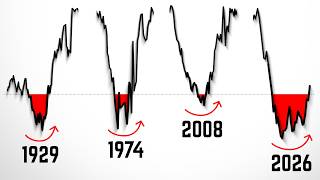
The core thesis is that the yield curve has steepened in a way that has historically preceded recessions, but the speaker thinks this time may be different because the labor market and corporate profit backdrop are still unusually strong. They frame the current setup as a “very scary signal” without turning it into a full bearish call, arguing instead that investors should understand what the indicator is saying and position more intelligently rather than “sell all your stocks and start hoarding cash.” The speaker leans heavily on historical precedent. They say the yield curve has steepened by two full percentage points after an inversion and cite prior episodes including the early 1980s, the 2020 pandemic recession, the 2007 financial crisis, the 2001 dot-com bust, the 1990 Gulf War recession, and even the Great Depression. …

🔒 The full detailed summary continues — read all of it free with an account. Read the full summary →

Main takeaways

  1. The yield curve is being treated as a historically serious recession signal, but not as an automatic immediate crash call.
  2. The speaker thinks the labor market and record corporate profits are delaying the usual recession sequence.
  3. Their base case is that the economy may still avoid recession in the next few months if claims stay low and profits stay high.
  4. They allow for a late reversal if inflation and Fed hikes re-tighten financial conditions.
  5. They remain constructive on equities if growth stays above 2%, while warning that normal pullbacks are still possible.

Market read by horizon

Short term

Tactically, the near-term setup is still constructive unless claims or profits roll over; the main immediate risk is a renewed inflation pulse that pushes the Fed back toward tighter policy. The video’s own read is that the market can keep trending higher for now, but the next few months are the key test.

  • The key near-term window is the next few months through roughly September 2026, which the speaker says will clarify whether the yield-curve signal has failed or is still operative.
Show more
  • Initial jobless claims and corporate profits are the immediate data points to watch; both are currently supportive of continued expansion.
  • A fresh oil-driven inflation pickup that pushes the Fed back toward hikes would be a near-term risk because it could re-invert the curve.
Mid term

Over the next several weeks to months, the base case is continued expansion if labor data stays benign and earnings remain firm, with growth potentially improving as the lagged effects of easier credit filter through. That view weakens quickly if unemployment, claims, or profits begin to deteriorate.

  • Over the next several weeks and months, the speaker’s base case is that the economy can continue expanding despite the prior inversion if the labor market stays firm and profits remain elevated.
Show more
  • If the yield curve keeps steepening without a recession, they expect growth momentum to improve into mid-2027 because the macro effects of easier credit conditions tend to show up with a lag.
  • The view would be weakened if jobless claims begin rising again or if profits roll over, because those would revive the usual recession transmission mechanism.
Long term

Structurally, the speaker is arguing for a regime where the yield curve still matters, but only as part of a broader credit-plus-labor framework rather than a standalone crash trigger. If this cycle avoids recession, it would support the idea that macro timing signals can be delayed by unusually strong corporate balance sheets and labor resilience.

  • Structurally, the video argues that the yield curve remains one of the most important recession indicators, but its timing is imperfect and credit conditions work with a lag.
Show more
  • The lasting implication is that investors should not rely on cash-hoarding as a generic macro strategy; regime-aware positioning matters more than waiting for an obvious crash signal.
  • If the speaker is right, the current cycle could become an example of the yield curve being delayed rather than invalidated, which would reinforce the importance of combining it with labor and profit data.
Unlock the full horizon read See the full short-term, mid-term, and long-term implications with confirmation and invalidation signals. Unlock horizon read

Key claims (6)

BEARISH yield curve / recession prediction

Every single time the yield curve has steepened like it is today, it was either during or right before a recession began.

The speaker lists historical instances (2020, 2007, 2001, 1990, 1929) where yield curve steepening preceded or coincided with recession.

BULLISH corporate profits / recession resilience

Corporate profits remaining at record highs despite yield curve inversion means businesses have no pressure to cut costs and lay workers off, so economic growth could hold up in the 3-month danger window.

The speaker argues that the usual recession mechanism (falling profits → layoffs) is absent because profits are at all-time highs, so the yield curve signal may not materialize into recession this time.

BEARISH yield curve / recession timing

In the vast majority of past instances where the yield curve steepened, a recession typically began within 12 months of the yield curve crossing back above the zero threshold.

The speaker observes historical patterns and then notes that the current crossing happened in June 2025 (12 months ago) but a recession has not occurred yet, creating uncertainty.

Unlock 3 more claims See the full bullish, bearish, and counter-consensus argument map extracted from the transcript. Unlock all claims

Assets discussed (7)

Yield curve
BEARISH other

Used as the main recession warning signal because it steepened sharply after inversion and has historically preceded downturns.

U.S. economy
MIXED other

Described as still growing with GDP positive and unemployment moderate, but potentially at risk of recession.

Unlock the full asset map (5 more) See all assets mentioned, their directional bias, and the exact reasoning. Unlock asset map

Where this transcript pushes against consensus

  • The claim that the yield-curve playbook is “literally breaking” is asserted more than demonstrated; the evidence shown is suggestive but not conclusive.
  • The recession-timing argument leans on historical repetition, but the video does not fully address structural changes in the post-pandemic economy or financial system.
  • The forecast that growth could pick up into mid-2027 rests on a lagged interpretation of the curve, but that is more model inference than directly observed evidence.
  • The pitch for the new quantitative model is promotional and not supported with backtested performance, drawdown stats, or live track record in the transcript.

Topics

yield curverecession riskjobless claimscorporate profitsU.S. growthstock marketinflation shockFederal Reservesystematic market model

Create your free research agent

Unlock the full claims, asset map, scores, related transcripts, follow-up questions, and AI chat — shaped around your portfolio, watchlist, favorite speakers, and risks.

  • Full claims and asset map
  • Personalized relevance to your watchlist
  • Follow-up questions you can track
  • Related transcripts from your workspace
  • AI chat about this video
Create your free research agent
TRANSCRIPTAGENT.AI