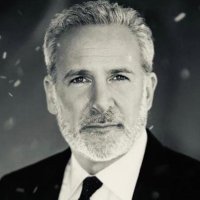
Peter Schiff argues that the Jan. 20 market selloff is the start of a broad US asset bust: stocks, bonds, the dollar, and Bitcoin fell while gold, silver, and miners surged. He ties the move to Trump’s Greenland rhetoric, tariffs, and what he sees as a growing global loss of confidence in the US dollar and US leadership.
Watch on YouTube ›Get the market thesis, key claims, assets, contradictions, and follow-up questions from any financial video — then unlock a version personalized to your portfolio, watchlist, and favorite speakers.
Peter Schiff frames the day’s market action as evidence that the “real crash” is now beginning. He says the US had a broad “sell America” session: Dow down about 870 points, Nasdaq and S&P down a bit over 2%, Treasury yields rising, the dollar falling, and Bitcoin dropping below 90,000. Against that, he highlights sharp gains in gold, silver, and mining stocks, presenting those moves as confirmation of his long-running view that precious metals are the best safe haven and that the market is finally re-rating them upward. A large share of the episode is devoted to Trump’s Greenland comments. Schiff says Trump’s talk of annexing Greenland by force, combined with tariff threats against countries that object, sends the message that the US is willing to use military power for American advantage rather than as a defensive force for the world. …
Tactically, Schiff wants listeners positioned for continued weakness in US stocks, bonds, and the dollar while staying long gold, silver, and miners. He thinks the tape can move quickly from a selloff into a more violent repricing, so waiting for a deep pullback is the wrong trade.
His base case is a multi-week or multi-month rotation out of US financial assets and into hard assets and foreign markets as yields rise and the dollar weakens. Confirmation would come from persistent Treasury selling, further gold strength, and broad international underperformance of US assets.
The structural view is that the dollar-based reserve system is eroding and the world is gradually rebalancing away from subsidizing the US. If that regime shift continues, gold and real assets should become more central while Treasuries and dollar claims lose their privileged status.
The world is beginning a mass exodus out of US Treasuries and all US dollar-denominated debt, ending the dollar's era as the reserve currency.
Speaker cites a Danish pension fund dumping Treasuries as the trigger, and argues that Trump's rhetoric on Greenland made the world realize the danger of subsidizing the US.
The US dollar is going to collapse, making it necessary to get out of the dollar and into foreign assets, gold, and silver.
The speaker argues the US has been kicking the can down the road on fiscal problems, Donald Trump accelerated the process, and now the 'day of reckoning' has begun.
The damage from Trump's Greenland comments is irreversible — even if he backtracks, it's too late and the world has already made a decision.
The speaker argues that the message has been sent and cannot be unsent; the world has already decided how to respond.
Why does he think the world is waking up to the danger of subsidizing the United States?
He says foreign lenders have enabled America to live beyond its means, fund huge deficits, and build a large military. He argues Trump’s attitude and tariff policies are making other countries realize they are financing a potential threat and should stop subsidizing the U.S.
What was the point of the Scott Bessent example about preventing a future crisis?
The guest argues that Bessent’s logic is circular and misleading: the government claims it must act now to prevent a future crisis, using the subprime mortgage example as justification. He responds that people were warning about subprime in 2005 and 2006, and that the government itself helped inflate the bubble rather than stop it.
Why does he say the U.S. does not need to own Greenland to protect it from Russia or China?
He says the U.S. has historically protected places like West Berlin, West Germany, and Japan with troops without owning them. On that basis, he argues there is no need for the U.S. to annex Greenland in order to prevent Russia or China from taking it.
Unlock the full claims, asset map, scores, related transcripts, follow-up questions, and AI chat — shaped around your portfolio, watchlist, favorite speakers, and risks.