
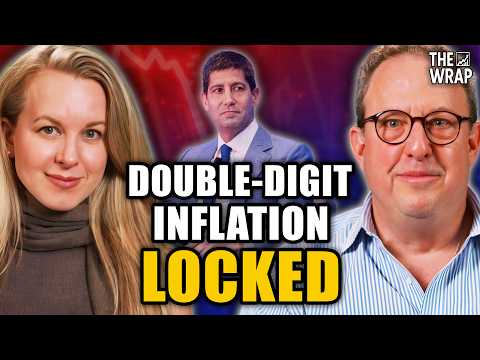
Chris Whalen argues the Fed is already behind the curve because long rates and credit conditions have effectively tightened on their own, while the bigger inflation risk is coming from war-related supply shocks and energy/refined-product shortages. He is bullish on Kevin Warsh’s less-chatty Fed style, bearish on AI/speculative equities, and constructive on income assets, precious metals, and select REITs like Annaly and PennyMac.
Watch on YouTube ›Get the market thesis, key claims, assets, contradictions, and follow-up questions from any financial video — then unlock a version personalized to your portfolio, watchlist, and favorite speakers.
This episode is a wide-ranging macro discussion between Julia La Roche and Chris Whalen, centered on the Federal Reserve’s new posture under Kevin Warsh, the bond market’s role in tightening financial conditions, war-related inflation risks, and where Whalen is positioning in markets. The core thesis is that the Fed is no longer the main driver of tightening because market rates have already moved higher, and that the next inflation impulse may come from persistent energy and industrial supply disruptions rather than from demand alone. Whalen repeatedly emphasizes that the bond market has “already had a hike,” arguing that longer-term rates and corporate borrowing costs have increased enough to count as policy tightening even if the Fed has not formally raised Fed funds. On the Fed, Whalen is strongly positive about Warsh’s tone and operating style. …
Near term, the actionable setup is that long yields and credit spreads may stay tight enough to pressure growth and speculative assets even if the Fed pauses. Watch the post-Fed tape, energy prices, and AI/software weakness for confirmation or reversal.
Over the next few months, the base case is a continued rotation away from duration-heavy growth and toward income, defensive equities, and hard assets if Warsh keeps communications tight and supply shocks linger. The view changes if refined-product shortages ease quickly and rates back off.
Structurally, Whalen is describing a regime where the bond market and global supply chains constrain inflation more than the Fed’s policy rate does. If that holds, real assets, credit discipline, and balance-sheet quality should matter more than central-bank theater.
Long-term interest rates and corporate bond costs have already risen by more than a point, effectively constituting a rate hike already.
The speaker points to observed increases in long-term interest rates and corporate bond issuance costs, arguing the tightening has already occurred regardless of Fed funds rate.
The Federal Reserve cannot meaningfully fix the inflation problem because energy costs are beyond its control.
The economy is globally supply-chain-linked, unlike the 1970s; raising credit costs to slow aggregate demand is the only lever and it won't work on energy prices.
The AI stock rally is a bubble that will reverse, with a sell-off coming in tech and AI.
Extraordinary gains (10x in 12 months for some stocks) with accompanying hype in media signal an impending reversal.
What were your high-level thoughts on Kevin Warsh's first FOMC meeting and presser as Fed chair?
Chris Whalen says it was what he expected. Warsh has set a different tone for public meetings, doesn't want to provide forward guidance, and may eliminate dot plots. Whalen believes Warsh was tutored by smart people and will refocus the Fed on its job while leaving behind progressive nonsense. He's positive about the inflection point but notes Warsh has limited choices regarding rate hikes in response to inflation from the war.
Do you think Kevin Warsh will be a net positive for the markets?
Chris says yes, very much so. He believes less is more when it comes to Fed communication — the open kimono forward guidance regime was a mistake. He thinks a little mystery and uncertainty about what the central bank will do is good because it forces markets to assess risk, and too much guidance sets you up for surprises.
How do you see the path of rates evolving this year given Warsh's first meeting?
Chris argues rates have already gone up — long-term interest rates and corporate bond issuance have already seen more than a point increase in cost. He thinks the Fed must be careful because changing the Fed funds target doesn't control the long end of the yield curve. While an FOMC rate increase is reasonable, he suggests Chairman Warsh should wait to see how the war and supply situations evolve before acting.
Unlock the full claims, asset map, scores, related transcripts, follow-up questions, and AI chat — shaped around your portfolio, watchlist, favorite speakers, and risks.
