TranscriptAgent
Try it free
TRANSCRIPTAGENT.AI · transcript analysis

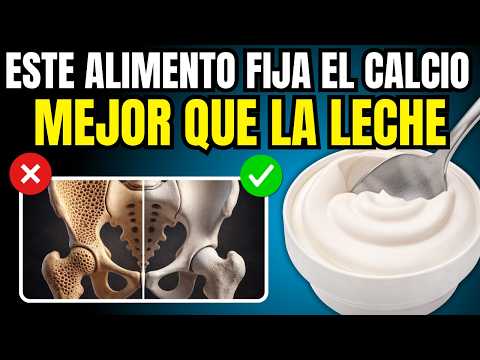
Osteoporosis: 5 Alimentos que fijan el CALCIO en los huesos aunque no tomes leche

Channel: Vida Sana 60+ Published: 2026-02-07 14:30
Vida Sana 60+

Spanish-language health video pitching five foods that allegedly help calcium ‘stick’ to bones: sardines, dried plums, dark leafy greens, sesame/tahini, and Greek yogurt. The speaker frames osteoporosis as preventable with nutrient synergy rather than calcium alone, repeatedly emphasizing vitamin D, K, magnesium, protein, probiotics, and anti-inflammatory compounds.

Watch on YouTube ›

Get the market thesis, key claims, assets, contradictions, and follow-up questions from any financial video — then unlock a version personalized to your portfolio, watchlist, and favorite speakers.

Detailed summary

The speaker’s core thesis is that osteoporosis is not primarily a problem of too little calcium, but of calcium not being properly absorbed, transported, or retained in bone. He argues that bones need a coordinated nutrient system—vitamin D for absorption, vitamin K2 for directing calcium, magnesium and phosphorus for fixation, and protein for retention—so simply drinking milk or taking calcium pills is insufficient. He presents five foods as the practical solution: sardines, prunes, dark leafy greens, sesame/tahini, and Greek yogurt. He spends much of the video explaining bone remodeling, claiming bone loss accelerates after age 35 and especially after 50, with menopause, aging, and chronic inflammation as major accelerants. …

🔒 The full detailed summary continues — read all of it free with an account. Read the full summary →

Main takeaways

  1. The central claim is that calcium only helps bones when paired with the right cofactors; calcium alone is not enough.
  2. The five highlighted foods are sardines, prunes, leafy greens, sesame/tahini, and Greek yogurt.
  3. The speaker repeatedly argues that vitamin D, K, magnesium, protein, and probiotics improve calcium utilization.
  4. He presents bone loss as common, silent, and accelerated by menopause, aging, and inflammation.
  5. The video includes practical serving suggestions and step-by-step weekly adoption advice.
  6. He acknowledges that severe osteoporosis may still require medication.
  7. The piece is highly persuasive and repetitive, using anecdotes and analogies more than hard data.

Market read by horizon

Short term

Near term, the actionable setup is purely behavioral: add one or two of the listed foods consistently and avoid treating calcium as a standalone fix. The main immediate risk is overclaiming food effects as a substitute for medical care in anyone with established osteoporosis.

  • Immediate takeaway: the speaker wants viewers to act on diet now by picking one food to add this week.
Show more
  • He gives specific near-term serving targets: sardines three times weekly, prunes daily, greens daily, tahini two to three tablespoons, yogurt one to two cups.
  • A practical next step is combining foods in the same meal to pair calcium with vitamin D, K, magnesium, protein, and probiotics.
Mid term

Over the next several weeks or months, the speaker’s base case is that combining calcium sources with vitamin D, K, magnesium, protein, and probiotics can slow bone loss and improve early osteopenia markers. That view weakens if the person has severe disease, kidney problems, diabetes, or cannot sustain the diet.

  • Over weeks to months, the speaker’s base case is that consistent nutrient-dense eating could slow bone loss and improve osteopenia, especially in people without severe disease.
Show more
  • He suggests the key confirmation signal would be stable or improved densitometry and bone markers, not immediate symptom changes.
  • His scenario is stronger for prevention and early-stage bone loss than for reversing advanced osteoporosis or prior fracture history.
Long term

Structurally, the transcript argues for a regimen where bone health is driven by nutrient synergy, gut health, and inflammation control rather than milk-centric or calcium-pill-centric thinking. The durable implication is that diet pattern quality may matter more than isolated supplements for long-run skeletal resilience.

  • Structurally, the transcript promotes a ‘bone health as a nutrient-synergy system’ framework rather than a single-nutrient framework.
Show more
  • The lasting implication is that older adults may benefit more from dietary patterns rich in mineral cofactors and anti-inflammatory foods than from calcium-centric messaging.
  • He implies a durable shift away from relying on milk or supplements alone toward diversified food-based bone support.
Unlock the full horizon read See the full short-term, mid-term, and long-term implications with confirmation and invalidation signals. Unlock horizon read

Key claims (12)

BULLISH bone health / nutrition

Sardines eaten three times a week slow postmenopausal bone loss by 30%.

The speaker cites a 2020 study showing that postmenopausal women who ate fatty fish three times per week had 30% slower bone loss than those who did not.

BULLISH bone health / nutrition

Prunes (dried plums) can reverse bone loss and actually increase bone density in postmenopausal women without medication.

The speaker describes a 2022 Penn State study where postmenopausal women eating 5-6 prunes daily increased bone density in spine and hip over 12 months, while the control group continued losing bone.

BULLISH

You cannot fix calcium into bones without magnesium; magnesium activates the enzyme that places calcium into the bone matrix.

Speaker states magnesium is required to activate the enzyme that integrates calcium into bone matrix; without it calcium floats but doesn't integrate.

Unlock 9 more claims See the full bullish, bearish, and counter-consensus argument map extracted from the transcript. Unlock all claims

Assets discussed (6)

sardines
BULLISH other

Presented as a top food for bone health because it supplies calcium, vitamin D, omega-3s, protein, and phosphorus.

ciruelas pasas
BULLISH other

Claimed to reduce bone loss and improve density in postmenopausal women through polyphenols, boron, and potassium.

Unlock the full asset map (4 more) See all assets mentioned, their directional bias, and the exact reasoning. Unlock asset map

Speakers

SPEAKER Dr. Enrique Salazar

Where this transcript pushes against consensus

  • The transcript gives many confident claims but little verifiable sourcing beyond broad references to ‘studies’; several statistics are not anchored in named papers or methods.
  • He implies diet can meaningfully improve or reverse bone loss in a wide range of cases, but the evidence presented is mostly anecdotal and may not generalize.
  • The claim that calcium supplements increase arterial calcification risk is stated strongly without nuance about dose, population, or confounders.
  • Several mechanisms are oversimplified, such as the K1-to-K2 conversion and the role of specific foods in ‘focusing’ calcium into bone.
  • Some numeric nutrition claims and study results are likely exaggerated or imprecisely stated in the transcript’s delivery.

Topics

osteoporosis preventioncalcium absorptionbone densityvitamin D and Kmagnesiumprotein intakeomega-3sdried plumssesame/tahinigut health

Create your free research agent

Unlock the full claims, asset map, scores, related transcripts, follow-up questions, and AI chat — shaped around your portfolio, watchlist, favorite speakers, and risks.

  • Full claims and asset map
  • Personalized relevance to your watchlist
  • Follow-up questions you can track
  • Related transcripts from your workspace
  • AI chat about this video
Create your free research agent
TRANSCRIPTAGENT.AI