
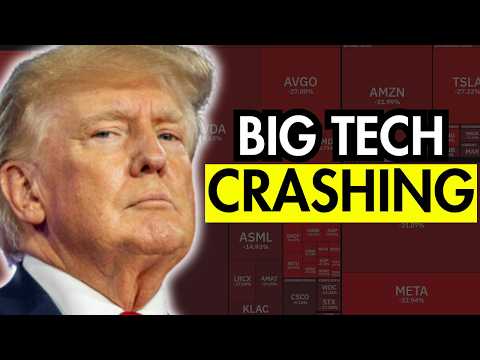
The video argues that the recent selloff in big tech is a fear-driven, macro/geopolitical panic rather than a sign that the underlying businesses have broken. The speaker highlights Meta, Microsoft, Nvidia, Google, Amazon, Broadcom, and Micron as stocks being repriced lower amid higher oil, inflation concerns, tariff pressure, and uncertainty around war escalation and Fed policy, and says several now look attractive on valuation and DCF-based margin-of-safety metrics.
Watch on YouTube ›Get the market thesis, key claims, assets, contradictions, and follow-up questions from any financial video — then unlock a version personalized to your portfolio, watchlist, and favorite speakers.
The core thesis is straightforward: the market is dumping major tech names because of macro fear, geopolitics, and headline risk, but the speaker thinks the businesses themselves remain intact and in several cases are now mispriced. He frames the tape as an “extreme fear” setup where the Nasdaq has erased months of gains, sentiment has collapsed, and investors are defaulting to “sell first and ask questions later.” In his view, the selloff is less about deteriorating fundamentals and more about uncertainty around oil, inflation, tariffs, Fed policy, and war escalation. He spends most of the video walking through large-cap tech names one by one. …
Near term, the trade is still exposed to headline risk, especially from geopolitics, rates, and litigation, so these names can keep whipsawing before any durable bounce. The immediate opportunity is selective buying into fear, but only if volatility stops expanding.
Over the next few months, the base case is a re-rating process where strong businesses recover if earnings and margins hold while the market digests AI and macro uncertainty. A failure of litigation, regulation, or AI spending to stabilize would keep the valuation reset going.
Longer term, the transcript argues that dominant tech franchises are still intact and that market panics can create structural mispricings in quality compounders. The enduring question is not whether tech is volatile, but which platforms keep their economic moat through the next AI and regulatory regime.
The stock sell-off in tech is not about fundamentals breaking but about positioning resetting and fear — the best days are priced in but the data says growth and margins are still elite.
Speaker distinguishes between a stock falling (positioning/fear) vs a business breaking (fundamentals).
The world is undersupplied, not oversupplied, in AI compute — there is still a shortage of compute and massive demand for AI infrastructure.
Speaker argues the bear narrative of AI peaking is wrong because demand for Nvidia chips still exceeds supply.
Meta Platforms is trading at 18 times forward earnings, below its historical average of 23, for a company still growing at 20%+ — this represents an extremely attractive mispricing opportunity.
Speaker points to Meta's valuation multiple being below its historical average despite strong growth, suggesting the sell-off is unjustified by fundamentals.
What is your base case for the market after this selloff?
The guest says the market has rapidly shifted from expecting lower rates and AI-driven optimism to pricing in a possible hike. They attribute that change to higher oil prices, tariff-driven inflation pressure, and an economy that is still performing well, which leaves the Fed in a difficult spot.
Why are investors suddenly pricing in a higher likelihood of a rate hike?
The answer is that the market has pivoted from a month earlier when the dominant narrative was falling rates, Fed cuts, and rising unemployment. Now higher oil prices, tariffs, and resilient economic data are pushing inflation expectations upward.
How serious is the legal risk for Meta and the other platforms?
The legal expert says appeals will take years, but the risk is not limited to one case because thousands of similar cases are already pending. There is also a chance the litigation could spur legislation requiring stricter warnings and care in platform design.
Unlock the full claims, asset map, scores, related transcripts, follow-up questions, and AI chat — shaped around your portfolio, watchlist, favorite speakers, and risks.
