
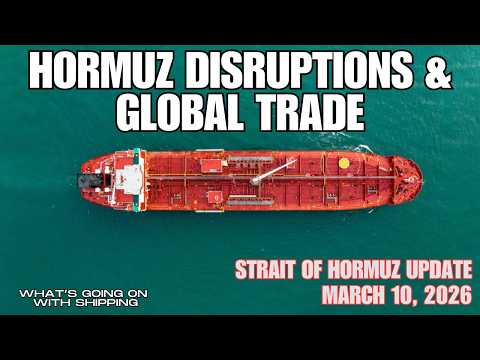
The host argues that the Strait of Hormuz disruption is creating a global trade and commodity shock, with the most important risks being LNG, fertilizer, war-risk insurance, and higher shipping/fuel costs. He is skeptical that the U.S. military currently has a clearly prepared convoy plan, and says markets need a visible escort/open-sea solution before normal trade resumes.
Watch on YouTube ›Get the market thesis, key claims, assets, contradictions, and follow-up questions from any financial video — then unlock a version personalized to your portfolio, watchlist, and favorite speakers.
This episode is a focused update on the Strait of Hormuz and its knock-on effects for global trade. The host, Sal Kaglano, frames the video around three items: a live shipping update, comments from General Kaine on possible U.S. Navy convoying, and a new UNCTAD note on the consequences of a Hormuz closure. His core thesis is that the chokepoint is already transmitting a broad shock through shipping, insurance, energy, and fertilizers, and that the world economy is vulnerable until traffic resumes more normally. He spends the first section on vessel tracking and warns viewers not to overread AIS images. In his view, much of the apparent traffic clustering in the Strait is spoofing and electronic interference from Iran, making the public vessel map unreliable. …
Tactically, the setup stays fragile: any fresh incident or weak escort messaging can keep oil, LNG, and shipping risk premiums elevated. The immediate watch is whether transit confidence improves enough to cool war-risk pricing and freight surcharges.
Over the next few weeks to months, the likely path is continued pressure on logistics and commodity costs unless a credible convoy/escort regime restores normal passage. If LNG and fertilizer flows remain impaired, the story shifts from a transitory shipping event to a broader inflation and supply-chain headwind.
Structurally, the episode argues that chokepoints like Hormuz remain a permanent vulnerability in the global trade system. When security of sea lanes is uncertain, the world pays through higher transport costs, more volatile commodities, and recurring inflation shocks.
There is almost nothing that can be done to increase liquified natural gas production as an alternative if LNG supply through the Strait of Hormuz is cut off.
Speaker argues LNG has very little spare capacity globally, unlike oil which has strategic and floating reserves.
The US military does not have a ready plan to escort vessels through the Strait of Hormuz despite initiating the conflict with Iran.
Speaker interprets General Kaine's press conference comments — that they would need to assess resources and risks once tasked — as indicating no pre-existing plan.
Rising costs of marine fuel and war risk insurance will be passed through to consumers via fuel surcharges on all types of shipping.
Speaker cites that marine fuel price and scarcity are rising, and major shipping lines are already adding surcharges.
What did General Kaine say about the US Navy's mission to escort vessels through the Strait of Hormuz?
General Kaine said that if tasked to escort, they'd look at the range of options to set the military conditions to do that, and would come to the secretary and president with the resources required, command and control required, and the risks and how to mitigate them. The host interprets this as indicating there is no concrete plan ready to execute.
Unlock the full claims, asset map, scores, related transcripts, follow-up questions, and AI chat — shaped around your portfolio, watchlist, favorite speakers, and risks.

