TranscriptAgent
Try it free
TRANSCRIPTAGENT.AI · transcript analysis

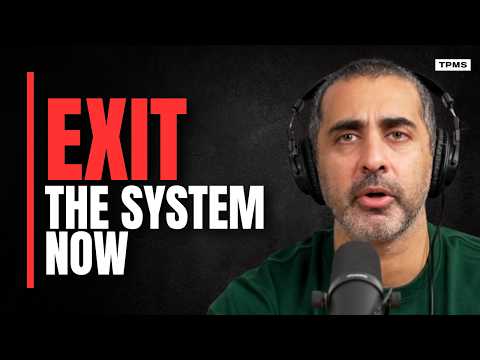
There’s Only One Way Out (Balaji Explains)

Channel: The Peter McCormack Show Published: 2026-03-02 15:15
The Peter McCormack Show

Balaji argues the West is structurally declining while the internet, AI, crypto, and internet-first “network states” are the new organizing layer. His practical advice is to take the loss early, liquidate, move to a cheaper or freer jurisdiction, and rebuild around internet-native institutions rather than trying to save legacy nation-states or blue-state politics.

Watch on YouTube ›

Get the market thesis, key claims, assets, contradictions, and follow-up questions from any financial video — then unlock a version personalized to your portfolio, watchlist, and favorite speakers.

Detailed summary

A large part of the discussion is a political-economy diagnosis: Balaji says the state has become the organizing tool of the left, while tech has become a global, decentralized counterforce. He claims Democrats lost control of speech, media, and money to the internet, while Republicans lost to China in trade, manufacturing, and geopolitics. He repeatedly says the state is “their startup,” meaning blue-state institutions use government, NGOs, universities, and grants as a compounding machine. In contrast, tech companies and internet-native communities operate more like true startups: globally scaled, meritocratic, and portable. On California and wealth taxes, he argues that proposed billionaires taxes are not really revenue tools but political revenge and control mechanisms designed to force founders to sell, leave, or lose power. …

🔒 The full detailed summary continues — read all of it free with an account. Read the full summary →

Main takeaways

  1. Balaji’s thesis is civilizational, not cyclical: he thinks the West is structurally fading and the internet is the next organizing layer.
  2. He sees the state as a compounding political machine for the left, while tech is a globally portable counter-system.
  3. China is, in his framework, the main winner on the physical side of AI, manufacturing, and drones.
  4. AI is less a singular superintelligence threat than a broad productivity and labor reallocation shock.
  5. His immediate prescription is to reduce exposure to declining jurisdictions and move toward freer, cheaper, internet-native hubs.
  6. He thinks debt, taxation, capital controls, and political fragmentation make “stay and fight” increasingly costly for high-ability people.
  7. He treats network states / network school as a serious reconstruction path, not just an internet meme.

Market read by horizon

Short term

Tactically, the setup favors caution in high-tax, high-regulation jurisdictions and a bias toward optionality: keep liquidity, reduce fixed exposure, and watch for more talent/capital flight. AI and political fragmentation can create abrupt regime changes, so the near-term risk is being trapped before mobility or tax rules tighten further.

  • Watch for further pressure from wealth taxes, exit taxes, visa restrictions, and regulatory hostility in blue states and the UK.
Show more
  • Near-term risk is capital and talent flight from high-tax jurisdictions into Dubai, Singapore, Thailand, and other low-friction hubs.
  • AI adoption is likely to keep accelerating in code, media, and verification workflows, especially for globally distributed teams.
Mid term

Over the next few months, the base case is further fragmentation: more pressure on blue-state institutions, more AI-driven labor disruption, and more migration toward cheaper, freer hubs. Confirmation would be continued founder exits, rising fiscal stress, and stronger parallel internet-native institutions; invalidation would require genuine fiscal reform and political cohesion in legacy centers.

  • Over the next several months, Balaji’s base case is continued institutional weakening in the West alongside stronger internet-native and Asia-linked growth.
Show more
  • He expects AI to keep hollowing out expensive Western symbolic labor while expanding demand for prompt engineers, verifiers, managers, and operators.
  • He thinks the clearest confirmation would be more founder exits, more jurisdiction shopping, and more visibly fragmented politics across blue/red/tech blocs.
Long term

Structurally, he’s arguing that the center of gravity is shifting from nation-states to networked civilizational layers. If he’s right, the durable winners are the jurisdictions and institutions that combine mobility, digital property rights, and decentralized coordination rather than those relying on legacy state power.

  • Balaji’s structural thesis is that the world is shifting from state-centered civilization to network-centered civilization.
Show more
  • He believes the durable regime question is not America versus another nation, but centralized control versus decentralized internet power.
  • China may dominate hardware, drones, and surveillance, while the internet ecosystem owns software, encryption, and distributed coordination.
Unlock the full horizon read See the full short-term, mid-term, and long-term implications with confirmation and invalidation signals. Unlock horizon read

Key claims (12)

BEARISH Sovereign debt unsustainability / Western decline

America and the West as we know them are going to zero because debt compounding at $175 trillion per year versus a few trillion in tax revenue is unsustainable.

The speaker (Peter) states that the ratio of debt growth to tax revenue makes the system mathematically unsustainable and that the West is heading to zero.

BEARISH Western decline

Western civilization is over, and America and Western Europe as we know them are over.

Speaker asserts civilizational decline of the West as terminal.

BEARISH US sovereign default / fiscal collapse

The US government debt is unsustainable and will go to zero because $175 trillion in compounding debt far exceeds annual tax revenue of a few trillion.

Simple arithmetic argument: revenue cannot service a debt growing faster than revenue, so a full default / bankruptcy is inevitable.

Unlock 9 more claims See the full bullish, bearish, and counter-consensus argument map extracted from the transcript. Unlock all claims

Assets discussed (10)

AI
BULLISH other

Presented as a transformative technology that boosts productivity, decentralizes talent, and reshapes work; also a catalyst for both disruption and creation.

Google — GOOGL
MIXED stock

Used as an example of a company disrupted by AI/search change and later strengthened by AI through better execution and Gemini.

Unlock the full asset map (8 more) See all assets mentioned, their directional bias, and the exact reasoning. Unlock asset map

Speakers

GUEST Balaji INTERVIEWER Peter McCormack

Interview (35 Q&A)

world outlook

What's your mental model for the world over the next 10 years given the collapse in trust, the rise of AI, and the potential insolvency of the state?

Balaji says it's hard to model 10 years out because while physical/space things are predictable, many aspects of human behavior are going to change. He then launches into a detailed thesis about why Silicon Valley could go to zero, describing how Democrats lost to the internet and Republicans lost to China, leading to a future of China versus the internet.

Europe vs America comparison

What is the thing Europe is richer than America in?

The guest initially says 'history' but then pivots to argue that Europe has more functional public infrastructure and lower crime than blue America — though Western Europe is going in the wrong direction direction too. He says Europeans can tolerate lower income because their commons are better, whereas Americans need high income to escape crime and dysfunction.

West unsalvageable

Is there nothing that can save the West? No board case?

The guest confirms: no, there is nothing that can save the West. He argues that 'America doesn't exist' as a coherent entity — there's blue America, red America, and tech America, making it the disunited tribes of North America, not the United States. He compares asking what can save the West to asking what can save the Soviet Union or Korea.

Unlock the full interview (32 more Q&A) Every question, answer summary, and YouTube timestamp. Unlock full Q&A

Where this transcript pushes against consensus

  • The claim that “Western civilization’s over” is asserted with confidence but not demonstrated with falsifiable thresholds.
  • He treats the proposed California wealth tax mainly as revenge/control, but gives limited evidence that revenue motives are secondary in all cases.
  • The argument that China will dominate physical AI is plausible, but he underweights execution, demographic, and geopolitical constraints on China.
  • His claim that AI won’t become an autonomous “god” is reasonable, but the timeline for human control could still change quickly.
  • The prescription to liquidate and move is compelling for some, but he offers limited guidance for lower-income households or people with immovable ties.
  • He presents blue/red/tech blocs as already cleanly separated, but real-world identities and coalitions remain more mixed than the framework suggests.

Topics

civilizational declineinternet-first futurewealth taxesAI labor disruptionChina manufacturing and roboticsnetwork statescapital flight and migrationfiscal insolvencystate power and NGOsdecentralization vs surveillance

Create your free research agent

Unlock the full claims, asset map, scores, related transcripts, follow-up questions, and AI chat — shaped around your portfolio, watchlist, favorite speakers, and risks.

  • Full claims and asset map
  • Personalized relevance to your watchlist
  • Follow-up questions you can track
  • Related transcripts from your workspace
  • AI chat about this video
Create your free research agent
TRANSCRIPTAGENT.AI