TranscriptAgent
Try it free
TRANSCRIPTAGENT.AI · transcript analysis

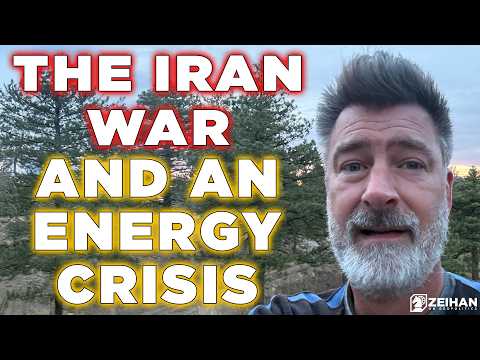
Iran War Escalates: 20 Million Barrels a Day of Crude Oil Disrupted || Peter Zeihan

Channel: Zeihan on Geopolitics Published: 2026-03-02 15:00
Zeihan on Geopolitics

Peter Zeihan argues that the Iran war has moved from a regional strike campaign into an energy-market risk because Persian Gulf shipping is being disrupted, even if infrastructure has not yet been physically destroyed. He says more than 20 million barrels per day of crude flows have been interrupted in the last 24 hours, which he believes is enough to push oil higher and raise the odds of a broader energy crisis if the conflict drags on.

Watch on YouTube ›

Get the market thesis, key claims, assets, contradictions, and follow-up questions from any financial video — then unlock a version personalized to your portfolio, watchlist, and favorite speakers.

Detailed summary

Peter Zeihan opens by framing the video as day three of the Iran war and says the operational pattern is shifting: Iran appears to be running low on missiles but still has plenty of drones, with more than 300 drones launched and fewer than 100 missiles. He notes a drone reaching Cyprus, which he treats as a psychologically important sign that the conflict can spill well beyond the immediate theater. He also says the United States lost three fighter aircraft to Kuwait in a friendly-fire incident, which he characterizes as the first significant American hardware losses in the conflict. The central thesis is that the war is now beginning to hit energy infrastructure and, even more importantly, energy flows. …

🔒 The full detailed summary continues — read all of it free with an account. Read the full summary →

Main takeaways

  1. The war is moving from military exchanges into energy-market disruption.
  2. Shipping risk in the Persian Gulf matters more than permanent physical damage so far.
  3. Oil prices are likely to keep reacting higher if the disruption persists.
  4. The conflict is becoming broader because Hezbollah, the U.S., Israel, and Ukraine-linked disruptions are now all part of the supply picture.
  5. The key variable is duration: a few days of disruption are bad, but a longer shutdown becomes a real crisis.

Market read by horizon

Short term

Near term, the actionable setup is elevated oil volatility because Gulf shipping confidence is impaired and Zeihan thinks the market is already missing 15–20 million barrels a day of crude movement. The key tactical risk is that any extension of attacks or tanker avoidance keeps crude bid until transport normalizes.

  • Immediate risk is continued interruption of Persian Gulf tanker traffic and energy operations.
Show more
  • Zeihan says Ras Tanura and Ras Laffan have already had operations interrupted, which is the clearest near-term catalyst.
  • He expects oil prices to tick up as long as vessels stay out of the Gulf.
Mid term

Over the next few weeks, the base case is a fragile energy market that stays sensitive to any renewed Gulf interruptions, especially if tanker traffic remains hesitant. If flows resume cleanly, the shock may fade; if not, the market can reprice toward a broader supply squeeze.

  • Over the next several weeks, the important question is whether tanker traffic and Gulf energy exports normalize or remain constrained.
Show more
  • Zeihan’s base case is that sustained supply friction would push the market toward a broader energy crisis even without destroyed infrastructure.
  • A confirming signal would be repeated daily disruptions around 15 to 20 million barrels per day, not just one-off strikes.
Long term

Structurally, the video argues that the global energy system remains vulnerable to maritime chokepoints and regional conflict even when physical assets are not destroyed. The lasting implication is that transport security and export-route redundancy matter almost as much as production capacity itself.

  • Structurally, the transcript argues that the world’s energy system is highly vulnerable to maritime chokepoints and shipping confidence.
Show more
  • The durable implication is that the Persian Gulf remains a central weak point because so much traded energy still depends on it.
  • The longer-run regime takeaway is that even limited attacks can create outsized price effects in markets with inelastic demand.
Unlock the full horizon read See the full short-term, mid-term, and long-term implications with confirmation and invalidation signals. Unlock horizon read

Key claims (4)

BEARISH Energy / geopolitical risk

Energy assets in the Persian Gulf are now being attacked, marking a new escalation in the conflict.

The speaker points to reported tanker strikes and damage to Ras Tanura and Ras Laffan as evidence that the conflict has broadened to energy infrastructure.

BULLISH Energy / inflation crude oil

If the disruption in Persian Gulf energy flows continues, it will eventually produce an energy crisis.

He argues that sustained outages of 15% to 20% of global crude supply would overwhelm the system because demand for energy is inelastic.

BULLISH Energy / inflation oil

Oil prices will keep rising if these disruptions persist.

The speaker links continued shipping disruptions to higher oil prices through reduced availability and increased costs to consumers.

Unlock 1 more claim See the full bullish, bearish, and counter-consensus argument map extracted from the transcript. Unlock all claims

Assets discussed (6)

crude oil
BULLISH commodity

Zeihan says more than 15 to 20 million barrels a day of crude flows have been disrupted, which should push prices up if sustained.

Ras Tanura
BEARISH other

He says the Saudi refinery had operations interrupted by drone damage.

Unlock the full asset map (4 more) See all assets mentioned, their directional bias, and the exact reasoning. Unlock asset map

Speakers

SPEAKER Peter Zeihan

Where this transcript pushes against consensus

  • The claim that 15 to 20 million barrels per day of crude has not shipped is asserted forcefully, but the transcript does not show the underlying counting methodology.
  • He treats temporary operational interruptions as equivalent to a major supply shock, which may overstate the immediate physical supply loss if exports resume quickly.
  • The statement that the United States will 'run out of interceptors' is directional but unsupported here with inventory data.
  • The assertion that a drone reaching Cyprus is a major escalation signal is plausible, but its market relevance is more psychological than directly quantified.

Topics

Iran warPersian Gulf shippingoil supply disruptionRas TanuraRas LaffanHezbollahVenezuela outputNovorossiysk strikeenergy crisismaritime trade

Create your free research agent

Unlock the full claims, asset map, scores, related transcripts, follow-up questions, and AI chat — shaped around your portfolio, watchlist, favorite speakers, and risks.

  • Full claims and asset map
  • Personalized relevance to your watchlist
  • Follow-up questions you can track
  • Related transcripts from your workspace
  • AI chat about this video
Create your free research agent
TRANSCRIPTAGENT.AI