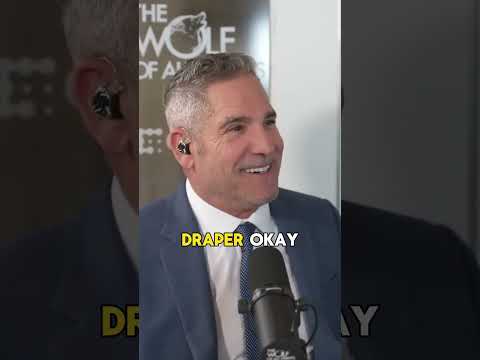
The speaker warns that chatbot conversations with tools like ChatGPT and Claude are not attorney-client privileged because they are shared with a third party and may be discoverable or subpoenaable. He contrasts that with Venice, which he says uses zero data retention and is designed for privacy.
Watch on YouTube ›Get the market thesis, key claims, assets, contradictions, and follow-up questions from any financial video — then unlock a version personalized to your portfolio, watchlist, and favorite speakers.
The speaker’s main point is that users should not treat chatbot conversations as legally confidential in the way they would treat a conversation with a lawyer. He argues that when people use ChatGPT or Claude, they are sharing information with a third party, so legal advice or other sensitive content can potentially appear in discovery and is not protected by attorney-client privilege. He stresses the gap between user intuition and legal reality. In his framing, people experience AI chats like a “closest confidant” or “little genie,” even like an extension of the brain, but the law does not recognize that emotional closeness as privacy. …
Immediate setup: treat mainstream chatbot logs as potentially discoverable and avoid sensitive inputs unless you know the retention policy. Privacy-first tools are the tactical alternative the speaker is implicitly favoring.
Over the next few months, awareness of legal exposure could push users and institutions toward products with explicit zero-retention or enterprise controls. The view weakens if providers prove stronger confidentiality guarantees than assumed here.
The lasting regime implication is that AI privacy will be governed by storage, access, and subpoena rules rather than user sentiment. That favors platforms that can credibly minimize data retention, but the legal framework may need to evolve for AI to feel truly private.
Chatbot conversations are legally treated as third-party communications, not attorney-client privileged or personal effects.
The speaker argues that when users share information with a chatbot provider, the law treats that as disclosure to a third party rather than protected private communication.
Because chatbot data is shared with a third party, the government can subpoena it without a search warrant.
The speaker states that third-party doctrine allows authorities to obtain the data directly from the company, bypassing a warrant.
Venice's zero-data-retention design keeps AI conversations completely private unless the user voluntarily hands them over.
The speaker presents zero data retention as the mechanism that prevents anyone else from reading user AI interactions unless the user provides access.
Unlock the full claims, asset map, scores, related transcripts, follow-up questions, and AI chat — shaped around your portfolio, watchlist, favorite speakers, and risks.