
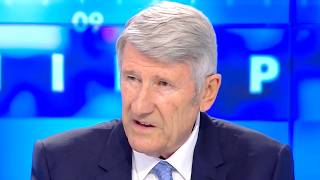
Philippe De Villiers argues that turning the 14 July military parade into an “EU/Ukraine” showcase is a major political mistake and a symbolic surrender to NATO/EU militarization. He also claims Ukraine is politically tainted by corruption and historical Nazi collaboration, warns that EU accession could drag France into war via treaty obligations, and suggests Macron may be using war rhetoric to preserve power.
Watch on YouTube ›Get the market thesis, key claims, assets, contradictions, and follow-up questions from any financial video — then unlock a version personalized to your portfolio, watchlist, and favorite speakers.
The speaker’s core thesis is that the planned 14 July ceremony is not a harmless display of solidarity but a dangerous political and strategic shift: France is, in his view, replacing its national holiday with an “European/Ukraine” event, thereby symbolically subordinating French sovereignty to NATO and the EU. He frames this as a “faute politique majeure,” arguing that the French army is being pushed offstage while “l’armée européenne” is put on display, with the result that the Champs-Élysées is being turned into an allegorical battlefield. He supports that thesis by citing press reports about an “XXL” 14 July, Ukraine being honored, a Mirage 2000 “aux couleurs de l’Ukraine,” the presence of the NATO military leadership, and the idea of a European coalition with 37 countries. He treats these elements as evidence of a broader militarized political theater. …
Immediate setup is a political backlash trade: the 14 July Ukraine/NATO imagery could trigger controversy over sovereignty and tone, especially if the ceremony is perceived as over-militarized.
Over the coming weeks, the issue is whether the parade remains symbolism or becomes part of a broader policy drift toward EU defense integration and deeper Ukraine commitments. If that drift continues, his warning about domestic political blowback and war-risk rhetoric gets louder; if not, the episode fades as a culture-war flashpoint.
Longer term, the speaker’s thesis is that Europe is moving toward a quasi-state through defense integration, eroding national sovereignty and making wartime commitments more automatic. He treats this as a structural regime change, with France’s internal security and democratic balance at risk if external militarization keeps displacing domestic priorities.
The 14 July military parade is being turned into a Euro-Ukrainian event rather than a French national celebration.
The speaker argues that French national symbols are being replaced by Ukrainian and European military imagery, making the parade politically improper.
If Ukraine joins the EU, EU treaty Article 42.7 would obligate European countries to enter the war in Ukraine.
The speaker asserts that Article 42.7 functions like NATO Article 5 and would force EU members into belligerence if Ukraine became a member during wartime.
The event signals that the European Union is effectively moving toward creating a European army.
The speaker says the parade reflects a transfer of defense competence to the EU and that this would amount to the creation of a state-level army.
Est-ce que ce type de mise en scène vous semble bienvenu ou maladroit ?
De Villiers answers that it is not just maladroit but a major political mistake.
Pourquoi dites-vous que cette célébration est mal venue ?
He says Ukraine is compromised by corruption and Nazi-collaboration links, making the celebration inappropriate.
Pourquoi l'élection présidentielle n'est pas fixée à ce jour ?
He speculates, half-jokingly, whether Macron is using war conditions to prolong his power, drawing an analogy to Zelensky.
Unlock the full claims, asset map, scores, related transcripts, follow-up questions, and AI chat — shaped around your portfolio, watchlist, favorite speakers, and risks.

