TranscriptAgent
Try it free
TRANSCRIPTAGENT.AI · transcript analysis

The Vicious Cost of Self-Awareness

Channel: Chris Williamson Published: 2026-06-21 10:00
Chris Williamson

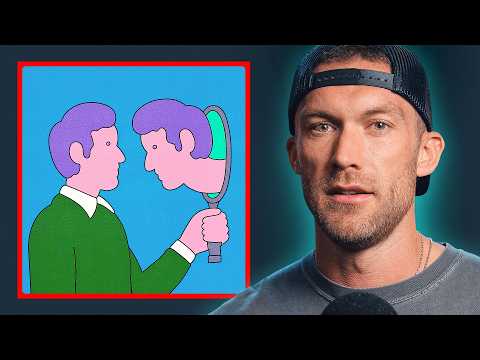
Chris Williamson gives a solo reflection on Shakespeare’s line “Thus conscience does make cowards of us all,” arguing that self-awareness can paralyze action by letting the mind simulate negative outcomes faster than a person can respond. The video is a psychological essay, not a market discussion, and ends with a sponsor read for Element.

Watch on YouTube ›

Get the market thesis, key claims, assets, contradictions, and follow-up questions from any financial video — then unlock a version personalized to your portfolio, watchlist, and favorite speakers.

Detailed summary

This is a solo, essay-style commentary rather than a market interview or investing thesis. The speaker’s core argument is that Shakespeare’s line from Hamlet is not an attack on morality, but a description of the cost of self-awareness: humans can imagine future pain so vividly that thought itself becomes a brake on action. He repeatedly reframes “conscience” as consciousness, simulation, and the mind’s ability to rehearse embarrassment, rejection, failure, and uncertainty in advance. He argues that the key problem is not pain or effort, but the unknown. In his telling, the brain prefers a familiar misery to an unfamiliar freedom because it can model losses more easily than it can value the upside of acting. That leads to “omission errors” — staying in the wrong job, relationship, or identity because a person has overthought the move and never closed the loop. …

🔒 The full detailed summary continues — read all of it free with an account. Read the full summary →

Main takeaways

  1. The central thesis is that self-awareness can become paralyzing when the mind simulates too many negative futures.
  2. Shakespeare’s “conscience” is interpreted as consciousness and foresight, not a moral insult.
  3. The real enemy of action is uncertainty, not effort or pain.
  4. Overthinking creates omission errors: missed opportunities that never leave an obvious scar.
  5. The speaker argues the practical fix is to consciously imagine the cost of not changing, not just the cost of failing.
  6. This is a psychological reflection, not a market thesis or asset-driven discussion.

Market read by horizon

Short term

No immediate market read is available; the clip is not about assets or price action. Tactically, the only near-term takeaway is behavioral: stop over-analyzing a decision if delay itself is the main cost.

  • No immediate market setup is present; the transcript offers no tradeable catalyst or asset-specific timing.
Show more
  • The only actionable near-term point is personal behavior: if a decision has been postponed, the speaker argues to force a closure loop rather than keep rehearsing possibilities.
  • The sponsor segment is separate from the thesis and does not create an investment implication.
Mid term

Over the next several weeks or months, the clip suggests people who are stuck will only move once they stop treating imagined downside as more real than the cost of inertia. The setup is about action under uncertainty, not market direction.

  • Over weeks or months, the framework implies that people who over-simulate downside may continue avoiding career, relationship, or business changes unless they deliberately reweight the cost of inaction.
Show more
  • The argument suggests progress comes from moving before certainty arrives, so the relevant confirmation signal is behavioral execution rather than further reflection.
  • If the speaker’s framework is right, the main invalidation is a person discovering that their hesitation was more rational than emotional and that waiting improved outcomes.
Long term

Longer term, the transcript argues that self-awareness has a ceiling: beyond it, reflection can suppress agency and life outcomes. The enduring lesson is that cognition can become a liability when simulation outruns execution.

  • The structural implication is that self-awareness is not unambiguously beneficial; beyond some threshold it can reduce agency and life progression.
Show more
  • The durable thesis is about human decision-making under uncertainty: the ability to imagine futures is also the ability to freeze oneself.
  • The lasting risk is a regime of chronic overthinking in which people optimize for avoiding embarrassment and loss, but miss larger life opportunities.

Key claims (3)

NEUTRAL

Self-awareness can inhibit agency by causing people to simulate negative outcomes so vividly that they hesitate to act.

The speaker argues that imagination and reflection make anticipated losses feel real in advance, which drains courage and leads to inaction.

NEUTRAL

People often remain in the wrong job, relationship, or self-concept because uncertainty is more aversive than familiar misery.

He says people would rather endure a predictable bad situation than risk the unknown freedom of change.

NEUTRAL

Overthinking creates omission errors by causing people to avoid opportunities they would have benefited from taking.

The speaker says people miss out because their minds generate more ways things could go wrong than their actions can resolve.

Assets discussed (2)

Element
NEUTRAL other

Sponsored product mention, not an investment thesis.

drinklmn.com/modernwisdom
NEUTRAL other

Promoted affiliate/sample-pack link in the sponsor read.

Speakers

SPEAKER Chris Williamson

Where this transcript pushes against consensus

  • The Shakespeare interpretation is highly speculative; the speaker openly admits he is reverse-engineering the meaning without being a Shakespeare scholar.
  • The claim that self-awareness is often inhibitory may be true for some people, but the transcript provides no empirical evidence beyond intuition and anecdotes.
  • The distinction between commission and omission errors is useful rhetorically, but the talk does not quantify when one dominates the other.
  • The personal examples are illustrative rather than evidentiary, so the argument relies more on persuasive framing than proof.

Topics

self-awarenessHamletconscienceoverthinkingagencyomission errorsfear of uncertaintyTony Robbinspain-pleasure principlead read

Create your free research agent

Unlock the full claims, asset map, scores, related transcripts, follow-up questions, and AI chat — shaped around your portfolio, watchlist, favorite speakers, and risks.

  • Full claims and asset map
  • Personalized relevance to your watchlist
  • Follow-up questions you can track
  • Related transcripts from your workspace
  • AI chat about this video
Create your free research agent
TRANSCRIPTAGENT.AI