TranscriptAgent
Try it free
TRANSCRIPTAGENT.AI · transcript analysis

On a voulu voir si la prison c’était vraiment le “Club med”

Channel: BFMTV Published: 2026-04-17 05:41
BFMTV

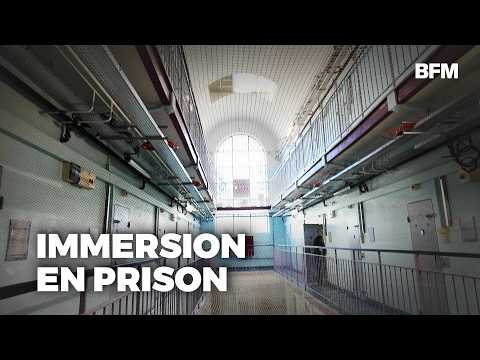
BFMTV’s report argues that French prisons are not a “Club Med” but an overpopulated, under-resourced system under acute strain. The piece centers on prison overcrowding, deteriorating conditions, staffing shortages, suicides, weak reintegration, and policy responses ranging from more prison construction to alternatives like open facilities and regulated admissions.

Watch on YouTube ›

Get the market thesis, key claims, assets, contradictions, and follow-up questions from any financial video — then unlock a version personalized to your portfolio, watchlist, and favorite speakers.

Detailed summary

This BFMTV segment is an investigative report on the state of French prisons, built around the idea that the popular “Club Med” image is false and that the real issue is severe overcrowding. The report opens by contrasting social-media theatrics from detainees with the reality inside prisons, then quickly frames the system as historically strained: more than 87,000 detainees for 63,353 operational places, a 137.5% density rate, and even worse crowding in maisons d’arrêt, where the average occupancy is described as 168% and much higher in male units. The core thesis is that overcrowding is the root cause of many downstream problems: poor sanitation, people sleeping on floor mattresses, impossible living conditions, staff overload, and a loss of institutional control. …

🔒 The full detailed summary continues — read all of it free with an account. Read the full summary →

Main takeaways

  1. Overcrowding is presented as the central problem driving nearly every other prison failure.
  2. The report argues that longer detention durations and delayed justice matter more than yearly intake.
  3. Staff shortages are portrayed as severe enough to undermine both safety and daily control.
  4. Psychiatric distress, suicides, and self-harm are framed as systemic, not exceptional.
  5. Reintegration is depicted as underfunded, undermeasured, and structurally ineffective.
  6. The government’s prison-expansion strategy is criticized as costly and historically weak.
  7. Alternatives such as open prisons, placements outside, and regulated intake are presented as more promising.

Market read by horizon

Short term

Immediate tactical pressure is on French prison administration: overcrowding, staff overload, and security breakdowns look like they will keep worsening before any fix lands. Watch for policy headlines on prison-place expansion, intake regulation, and criminal-procedure reform.

  • Immediate pressure remains on overfull maisons d’arrêt, especially where occupancy is far above capacity and basic routines are already breaking down.
Show more
  • Near-term catalysts are policy debates over new prison construction, the proposed regulation of prison intake, and reforms to criminal procedure designed to reduce backlog.
  • The report suggests tactical risk comes from continued crowding causing more incidents, degraded security, and higher staff strain before any structural fix arrives.
Mid term

Over weeks to months, the setup only improves if court delays shorten, detention lengths fall, or non-custodial options expand materially. Without that, the report’s base case is continued strain, more incidents, and political pressure to choose between costly construction and harder operational reforms.

  • Over the next several months, the key question is whether new capacity, procedural reforms, or intake regulation can actually slow the occupancy spiral.
Show more
  • The base case in the report is that prison strain persists unless detention lengths fall, trials speed up, and alternatives to incarceration are scaled more aggressively.
  • If staffing and judicial capacity do not improve, overcrowding will likely continue to amplify violence, suicides, and control failures.
Long term

The structural message is that incarceration-heavy systems hit diminishing returns when capacity growth lags demand and reintegration remains weak. The durable lesson is that prison quality, judicial speed, and alternatives to incarceration matter more than simply adding beds.

  • Structurally, the report argues France’s prison model is too reliant on incarceration and too weak on reintegration.
Show more
  • The lasting thesis is that building more prisons alone does not solve the regime problem because supply tends to be absorbed by demand.
  • A more durable fix would involve sentencing, court capacity, staffing, and open/alternative prison models rather than a pure expansion strategy.
Unlock the full horizon read See the full short-term, mid-term, and long-term implications with confirmation and invalidation signals. Unlock horizon read

Key claims (12)

BEARISH French prison overcrowding

French prisons are severely overcrowded, with a national detention density of 137.5% and the country ranking among the EU's worst after Cyprus and Slovenia.

The speaker supports this with the latest headcount, available capacity, and a comparison to EU peers.

BEARISH French justice system capacity

France's prison overcrowding is driven mainly by longer time served and court delays, not by a surge in the number of people entering prison.

The speaker says annual inflows are roughly stable, but average detention length has risen and judicial backlogs keep pretrial detainees locked up longer.

BEARISH public sector labor shortages

French prisons are severely overcrowded and understaffed, with roughly 4,000 guards missing.

The speaker says staffing is set by theoretical capacity rather than actual inmate count and quantifies the gap at 4,000 effective positions.

Unlock 9 more claims See the full bullish, bearish, and counter-consensus argument map extracted from the transcript. Unlock all claims

Assets discussed (6)

BFMTV
NEUTRAL other

The channel is the publisher and not a market asset.

Skyrock
NEUTRAL other

Mentioned only as Fred Musa’s employer and platform for prison radio workshops.

Unlock the full asset map (4 more) See all assets mentioned, their directional bias, and the exact reasoning. Unlock asset map

Speakers

GUEST Various speakers (BFMTV) INTERVIEWER Interviewer (BFMTV)

Interview (15 Q&A)

overcrowding

How bad is the overcrowding in French prisons, and will they crack under the pressure?

The segment explains that French prisons are severely overcrowded, with more than 87,000 detainees for 63,353 operating places, and that some facilities are far beyond capacity. It presents the situation as a chronic pressure point that may lead to breakdowns in daily prison life.

cell conditions

What does the overcrowding look like inside a prison like Nanterre?

The guest explains that the cell has two beds but can hold more people, forcing one inmate to place a mattress on the floor and making basic movement to the toilet nearly impossible. The interview also describes dirty shared sanitation and cramped living conditions with mattresses placed on water bottles to create space.

causes

Why has prison overcrowding reached this level?

The segment says the main driver is not a surge in incarcerations but a longer average time spent in custody. It also cites sentencing reforms that encouraged longer terms, plus understaffing in the judiciary that slows criminal proceedings and keeps pretrial detainees locked up longer.

Unlock the full interview (12 more Q&A) Every question, answer summary, and YouTube timestamp. Unlock full Q&A

Where this transcript pushes against consensus

  • The report relies heavily on institutional statistics and expert testimony, but it does not deeply test whether all overcrowding effects are caused by the same mechanisms across facility types.
  • Claims that new prison construction is historically ineffective are asserted strongly, but the piece gives limited empirical comparison beyond a few examples.
  • The farm-placement and Scandinavian examples are persuasive, but the report does not fully address scalability, selection effects, or budget constraints.
  • The segment is critical of the administration’s secrecy, but it also lacks direct response from the ministry, so the strongest allegations are one-sided.

Topics

prison overcrowdingFrench justice systemstaff shortagessuicide and mental healthreintegrationprison reformopen prisonsrecidivismprison constructionEuropean Court of Human Rights

Create your free research agent

Unlock the full claims, asset map, scores, related transcripts, follow-up questions, and AI chat — shaped around your portfolio, watchlist, favorite speakers, and risks.

  • Full claims and asset map
  • Personalized relevance to your watchlist
  • Follow-up questions you can track
  • Related transcripts from your workspace
  • AI chat about this video
Create your free research agent
TRANSCRIPTAGENT.AI