
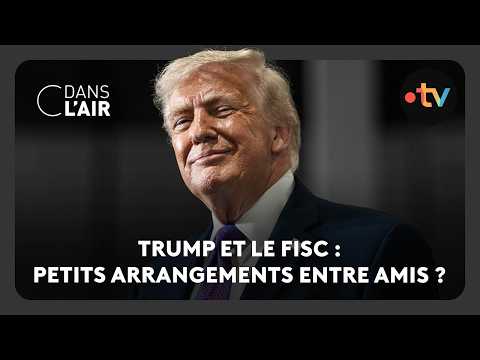
This C dans l’air episode argues that Trump is crossing political and institutional red lines on multiple fronts: tax immunity for himself and his family, a compensation fund for Jan. 6 participants, and a costly White House ballroom project that looks like a vanity and power move. The panel frames these moves as unprecedented, personally self-serving, and increasingly polarizing even inside the Republican camp.
Watch on YouTube ›Get the market thesis, key claims, assets, contradictions, and follow-up questions from any financial video — then unlock a version personalized to your portfolio, watchlist, and favorite speakers.
The core thesis is that Trump is using state power to protect and enrich his own political and family network while testing how far U.S. institutions and his own party will let him go. The opening segment focuses on the reported arrangement with the tax authorities: Trump would secure immunity from future tax scrutiny for himself, his family, and his companies, while also creating a large compensation fund for people tied to the Jan. 6 Capitol attack. The panel treats this as legally untested, politically explosive, and symbolically revealing of a politics of loyalty, revenge, and personal benefit. The guests repeatedly describe the situation as unprecedented and unstable. J. André says Trump “transigé avec lui-même” and that the Treasury is effectively under White House control, making the deal possible. L. …
Near term, the setup is tactically negative for Trump: the tax deal, Jan. 6 fund, and ballroom optics are creating backlash, while Iran remains a live escalation risk. Any fresh legal or congressional challenge could sharpen the selloff in political support among swing Republicans.
Over the next few months, the base case is a more strained Trump coalition: his core stays loyal, but inflation, war fatigue, and overreach make the midterms harder than he wants. A real change in trajectory would require either a foreign-policy win or a major Republican rupture.
Structurally, the episode argues that Trump is accelerating a shift toward personalized, transactional executive power and away from institutional restraint. The longer-run consequence is weaker U.S. credibility abroad and a more favorable comparison set for China as the steadier power.
Trump's tax deal gives him and his family a lifetime tax indemnity and blocks the Justice Department from auditing the Trump family.
The discussion states that Trump negotiated permanent tax protection for himself, his family, and their companies, and that the DOJ is now barred from conducting tax checks.
Donald Trump has arranged a deal that shields himself and his family from future IRS prosecution over possible past tax fraud.
The speakers say he reached an agreement with the Treasury/IRS that gives him immunity and means he and his family will not be pursued for past alleged frauds.
China is the main beneficiary of the current US political situation because it appears more stable and rational than Trump's America.
The speaker says China benefits from the disorder created by Trump and can present itself as a long-term, rational, orderly power by contrast.
Is Trump and his family effectively being shielded from future tax prosecution for past fraud?
J. André says that, barring a court reversal, it appears unprecedented: Trump struck an arrangement that gives him immunity and a large compensation fund. D. Moïsi adds that it is still unclear whether the immunity is permanent.
Is this a form of nepotism or a personal power grab?
J. Staron says it resembles that, but stops short of calling the United States authoritarian or dictatorial yet. He argues Trump is testing the system and bending the state to serve his private interests instead of dismantling it.
What do you make of Vance's response, and does he seem uncomfortable?
J. André says Vance does not seem at ease and is hard to read, but the explanation is not landing well. He says the story is being framed as using the legal system against Trump’s enemies and as a way to reward Trump’s supporters.
Unlock the full claims, asset map, scores, related transcripts, follow-up questions, and AI chat — shaped around your portfolio, watchlist, favorite speakers, and risks.
