
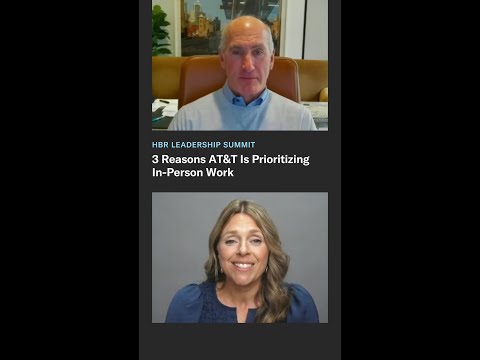
AT&T’s CEO argues for in-person work because the company is in the middle of a multi-year transformation, has a workforce split between very seasoned employees and newer hires, and wants to rebuild the social fabric that digital tools can erode. He says office time improves innovation, mentoring, and personal relationships in ways virtual work cannot.
Watch on YouTube ›Get the market thesis, key claims, assets, contradictions, and follow-up questions from any financial video — then unlock a version personalized to your portfolio, watchlist, and favorite speakers.
This is a short, focused interview clip about why AT&T is prioritizing office-based work. The speaker’s core thesis is straightforward: in-person work is not being pushed as a generic culture preference, but as a practical requirement for executing AT&T’s current business transformation. He says the company is running “seven very, very large initiatives,” each requiring multi-year effort, billions of dollars of investment, and broad interdepartmental coordination, and he does not believe the necessary level of innovation could be achieved while the team was virtual. He gives two additional reasons. First, he describes AT&T’s workforce as a “barbell” of highly seasoned employees and newer hires, and says that in-person contact helps build networks, rigor, and mentoring relationships that bring younger employees along. …
Tactically, this is a workplace-policy story rather than a tradable market catalyst; the immediate watch item is employee pushback or sentiment around AT&T’s mandate. There is no direct asset setup here.
Over the next few months, the key test is whether in-person work actually improves execution on AT&T’s large transformation projects. The story matters if it becomes a template for broader corporate return-to-office enforcement, but the transcript itself is company-specific.
Structurally, the clip supports the idea that large companies may reassert office presence where they believe execution, mentoring, and culture depend on face-to-face contact. The long-run implication is a continuing split between firms that see hybrid as sufficient and firms that treat presence as operational infrastructure.
AT&T is in a transformation cycle involving seven large multi-year initiatives that require major interdepartmental coordination and billions of dollars of investment.
The speaker says the company is executing seven large initiatives over multiple years with billions in investment and heavy cross-functional effort.
AT&T believes it cannot achieve the level of innovation needed to complete its transformation while working virtually.
The speaker directly argues that virtual work would prevent the innovation required to break apart and execute the company’s large initiatives.
The company's workforce mix makes in-person work important because newer employees need mentorship, networks, and rigor from being around experienced colleagues.
He says the mix of seasoned staff and newer hires makes it hard to build networks and mentor people unless they are physically together.
Why is in-person work so critical to the company's goals, and how has pushback been handled?
The speaker says the company is in a major transformation cycle with seven large, multi-year, multibillion-dollar initiatives that require extensive cross-department collaboration. They also argue that in-person work helps bridge a workforce split between very seasoned employees and newer hires, strengthening mentoring, networks, and rigor. Finally, they believe physical relationships balance the limits of digital tools by building social fabric and mutual support.
Unlock the full claims, asset map, scores, related transcripts, follow-up questions, and AI chat — shaped around your portfolio, watchlist, favorite speakers, and risks.
