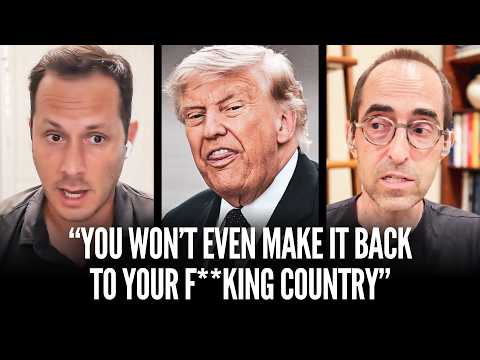
The Bulwark’s Sam Stein and Will Saletan argue that Trump’s handling of Iran talks is chaotic, self-defeating, and internally inconsistent. Their core complaint is that the administration is publicly threatening Iranian negotiators, claiming tactical wins that amount to a return to square one, and embedding vague side-deals on Lebanon and the Strait of Hormuz that weaken the U.S. bargaining position.
Watch on YouTube ›Get the market thesis, key claims, assets, contradictions, and follow-up questions from any financial video — then unlock a version personalized to your portfolio, watchlist, and favorite speakers.
Sam Stein and Will Saletan frame the day’s Iran diplomacy as a confused first round of talks in Switzerland that was immediately destabilized by Donald Trump’s public threats. They say the U.S. and Iran are supposedly negotiating through Qatari and Pakistani mediation, but Trump simultaneously told Fox News that Iranian officials “won’t even make it back” to their country if they close the Strait of Hormuz. Their central thesis is that threatening the people you are negotiating with undermines diplomacy and suggests the administration is improvising rather than executing a coherent strategy. A major focus is the Strait of Hormuz. The speakers argue that the administration is trying to turn an already-open shipping lane into a false victory narrative, claiming the U.S. has “negotiated to open the strait” even though traffic was already moving. They also criticize the idea that the U.S. …
Near term, the setup is fragile: public threats and contradictory readouts raise the odds of a stumble, especially if Lebanon or Hormuz rhetoric escalates again.
Over the next few weeks, the process may continue but remain unstable unless the sides clarify the deal’s actual scope and stop undercutting it in public.
Structurally, the episode points to a broader regime of noisy, proxy-filled diplomacy where U.S. leverage is limited and negotiations are vulnerable to constant spoiler risks.
The U.S. and Iran are negotiating over the Strait of Hormuz and Lebanon as part of the deal framework.
The speakers say the talks are focused on deconfliction in Lebanon and on the Strait of Hormuz, implying both issues are now central to the negotiations.
The negotiations are not yet meaningfully beyond basic framework disputes because the parties are still trying to re-establish a shared understanding of the agreement.
The speakers argue that the main deal elements—Lebanon and the Strait—are still in dispute, so the talks are effectively about rebuilding the original understanding rather than implementing it.
The U.S. is claiming the Strait of Hormuz remains fully open and that it has made progress keeping it that way.
A U.S. diplomat is quoted saying the parties discussed the Strait and that the U.S. wants to ensure it remains fully open, which suggests the administration is treating openness as a key objective and asserting progress.
What do you make of Trump threatening the Iranian negotiators and saying the US could take over the Strait of Hormuz and charge tolls?
Will says the threat is absurd and dangerous, because it amounts to threatening to steal oil from countries other than the US. He argues Trump is blustering, repeating a pattern of saying he can seize the strait without actually being willing to pay the military cost.
Why is Trump now saying the Strait of Hormuz must be taken over if he previously said the US did not need it?
Will says Trump is contradicting himself: he previously claimed the US could live without the strait and now is talking about controlling it. He treats the whole position as incoherent, especially since Trump also says the strait is already open.
What should we make of the report that the talks in Switzerland were focused on Lebanon and the Strait of Hormuz, and that all four parties were pleased?
Will dismisses the language as diplomatic mumbo jumbo that often signals process without substance. He says the talks are not really post-deal negotiations, because major parts of the framework are still contested and the sides are only trying to re-establish a shared understanding.
Unlock the full claims, asset map, scores, related transcripts, follow-up questions, and AI chat — shaped around your portfolio, watchlist, favorite speakers, and risks.