TranscriptAgent
Try it free
TRANSCRIPTAGENT.AI · transcript analysis

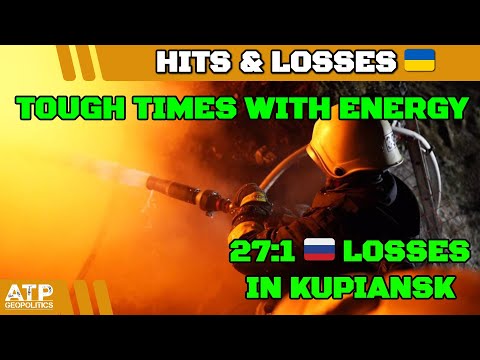
27:1 Loss Ratio in Kupiansk! Energy Woes in Ukraine| Ukraine War Update (20260117): Overnight News

Channel: ATP Geopolitics Published: 2026-01-17 05:36
ATP Geopolitics

A Ukraine war update centered on battlefield loss ratios, Russian drone and strike activity, and worsening Ukrainian energy shortages. The speaker argues that Ukraine is under real pressure on power and air defenses, while also highlighting Ukrainian strikes on Russian infrastructure and several morale/aid stories.

Watch on YouTube ›

Get the market thesis, key claims, assets, contradictions, and follow-up questions from any financial video — then unlock a version personalized to your portfolio, watchlist, and favorite speakers.

Detailed summary

This is a Ukraine war update from ATP Geopolitics, with the speaker framing the episode as a candid rundown of battlefield developments, energy stress, and strike exchanges. The core thesis is that Ukraine is facing a genuinely difficult period on the home front—especially in energy and air defense—while still inflicting meaningful losses on Russian forces and Russian rear-area infrastructure. The speaker repeatedly emphasizes that he is not trying to “doom” Ukraine for its own sake, but he also says he will not downplay serious problems when they exist. On the military side, the update starts with Ukraine’s reported Russian losses for the prior day: 1,130 personnel, three tanks, six armored combat vehicles, 31 artillery systems, one MLRS, one air-defense system, 115 vehicles/fuel tanks, and 721 drones. …

🔒 The full detailed summary continues — read all of it free with an account. Read the full summary →

Main takeaways

  1. Ukraine is under serious strain in power generation, grid resilience, heating, and air-defense missile supply.
  2. Russia is sustaining very high drone usage and heavy losses around key fronts such as Kupiansk.
  3. Ukrainian strikes are still landing on Russian rear-area infrastructure, especially in cold-weather regions.
  4. The war is now producing clear demographic and labor-market effects through emigration, especially among young men.
  5. The speaker’s style is explicitly pro-Ukraine but he says he will report bad news when warranted.

Market read by horizon

Short term

Near term, the setup is defensive for Ukraine: energy fragility and air-defense scarcity create immediate downside risk if Russian strikes continue at the current pace. Tactical improvement depends on fresh missile deliveries and grid repairs, not on battlefield headlines.

  • Immediate risk is continued Russian pressure on Ukraine’s energy grid and air defenses, especially if missile stocks remain thin.
Show more
  • Watch for more outages, heating disruptions, and school/utility closures if the 7 GW shortfall persists.
  • Any fresh air-defense deliveries or Czech aircraft support could improve short-run interception rates, but only gradually.
Mid term

Over the next few weeks to months, expect a grinding pattern of Russian infrastructure pressure met by incremental Ukrainian repairs and selective counterstrikes. The key validation is whether Ukraine can narrow the energy gap and maintain interception rates; if not, utility stress and service disruptions should stay elevated.

  • Over the next several weeks, the key question is whether Ukraine can stabilize power supply before winter damage compounds further.
Show more
  • The battlefield narrative likely remains one of high Russian attrition in selected sectors, but with no sign of a clean operational breakthrough.
  • The energy picture will hinge on repairs, imported electricity, donor support, and the pace of air-defense replenishment.
Long term

Structurally, the war is evolving into a contest between Russian attrition and Ukrainian resilience, with energy, labor supply, and logistics as decisive long-run variables. If the current pattern persists, Ukraine’s postwar recovery will depend heavily on how much human capital and infrastructure survive this prolonged pressure.

  • The transcript implies a war economy regime in which energy security, air defense, and industrial repair are strategic assets, not background issues.
Show more
  • Ukraine’s long-run challenge is not just battlefield survival but preserving labor force, public services, and economic capacity under prolonged mobilization.
  • Russia’s willingness to target civilian infrastructure and use large drone volumes suggests a durable attritional strategy rather than a quick decisive campaign.
Unlock the full horizon read See the full short-term, mid-term, and long-term implications with confirmation and invalidation signals. Unlock horizon read

Key claims (12)

BEARISH Ukraine energy crisis

Ukraine faces a 7 gigawatt power shortfall, with demand around 18 gigawatts and capacity only 11 gigawatts.

The speaker says the energy gap is larger than previously thought and supports it with the cited demand and capacity figures.

BEARISH Ukraine civilian energy disruption

Russia's strikes are causing severe, widespread disruption to Ukraine's electricity and heating supply, including closed Kyiv schools and apartment blocks still without heat.

The speaker cites emergency measures, school closures, and thousands of apartments affected as evidence that the infrastructure damage is materially hurting civilians.

BEARISH energy security

Ukraine is facing a serious energy-sector crisis with a 7 GW power shortfall and repeated Russian strikes on infrastructure.

The speaker says demand is 18 GW while capacity is only 11 GW and cites 256 strikes since October on hydro and thermal plants.

Unlock 9 more claims See the full bullish, bearish, and counter-consensus argument map extracted from the transcript. Unlock all claims

Assets discussed (9)

Ukraine
MIXED other

Country-level situation is described as under heavy energy and military pressure but still resilient in repairs and counterstrikes.

Russia
MIXED other

Russia is portrayed as inflicting strikes and sustaining large drone use, while also taking losses and suffering counterstrikes.

Unlock the full asset map (7 more) See all assets mentioned, their directional bias, and the exact reasoning. Unlock asset map

Speakers

SPEAKER Jonathan MS Pierce

Interview (1 Q&A)

mobilization policy

Why did Ukraine change the rules to allow 18-to-22-year-olds to leave?

The speaker then relays explanations from media and AI: easing pressure, allowing education/work abroad, keeping ties to Ukraine, and serving as a pressure-release valve for war fatigue.

Where this transcript pushes against consensus

  • The 27:1 Kupiansk casualty ratio is attributed to a British intelligence briefing relayed through reporting, not independently verified in the transcript.
  • The claim that air-defense shortages were caused by U.S. withholding missiles is explicitly presented as speculation from others, not established fact.
  • The speaker sometimes infers the significance of fires or strikes at Russian sites without confirming exact damage assessments.
  • The reasoning behind allowing 18-to-22-year-olds to travel is discussed, but the transcript does not prove the policy’s true intent or effectiveness.

Topics

Ukraine war updateKupiansk casualty ratioenergy infrastructureair defense shortagesRussian drone attacksUkrainian counterstrikesmobilization and emigrationGDP and wartime economyLithuania sabotage caseUK-Ukraine partnership

Create your free research agent

Unlock the full claims, asset map, scores, related transcripts, follow-up questions, and AI chat — shaped around your portfolio, watchlist, favorite speakers, and risks.

  • Full claims and asset map
  • Personalized relevance to your watchlist
  • Follow-up questions you can track
  • Related transcripts from your workspace
  • AI chat about this video
Create your free research agent
TRANSCRIPTAGENT.AI