TranscriptAgent
Try it free
TRANSCRIPTAGENT.AI · transcript analysis

Trump’s Story on the Iran War Changed 5 Times in 48 Hours (w/ Bill Kristol) | The Bulwark Podcast

Channel: The Bulwark Published: 2026-03-23 15:41
The Bulwark

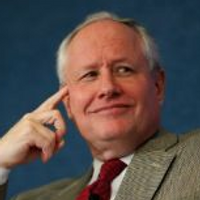
A Bulwark Podcast episode centered on Trump’s rapidly changing Iran-war posture and the political/economic fallout. Tim Miller and Bill Kristol argue that Trump is bluffing, improvising, and likely backing off from a dangerous escalation, but only after already causing market disruption, higher energy prices, and a broader credibility problem for the U.S. and its allies.

Watch on YouTube ›

Get the market thesis, key claims, assets, contradictions, and follow-up questions from any financial video — then unlock a version personalized to your portfolio, watchlist, and favorite speakers.

Detailed summary

The core thesis is that Trump’s Iran policy changed repeatedly over roughly 48 hours and is best understood as bluffing, improvisation, and then retreat rather than a coherent strategy. Tim Miller opens with a chronological recap: sanctions relief on Iranian oil at sea, Iranian missile fire near Diego Garcia, Trump’s threat to “obliterate” Iranian power infrastructure, Iran’s counter-threats against energy assets across the Middle East, and then Trump’s sudden public shift toward “productive conversations” and a five-day pause. Kristol’s read is that Trump “tacoed” — he backed down because he fears boots on the ground and especially fears oil prices — but the episode treats that outcome as only the less-bad option, not a success. A major thread is that the administration appears to have no real end-state plan. …

🔒 The full detailed summary continues — read all of it free with an account. Read the full summary →

Main takeaways

  1. Trump’s Iran posture is presented as a bluff followed by a retreat, not a coherent strategy.
  2. The immediate market risk is energy disruption: higher oil, gas, and broader supply-chain uncertainty.
  3. The political message they want Democrats to use is very simple: Trump is responsible for higher gas prices and airport chaos.
  4. Israel remains an independent variable; even if Trump backs off, the war may not be over.
  5. The administration’s lack of a real exit plan is a central critique.
  6. Trump’s rhetoric links foreign enemies and domestic political opponents in a way they view as ominous.
  7. Personnel around Trump are portrayed as incompetent, shameless, or both.
  8. The DHS/airport shutdown is framed as a deliberate political choice by Trump, not a necessary funding impasse.

Market read by horizon

Short term

Near term, the main actionable setup is reduced but still elevated geopolitical risk: if Trump keeps backing off, energy pressure can ease; if he reverses again, oil and risk assets can reprice fast. The airport/DHS mess is also a live political catalyst that could keep bad headlines flowing.

  • Watch whether Trump’s de-escalation holds or whether this is only a temporary pause before renewed strikes.
Show more
  • Oil and gasoline remain the key immediate market sensitivities; any renewed escalation would reprice energy quickly.
  • Airport disruption from the DHS/ICE standoff is an active near-term political and public-relations risk.
Mid term

Over the next few weeks, the base case is a messy de-escalation with lingering energy and policy volatility rather than a clean settlement. Confirmation would come from Israel easing strikes and Iran not escalating further; failure there would reopen the whole trade.

  • Over the next several weeks, the base case discussed is a messy partial de-escalation rather than a clean resolution.
Show more
  • The key confirmation signal is whether Israel actually stops striking and whether Iran’s retaliation cycle fades.
  • If the administration has already created durable supply-chain and energy uncertainty, prices may stay elevated even after the shooting pauses.
Long term

Structurally, the episode argues that U.S. policy risk is being driven by personality and improvisation rather than stable institutions. That implies a persistently higher geopolitical risk premium for energy, Treasuries, and allied confidence whenever Trump is in charge.

  • The deeper structural concern is that Trump is normalizing a presidency that can lurch toward war with little planning or institutional restraint.
Show more
  • The episode argues that U.S. credibility and market stability are damaged when major policy shifts happen via impulsive social media posts.
  • A longer-run implication is that energy markets, allies, and investors may price in a higher geopolitical risk premium because Trump can create instability quickly.
Unlock the full horizon read See the full short-term, mid-term, and long-term implications with confirmation and invalidation signals. Unlock horizon read

Key claims (12)

BEARISH US inflation / travel disruption / political accountability

Trump is responsible for the airport lines and higher gas prices, according to the speaker.

The speaker explicitly frames these as outcomes Trump is causing and says Democrats should make him own the consequences.

BEARISH U.S. politics

The political backlash from higher gas and grocery prices will be substantial because voters will directly feel the costs of the conflict.

They argue that ordinary people will notice their weekly bills rising and blame the administration, creating a significant domestic political problem.

BEARISH US government shutdown / transportation disruption

The shutdown is causing real operational harm at airports, including multi-hour lines and missed flights.

The speaker cites firsthand and secondhand reports from New Orleans airport describing ICE agents milling about and security lines of three to four hours, with people missing flights.

Unlock 9 more claims See the full bullish, bearish, and counter-consensus argument map extracted from the transcript. Unlock all claims

Assets discussed (4)

Iranian oil
BULLISH commodity

Trump lifted sanctions on oil at sea, described as a multi-billion dollar windfall for Iran and a disruption to markets.

oil
BULLISH commodity

The discussion says oil remained above $100 a barrel and moved on de-escalation news.

Unlock the full asset map (2 more) See all assets mentioned, their directional bias, and the exact reasoning. Unlock asset map

Interview (27 Q&A)

Iran war

What is your update on the Iran war and Trump's latest move?

Bill Crystal says Trump appears to have backed down from the most extreme escalation, likely because he is worried about boots on the ground and gas prices. He frames the situation as a bluff that may have turned into a fake or quasi-negotiation, though he warns the situation could still change.

strategy

Do you think Trump has a plan for how to get out of this conflict?

Tim Miller argues the administration lacks a real plan and is simply escalating in hopes that Iran folds. He says the Israel factor makes this much more complicated than Trump can control unilaterally.

Israel

Can Trump force Israel to stop and claim victory?

Bill Crystal thinks Trump can probably pressure Israel enough to halt the bombing and declare a kind of victory or quasi-victory. He says that would let Trump claim he knows how to end wars and reassure the markets.

Unlock the full interview (24 more Q&A) Every question, answer summary, and YouTube timestamp. Unlock full Q&A

Where this transcript pushes against consensus

  • The speakers assume Trump is mainly bluffing or backing down, but the transcript also notes Israeli sources saying the plan may still be moving forward.
  • They treat a ceasefire/backdown as preferable, but understate how much lasting damage may already be embedded in energy and logistics markets.
  • The claim that Democrats should simply say ‘Trump is responsible’ is politically intuitive but not demonstrated with evidence in the transcript.
  • The discussion speculates about Trump’s motives and internal thinking with limited direct sourcing; much of it is inference from public posts and behavior.
  • The assertion that airstrikes or missile degradation are strategically secondary to the Strait of Hormuz risk is plausible but not quantitatively supported.

Topics

Trump Iran policyenergy marketsmarket volatilityIsrael-Iran conflictDHS shutdownairport securityICEDemocratic messagingBob Mueller deathTrump rhetoric

Create your free research agent

Unlock the full claims, asset map, scores, related transcripts, follow-up questions, and AI chat — shaped around your portfolio, watchlist, favorite speakers, and risks.
  • Full claims and asset map
  • Personalized relevance to your watchlist
  • Follow-up questions you can track
  • Related transcripts from your workspace
  • AI chat about this video
Create your free research agent
TRANSCRIPTAGENT.AI