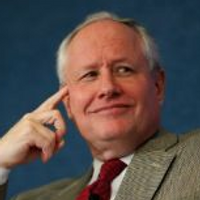
A Bulwark podcast segment where Tim Miller and Bill Kristol argue that Trump’s Venezuela intervention is reckless, legally muddy, and strategically incoherent. They concede Maduro is authoritarian and Venezuela’s election legitimacy is disputed, but say the U.S. response is turning a potentially manageable transition into a vanity-driven, oil- and bullying-based mess with broader risks for Latin America, NATO allies, and U.S. credibility.
Watch on YouTube ›Get the market thesis, key claims, assets, contradictions, and follow-up questions from any financial video — then unlock a version personalized to your portfolio, watchlist, and favorite speakers.
This episode is primarily a long-form political and foreign-policy critique of Trump’s move on Venezuela, with Tim Miller and Bill Kristol framing it as an intervention that may be morally defensible in opposing Maduro but is operationally and strategically foolish. Both speakers start by acknowledging that Maduro is bad and Venezuela has suffered greatly under Chávez/Maduro-era rule, including a refugee crisis and democratic erosion. But they argue that those facts do not justify the way Trump has handled the situation. Their central claim is that Trump’s rhetoric and apparent post-operation posture have turned a potentially hopeful or at least manageable situation into something much more dangerous, cruder, and harder to unwind. A major theme is that the administration appears to lack a real plan for Venezuela after any anti-Maduro action. …
Tactically, the setup looks unstable and headline-driven: Trump’s Venezuela posture may trigger fresh escalation fears, retaliatory action inside Venezuela, or follow-on rhetoric toward Mexico/Colombia/Greenland. The near-term trade is really about policy risk and credibility risk, not any clean economic upside.
Over the next few weeks and months, the likely path is some combination of Venezuelan instability, diplomatic backlash in Latin America, and a growing sense that the U.S. lacks a serious endgame. Confirmation would come from a real transition plan and allied coordination; absent that, the episode likely turns into a cautionary tale about overreach.
The structural implication is that Trump’s foreign-policy regime is becoming more improvisational, coercive, and conspiracy-inflected. That matters beyond one country because it can reshape how allies, adversaries, and domestic institutions assess U.S. reliability and restraint.
The Trump administration's action in Venezuela is politically driven, lacks a clear plan for helping Venezuelans, and does not clearly serve immediate U.S. interests.
The speaker argues the operation is motivated by Trump’s ego and Marco Rubio’s impulses rather than any coherent strategy, and says it does not solve Venezuela’s humanitarian crisis or advance U.S. interests.
Trump's handling of Venezuela would likely turn a potentially manageable situation into a bad outcome for the country and the region.
The speakers argue that his public framing and policy direction undermine a transition and could lead to instability, refugee outflows, and damage to U.S. foreign policy.
The Trump administration's approach to Venezuela is irresponsible and is doing nothing for U.S. interests.
The speaker argues that even if the intervention somehow succeeds, it lacks a serious plan, allies, or a clear theory of the case and therefore serves no U.S. interest.
Do we have reason to be reassured about U.S. intelligence and military capabilities?
Bill Crystal says the operation was impressive and somewhat reassuring. He frames it as evidence that worries about damage from political appointees like Pete Hegseth and Tulsi Gabbard have not yet fully materialized, though he still worries about the next three years.
Why would U.S. companies go drill in Venezuela instead of other places?
He argues it makes no sense because U.S. drilling is already booming and Venezuela has uncertain politics, rebel activity, and decaying equipment. He says the oil payoff is trivial and overstated, with only a tiny effect on global production.
How should Democrats respond to the Venezuela operation?
The guest says Democrats should either openly support the operation or plainly oppose it; the middle-ground, anonymous-background criticism is pointless. He argues the operation is already the wrong decision based on what is known now, so Democrats should just oppose it.
Unlock the full claims, asset map, scores, related transcripts, follow-up questions, and AI chat — shaped around your portfolio, watchlist, favorite speakers, and risks.