
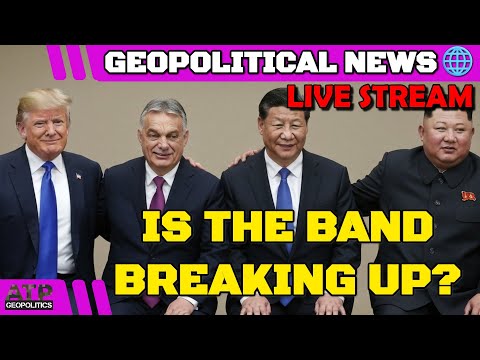
The speaker argues that Hungary’s election is a key blow to Orbán-aligned populism and may expose a wider web of funding and influence linking Hungarian state money, far-right media, Reform UK, CPAC, and parts of the US right. He also frames Trump’s coalition as weakening, while the UK and parts of the EU show signs of economic and institutional stabilization despite the continuing populist backlash.
Watch on YouTube ›Get the market thesis, key claims, assets, contradictions, and follow-up questions from any financial video — then unlock a version personalized to your portfolio, watchlist, and favorite speakers.
This livestream is framed as a global geopolitics update, but its core thesis is that a shift in Hungary could reverberate through a much larger transnational populist network. The speaker treats Peter Magyar’s election victory as a potential turning point: Magyar is presented as anti-corruption, pro-EU, more Western-facing, and capable of undoing some of the damage attributed to Viktor Orbán’s 16 years in power. A major theme is that Orbán’s defeat may weaken a broader ecosystem linking Hungarian state resources, far-right media, and aligned political movements in Europe and the US. The speaker spends a long stretch arguing that Hungarian public money has been funneled through opaque foundations and institutions to fund conservative and far-right influence operations. …
Near term, the trade is on whether Magyar can quickly consolidate power, secure EU money, and keep Orbán-aligned actors from obscuring records. In Trump-world, the immediate risk is reputational spillover from the Pope fight and visible fatigue in the MAGA coalition.
Over the next few months, the base case is a weakening Orbán-centered veto bloc if Hungary’s new leadership cooperates with Brussels and opens corruption/influence questions. The market-for-political-power read is that Reform-like and MAGA-adjacent networks face more scrutiny and possible donor/turnout erosion rather than an immediate collapse.
Structurally, the transcript argues that transnational populist politics is a money-and-media network rather than a purely domestic phenomenon. If that is right, Hungary’s regime shift matters because it may expose how far anti-EU influence has been institutionalized across the West and how dependent it is on cross-border funding structures.
Peter Magyar won a landslide election and secured the two-thirds majority needed to make constitutional changes in Hungary.
The speaker says Magyar achieved a huge landslide victory and explicitly notes the two-thirds majority required to reverse Orbán-era changes.
Organizations and individuals connected to Reform UK received substantial financial and institutional support from entities linked to Viktor Orbán's Hungarian government, especially through MCC.
The speaker says the article shows funding and support flowing from Orbán-linked institutions into Reform-adjacent networks in Britain.
A well-funded network linking Orbán-aligned Hungarian institutions, US conservative donors, and UK hard-right organizations has materially shaped the ecosystem around Reform UK through funding, conferences, and personal ties.
The speaker cites MCC-linked figures, NatCon events, and related organizations to argue that money and relationships connect these actors around Reform UK.
Why did the Trump team campaign for Viktor Orbán in Hungary?
Vance says they went because Orbán had been a good partner and because it was the right thing to do to stand behind him. He frames the support as about defending a leader who had stood by the United States and who opposed Brussels bureaucracy that he sees as harmful to American interests.
What does J.D. Vance's visit to Hungary say about his relationship with Orbán and Trump’s succession politics?
The speaker argues Trump does not especially like J.D. Vance and did not choose him for vice president. He suggests Trump sees no real succession plan, would rather endorse no one formally, and would view that as a sign of weakness.
How does Peter Magyar's appearance on state TV change the picture around Orbán's media control?
The speaker says Magyar had previously not been allowed on state TV and was only now able to appear after more than two years off the channel. He treats that as evidence of a state-controlled media environment that Vance had praised despite criticizing Europe for censorship.
Unlock the full claims, asset map, scores, related transcripts, follow-up questions, and AI chat — shaped around your portfolio, watchlist, favorite speakers, and risks.
