TranscriptAgent
Try it free
TRANSCRIPTAGENT.AI · transcript analysis

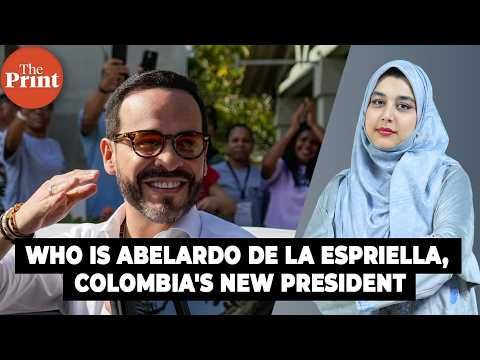
Who is Abelardo De La Espriella, Trump-backed lawyer who just won Colombia’s presidential race?

Channel: ThePrint Published: 2026-06-22 07:39
ThePrint

The video says Colombia has elected Abelardo de la Espriella in a narrow runoff victory over Iván Cepeda, marking a sharp rightward shift after four years of Gustavo Petro’s left-wing government. It frames de la Espriella as a nationalist, tough-on-crime outsider who built his profile as a celebrity criminal lawyer and entrepreneur, and says his agenda centers on harsher security policy, a smaller state, and pro-business energy expansion.

Watch on YouTube ›

Get the market thesis, key claims, assets, contradictions, and follow-up questions from any financial video — then unlock a version personalized to your portfolio, watchlist, and favorite speakers.

Detailed summary

The core thesis is straightforward: Abelardo de la Espriella’s win is presented as a major political pivot for Colombia and a signal of a broader conservative/nationalist turn in Latin America. The video says he defeated left-wing Senator Iván Cepeda in a close runoff, ending four years of Petro’s left-wing rule, and argues that the result reflects voter frustration with insecurity, weak growth, and the persistence of armed criminal groups. The explanation for why he won is mostly political and social rather than technical. The segment says Petro came in promising social reform, environmental protection, and “total peace” negotiations, but that concerns over economic growth and a deepening security crisis became dominant. …

🔒 The full detailed summary continues — read all of it free with an account. Read the full summary →

Main takeaways

  1. Colombia’s election is framed as a sharp rejection of Petro-era left-wing governance.
  2. De la Espriella is presented as a nationalist, outsider candidate built around security and order.
  3. The campaign’s core promise is tougher anti-crime policy, not institutional continuity.
  4. His economic platform leans toward smaller government, private investment, oil, and fracking.
  5. The win is portrayed as part of a broader Latin American conservative shift.
  6. The result is narrow and politically contested, so implementation will face resistance.

Market read by horizon

Short term

Near term, the setup is mostly about confirmation risk, protests, and whether the transition produces early legitimacy or governance friction. The market-relevant watchpoint is whether the new administration quickly signals a pro-business, pro-energy, and hard-security stance.

  • The immediate issue is whether the runoff result is formally confirmed after scrutiny and opposition complaints.
Show more
  • Protests and count disputes could create near-term volatility around legitimacy.
  • The incoming president faces a divided electorate and no outright congressional majority, which may slow early moves.
Mid term

Over the next few months, the base case is a market-friendly policy tilt if de la Espriella can work through Congress and keep support from fracturing. That view weakens if security measures stall or if the coalition’s lack of majority prevents any real fiscal, energy, or anti-crime change.

  • Over the next several weeks or months, the key question is whether de la Espriella can convert a hardline mandate into governing capacity.
Show more
  • His agenda will be tested by Congress, street pressure, and the practicality of a military-first anti-crime approach.
  • If he follows through on state cuts, oil exploration, and fracking, markets may read the administration as more business-friendly.
Long term

Structurally, the transcript points to a more durable Latin American regime shift toward nationalist, security-first leadership with friendlier attitudes toward private investment and resource development. The lasting question is whether that translates into durable state capacity or simply deeper polarization with different rhetoric.

  • The transcript frames the election as evidence of a durable regional swing toward conservative, security-first politics.
Show more
  • If sustained, the regime implication is a more market-friendly and resource-expansionist policy mix in Colombia.
  • The deeper structural risk is that harsher security policy without institutional gains could entrench polarization rather than stabilize the country.
Unlock the full horizon read See the full short-term, mid-term, and long-term implications with confirmation and invalidation signals. Unlock horizon read

Key claims (5)

NEUTRAL Latin America politics Colombia presidential election

Abelardo de la Espriella won Colombia's presidential runoff and defeated Iván Cepeda.

The speaker states that de la Espriella secured the largest vote share in the first round and narrowly defeated Cepeda in the runoff.

BEARISH Latin America politics Colombia government

De la Espriella's victory marks an end to four years of left-wing rule under Gustavo Petro.

The transcript explicitly links the runoff result to the end of Petro's left-wing administration.

BULLISH Latin America security Colombia security policy

De la Espriella plans a harder security policy that abandons negotiations with armed groups in favor of military action.

The speaker says he will replace dialogue with a harder military approach and target drug trafficking networks more decisively.

Unlock 2 more claims See the full bullish, bearish, and counter-consensus argument map extracted from the transcript. Unlock all claims

Assets discussed (2)

Truth Social
NEUTRAL other

Used as the platform where Trump commented on the election result.

X
NEUTRAL other

Platform where Marco Rubio congratulated the president-elect.

Speakers

INTERVIEWER Interviewer (ThePrint) GUEST Various speakers (ThePrint)

Where this transcript pushes against consensus

  • The transcript contains a likely naming error at the end, referring to 'Rodolfo Suárez' instead of Abelardo de la Espriella.
  • It asserts broad parallels with Bukele and a regional right-wing wave, but offers little quantitative evidence beyond commentary.
  • The security and economic promises are described clearly, but the feasibility of cutting the state by 40% is not examined.
  • The piece notes count disputes and protests, yet does not give detail on the substance of those objections.

Topics

Colombia electionAbelardo de la EspriellaGustavo PetroIván Cepedasecurity policydrug traffickingstate sizeoil explorationfrackingLatin America political shift

Create your free research agent

Unlock the full claims, asset map, scores, related transcripts, follow-up questions, and AI chat — shaped around your portfolio, watchlist, favorite speakers, and risks.

  • Full claims and asset map
  • Personalized relevance to your watchlist
  • Follow-up questions you can track
  • Related transcripts from your workspace
  • AI chat about this video
Create your free research agent
TRANSCRIPTAGENT.AI