TranscriptAgent
Try it free
TRANSCRIPTAGENT.AI · transcript analysis

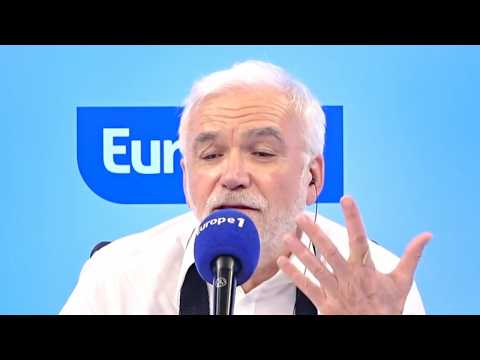
Canicule - "Vous allez voir c’est subtil" : Jean-Rémi Girard à P. Praud sur les mesures à l’école

Channel: Europe 1 Published: 2026-06-22 09:23
Europe 1

This is not a market video in the usual sense: it is a France radio segment about the heatwave and school closures, with guests discussing how schools are handling extreme temperatures. The practical focus is on who decides closures, how inconsistent the process is across municipalities, and the lack of a coherent national approach. The only market-adjacent angle is a brief mention of spending on air conditioning and climate control, but no real investing thesis is developed.

Watch on YouTube ›

Get the market thesis, key claims, assets, contradictions, and follow-up questions from any financial video — then unlock a version personalized to your portfolio, watchlist, and favorite speakers.

Detailed summary

The transcript is mainly a live radio discussion on the heatwave, not a market commentary. The opening concerns the tragic deaths of two children in a car in Carpentras during the canicule, which sets the emotional and public-policy frame for the rest of the segment. From there, the discussion shifts to school closures, how decisions are made, and whether the system is coherent when temperatures are extreme. The core practical point is that school responses are fragmented. Jean-Rémi Girard explains that for colleges and some lycées the prefect or head teacher can suspend classes, but the children may still be received in the building. …

🔒 The full detailed summary continues — read all of it free with an account. Read the full summary →

Main takeaways

  1. The transcript is primarily a school-heatwave policy discussion, not a market commentary.
  2. Jean-Rémi Girard says school decisions are decentralized and inconsistent across local authorities.
  3. The main operational issue is that schools cannot easily ventilate overnight like private homes.
  4. Air conditioning in schools is described as rare, with a few exceptions in newer buildings.
  5. A brief mention of financing school cooling appears, but no investment case is developed.
  6. The conversation includes tragic public-health context and a lot of informal banter, which lowers analytical density.

Market read by horizon

Short term

No immediate market setup is really present. The only actionable angle is a likely near-term increase in public discussion and spending pressure around school cooling during the current heatwave.

  • Immediate concern is operational: extreme heat is forcing some schools to suspend classes or close locally.
Show more
  • The next few days matter most because temperatures are still elevated and decisions are being made case by case.
  • Families without backup childcare or safe alternative housing are the most exposed right now.
Mid term

Over the next few weeks, the most likely path is continued ad hoc municipal responses unless authorities standardize procedures or fund retrofits. Any stronger policy response would need recurring heat extremes to make the case.

  • Over the next several weeks, the key question is whether heat events force a more standardized school-closure protocol.
Show more
  • A base-case reading is continued local improvisation unless the state issues clearer national guidance or funding.
  • Evidence that the system is changing would be more retrofits, better ventilation, or broader adoption of cooling solutions in schools.
Long term

The structural implication is that hotter summers turn school cooling and public-building adaptation into a durable capex theme. The transcript itself does not articulate an investable thesis, but it points to a longer-run need for climate-resilient infrastructure.

  • Structurally, the segment suggests climate adaptation is becoming a recurring public-infrastructure issue in France.
Show more
  • If heatwaves remain frequent, school design standards may need to shift toward cooling, insulation, and nighttime ventilation solutions.
  • The long-run implication is less about a single heatwave and more about the need to retrofit public buildings for a hotter baseline climate.
Unlock the full horizon read See the full short-term, mid-term, and long-term implications with confirmation and invalidation signals. Unlock horizon read

Key claims (4)

NEUTRAL education disruption due to heatwave

Beaucoup d'écoles sont fermées ou suspendent les cours à cause de la chaleur, mais les décisions restent prises de manière locale et désordonnée.

L'intervenant explique que les fermetures varient selon les préfets, les chefs d'établissement et les collectivités, ce qui produit une réponse fragmentée.

NEUTRAL weather / heatwave

Les températures doivent rester exceptionnellement élevées jusqu'au week-end avant de redescendre au début de la semaine suivante.

La météo est présentée comme durablement caniculaire pendant plusieurs jours, puis en baisse progressive.

NEUTRAL health impact of heatwave

La canicule actuelle provoque une hausse de 30 à 40 % des appels au SAMU.

L'intervenant relie explicitement la vague de chaleur à une augmentation mesurable des sollicitations d'urgence médicale.

Unlock 1 more claim See the full bullish, bearish, and counter-consensus argument map extracted from the transcript. Unlock all claims

Assets discussed (2)

climatisation des écoles
BULLISH other

Mentioned as a proposed spending item to deal with heat in schools, implying demand for cooling infrastructure.

climatiseurs
BULLISH other

Referenced as a recent purchase by Paris for a fresh room to receive children, suggesting near-term demand for cooling equipment.

Speakers

GUEST Jean-Rémi Girard INTERVIEWER Interviewer (Europe 1)

Interview (4 Q&A)

school closures

What is the situation in schools during the heatwave, and how many schools are closed today?

Jean-Rémi Girard says the closures are hard to count precisely because decisions change at the last minute and some schools simply tell families to keep children at home if possible. He says he is speaking from Asnières-sur-Seine and that primary schools and middle schools are still operating in many places, though arrangements are being made locally.

decision maker

Who decides whether a school closes or suspends classes during the heatwave?

He explains that for collèges and lycées the decision is made by the prefect or by the head of the establishment, who can suspend classes rather than formally close the school. He adds that students may still be welcomed on site even when classes are suspended.

air conditioning

Are there any schools in France that are air-conditioned?

He says air-conditioned schools do exist but are extremely rare. He gives an example of a newer school in Nice where air conditioning was installed, and says that newer or renovated schools now try to account for heat more often, with mixed success.

Unlock the full interview (1 more Q&A) Every question, answer summary, and YouTube timestamp. Unlock full Q&A

Where this transcript pushes against consensus

  • The guest says the system should be evaluated locally, but this conflicts with the need for coherent national coordination during extreme heat.
  • The idea that schools can simply manage by opening windows or using vigils is presented casually and may be impractical in real operations.
  • The discussion treats air conditioning as a potential fix without weighing energy, cost, or implementation tradeoffs.
  • Some claims are anecdotal and unsourced, especially around how often these incidents happen and who typically forgets children.

Topics

caniculeschool closureseducation administrationpublic healthmunicipal decision-makingschool coolingair conditioningfamily logisticsheat adaptationFrench local government

Create your free research agent

Unlock the full claims, asset map, scores, related transcripts, follow-up questions, and AI chat — shaped around your portfolio, watchlist, favorite speakers, and risks.
  • Full claims and asset map
  • Personalized relevance to your watchlist
  • Follow-up questions you can track
  • Related transcripts from your workspace
  • AI chat about this video
Create your free research agent
TRANSCRIPTAGENT.AI