TranscriptAgent
Try it free
TRANSCRIPTAGENT.AI · transcript analysis

US Had 'Very Good Day' Speaking With Iran, Vance Says

Channel: Bloomberg Television Published: 2026-06-22 10:52
Bloomberg Television

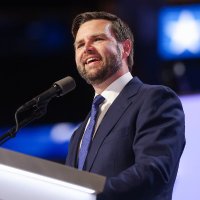
JD Vance says U.S.-Iran talks made "a very, very good day" of progress by keeping the Strait of Hormuz open, setting up deconfliction channels for regional clashes, agreeing to bring IAEA inspectors back into Iran, and establishing a technical negotiation process with political oversight.

Watch on YouTube ›

Get the market thesis, key claims, assets, contradictions, and follow-up questions from any financial video — then unlock a version personalized to your portfolio, watchlist, and favorite speakers.

Detailed summary

This is a short, heavily centered geopolitical clip in which the speaker—implicitly JD Vance, speaking in an official capacity—frames the prior day’s U.S.-Iran discussions as a practical success rather than a symbolic one. The core thesis is that the talks achieved four concrete objectives: preserving the flow of oil and gas through the Strait of Hormuz, creating a coordination mechanism to prevent regional escalation, securing agreement to let IAEA inspectors return to Iran, and setting up technical follow-on negotiations under political oversight. The most market-relevant part of the clip is the emphasis on the Strait of Hormuz and the associated energy flow. The speaker explicitly links the outcome to lower gas and oil prices and says “millions and millions of barrels of crude and natural gas” are flowing through the strait. …

🔒 The full detailed summary continues — read all of it free with an account. Read the full summary →

Main takeaways

  1. The speaker claims U.S.-Iran talks produced four concrete outcomes.
  2. He links the result to lower oil and gas prices via the Strait of Hormuz.
  3. He says Iran agreed to let IAEA inspectors back in.
  4. The clip presents de-escalation as ongoing, not finished.
  5. The main market relevance is reduced Middle East supply-risk premium.

Market read by horizon

Short term

Tactically, this reads as near-term relief for oil-sensitive assets if the Hormuz and inspector headlines hold; the immediate risk is that any regional incident or ambiguity on access reverses the calm quickly.

  • Immediate focus is whether the Hormuz / energy-flow calm holds and keeps crude volatility contained.
Show more
  • The biggest near-term catalyst is any confirmation that IAEA inspectors are actually allowed back in.
  • Watch for headlines on whether Hezbollah-Israel or other regional incidents disrupt the deconfliction setup.
Mid term

Over weeks to months, the setup only improves if the technical talks keep producing verifiable steps, especially inspector access and functioning deconfliction channels. If those stay vague, the market should treat the current easing in geopolitical risk as temporary.

  • Over the next several weeks, the base case in the clip is continued technical negotiations with political oversight.
Show more
  • The market will likely judge success by whether the coordination mechanism prevents isolated clashes from escalating.
  • Confirmation would come from visible inspector access and sustained diplomatic channeling among the U.S., Iran, Qatar, and Pakistan.
Long term

Structurally, the clip implies that Gulf energy-risk premia depend less on static geography and more on whether diplomacy can reliably manage chokepoints and verification. Durable downside in oil risk pricing would require that model to keep working through future regional flare-ups.

  • Structurally, the speech points to a regime where Hormuz risk is managed through active diplomacy rather than assumed open conflict.
Show more
  • If sustained, inspector access would matter more than the one-day headlines because it affects the durability of any nonproliferation outcome.
  • The lasting implication is that energy markets can reprice lower when geopolitical chokepoints are paired with credible deconfliction and verification.
Unlock the full horizon read See the full short-term, mid-term, and long-term implications with confirmation and invalidation signals. Unlock horizon read

Key claims (3)

BULLISH Geopolitics / Iran nuclear deal

Iran has agreed to invite IAEA inspectors back into the country, which is a major milestone and the first step toward permanently ending Iran's nuclear weapons program.

The speaker presents this agreement as a key diplomatic achievement and frames it as the beginning of permanent denuclearization.

BEARISH Energy security / Oil prices

Gas prices and oil prices have come down as a result of millions of barrels of crude and natural gas now flowing through the Strait of Hormuz that were not flowing before.

The speaker asserts a causal link between keeping the Strait of Hormuz open and declining energy prices.

BULLISH Geopolitics / Middle East peace

A deconfliction mechanism for the regional ceasefire has been set up so that if Hezbollah fires at Israel or if Israel responds, parties will coordinate to stop the shooting and make the region safer.

The speaker describes establishing a coordination mechanism to de-escalate future conflicts in the region.

Assets discussed (4)

Strait of Hormuz
BULLISH other

Keeping it open reduces immediate supply disruption risk for oil and gas flows.

oil
BEARISH commodity

The speaker says oil prices came down as supply risk eased.

Unlock the full asset map (2 more) See all assets mentioned, their directional bias, and the exact reasoning. Unlock asset map

Where this transcript pushes against consensus

  • The claim that this is the "first step in permanently" ending Iran’s nuclear weapons program is far ahead of the evidence shown here.
  • It is unclear whether "IAEA inspectors back" means full access, partial access, or only a promised invitation.
  • The speaker cites lower oil and gas prices, but no data or timeframe is provided to prove causality from the talks.
  • The deconfliction setup is presented as established, but the clip gives no specifics on enforcement or failure handling.

Topics

U.S.-Iran talksStrait of Hormuzoil and gas flowsIAEA inspectorsregional ceasefiredeconfliction mechanismsnuclear negotiationsMiddle East escalation risk

Create your free research agent

Unlock the full claims, asset map, scores, related transcripts, follow-up questions, and AI chat — shaped around your portfolio, watchlist, favorite speakers, and risks.
  • Full claims and asset map
  • Personalized relevance to your watchlist
  • Follow-up questions you can track
  • Related transcripts from your workspace
  • AI chat about this video
Create your free research agent
TRANSCRIPTAGENT.AI