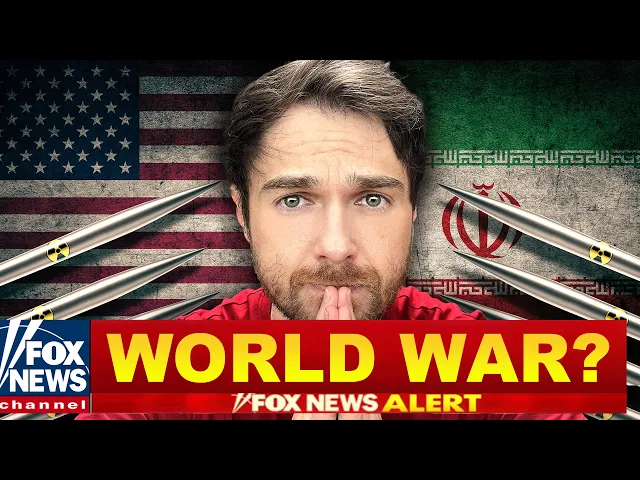
Andrei Jikh argues that the Iran war is not random but the product of overlapping interests: Israel, China-focused U.S. strategy, the military-industrial complex, and a broader tech/control-grid agenda. He ties the conflict to oil flows, dollar strength, AI-enabled warfare, and the push toward tokenized/programmable finance.
Watch on YouTube ›Get the market thesis, key claims, assets, contradictions, and follow-up questions from any financial video — then unlock a version personalized to your portfolio, watchlist, and favorite speakers.
The video is a geopolitics-and-markets monologue built around the claim that the U.S. strike on Iran fits a long-running strategic plan rather than an isolated event. Andrei Jikh opens by saying he previously warned Iran would be next after Venezuela, then frames the U.S. attack as logically connected to long-standing interests and planned outcomes. He first presents Israel as one possible driver. He cites Marco Rubio’s explanation that the U.S. acted preemptively because it knew an Israeli action would trigger retaliation against American forces. He also cites former CIA officer John Kiriakou, who allegedly said Israel gave the U.S. an ultimatum to bomb Iran’s nuclear facilities or Israel would use its own weapons. …
Near term, the actionable setup is energy and shipping volatility: any escalation around the Strait of Hormuz could keep crude, refined products, and defense-linked names bid while adding headline risk to risk assets.
Over the next few weeks or months, the key question is whether the conflict sustains a higher-energy, stronger-dollar backdrop or quickly de-escalates; confirmation would come from prolonged shipping disruption and continued retaliatory escalation.
Longer term, the video argues the real regime shift is toward programmable finance and digitally mediated power, where war, AI, and the payments stack increasingly reinforce each other rather than remaining separate domains.
The U.S. attack on Iran was preplanned and followed Iran agreeing to nuclear inspections.
He frames the sequence as inspections on February 27 and a bombing the next day, implying premeditation.
The official U.S. explanation for the war does not make sense because the nuclear threat had already been eliminated and intelligence saw no imminent danger.
He contrasts official justifications with prior destruction of the program and a Senate Intelligence Committee statement.
Israel forced or strongly influenced the U.S. attack through its own threat of action against Iran.
He cites Rubio and Kiriakou to argue Israel created the preemptive logic or issued an ultimatum.
Unlock the full claims, asset map, scores, related transcripts, follow-up questions, and AI chat — shaped around your portfolio, watchlist, favorite speakers, and risks.