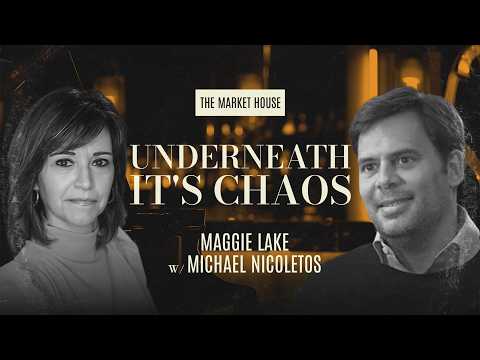
Grant Williams argues that luck and risk are often misunderstood: uncertainty is unavoidable, but it is also where opportunity lives. He uses a memorable anecdote about Joe Duran to argue that taking responsibility for both bad breaks and good outcomes is more useful than blaming luck or adopting a victim mindset. The conversation also starts to turn toward risk-taking, with Grant suggesting that risk appetite is often chosen and developed, not something people are simply born with.
Watch on YouTube ›Get the market thesis, key claims, assets, contradictions, and follow-up questions from any financial video — then unlock a version personalized to your portfolio, watchlist, and favorite speakers.
This episode is a reflective interview with Grant Williams centered on luck, responsibility, risk, and the mindset differences that shape long-term success. The core thesis is that uncertainty is a constant of life, but uncertainty is not the same as risk; instead of treating bad luck as fate or good luck as pure chance, people should examine their choices, take responsibility, and avoid becoming attached to victimhood. Grant frames that as emotionally difficult but ultimately freeing, because it lets people learn from setbacks without defining themselves by them. His main supporting example is the Joe Duran story. Grant says he saw a newspaper profile that mentioned Duran had “shitty parents,” which led him to seek out an interview. …
No actionable market setup is laid out in this excerpt; the near-term message is to focus on process, preparation, and responsibility rather than trying to explain outcomes through luck.
Over the next few months, the implied edge is psychological: people who can absorb setbacks without becoming victims are more likely to recognize and exploit opportunities when they appear. The market view itself remains unspecified in this excerpt.
The lasting thesis is that investment and trading success is a function of agency, resilience, and disciplined judgment more than a series of lucky breaks. The structural implication is a preference for process over narrative, even when outcomes look random.
Uncertainty and risk are different, and uncertainty creates opportunity.
Grant opens by separating uncertainty from risk and tying uncertainty to opportunity.
Good and bad luck both play a massive role in everyone's journey.
He explicitly says luck matters for everyone and can be recognized in the moment or in retrospect.
Taking responsibility for setbacks is more freeing than cursing bad luck.
Grant uses Joe Duran's story to argue that accepting responsibility allows learning and agency.
Can you share more about your favorite interview moments and the wisdom you've gathered from interviewing so many people?
Grant launches into the Joe Duran story and the Hugh Hendry story as examples of memorable interview moments that taught him about luck and taking responsibility.
What are your thoughts on the role of luck in people's careers and success?
Grant agrees luck plays a massive part, good and bad, in everybody's journey. He shares the story of Joe Duran, who after being mugged on his first night in London made a conscious decision to accept responsibility for everything that happened to him — not cursing bad luck but taking ownership. This freed him to take responsibility for good outcomes too. Grant says he's tried to adopt this approach, finding it freeing, and notes that every decision you've made put you in that place at that time.
What was your experience asking Hugh Hendry how he dealt with his success?
Grant recounts asking Hugh Hendry how he dealt with his success. No one had ever asked him that — they all wanted to know about failure and closing Eclectica. The question got Hugh talking about things he hadn't considered, processing it in real time. Grant notes that Hugh grew up on a council estate in Glasgow and people might call him lucky, but Hugh is a towering intellect who made decisions and worked to get himself out of there. Having both success and failure freed him up.
Unlock the full claims, asset map, scores, related transcripts, follow-up questions, and AI chat — shaped around your portfolio, watchlist, favorite speakers, and risks.