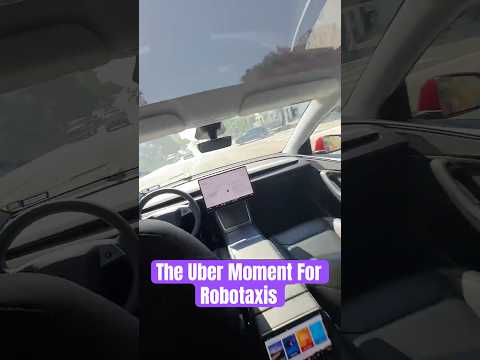
Kathy Wood argues that robotaxis need regulation to scale into an “Uber moment,” and that adoption will accelerate once autonomous cars are widely approved because they are already safer than human drivers and will keep improving. She frames the big payoff as freeing parents and other informal chauffeurs from the time cost of driving kids to school, playdates, and activities.
Watch on YouTube ›Get the market thesis, key claims, assets, contradictions, and follow-up questions from any financial video — then unlock a version personalized to your portfolio, watchlist, and favorite speakers.
This short clip is a focused thesis on robotaxis rather than a broad market update. The core argument is that the sector is not yet at its breakout moment because regulation is still the main bottleneck, but that the transition should happen because autonomous vehicles are, in her view, already safer than human-driven cars and will become substantially safer over time. She describes the current state in Austin as real but still limited: “there's a lot of these, but they're not everywhere,” implying the technology is visible in the market but not yet ubiquitous. Her bullish case rests on a simple adoption framework: once regulation allows autonomous cars “everywhere,” usage could expand quickly as safety concerns fade. …
Near term, robotaxi upside is mostly a policy-and-perception trade: the technology may be visible, but broad uptake depends on regulators widening access and consumers feeling safe enough to use it.
Over the next few months, the likely path is gradual expansion from showcase markets to broader service if approvals continue and reliability improves. If regulation stalls or trust lags, the “Uber moment” gets pushed out rather than invalidated.
Structurally, the clip argues for a shift toward autonomous mobility as a mainstream service category. If that regime change happens, the durable impact is less about novelty and more about reducing the time and labor cost of everyday transportation.
Regulation will allow autonomous vehicles everywhere because robotaxis are safer than human-driven cars.
Speaker argues that the safety superiority of autonomous vehicles will drive regulatory approval everywhere.
Many parents who are unpaid chauffeurs for their children will be grateful for the release of time that robotaxis provide, driving consumer adoption.
Speaker argues that the time-saving benefit of robotaxis for parents will drive demand and adoption.
Autonomous vehicle safety will improve to 2x, 10x, and eventually 100x safer than human drivers.
Speaker asserts a trajectory of exponentially improving safety ratios for AVs vs human drivers.
What would it take for the Uber moment to happen with robo taxis — when they really explode and are everywhere?
Kathy says the main constraint is regulation, but she believes it will happen because these cars are safer than human-driven cars and will get 2x, 10x, 100x safer over time. Parents will be comfortable sending kids to school in them, and many people who currently serve as unpaid chauffeurs will be grateful for the time savings.
Unlock the full claims, asset map, scores, related transcripts, follow-up questions, and AI chat — shaped around your portfolio, watchlist, favorite speakers, and risks.