
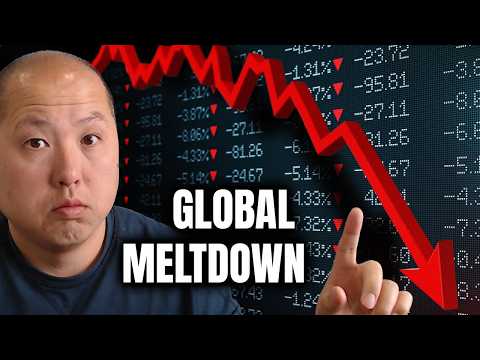
George says the market is in a broad risk-off flush led by Asian equities, with Bitcoin down about 5% to the low-$62k area and alts getting hit harder. He frames it as a leverage/liquidation-driven correction rather than a fundamental breakdown, and says the bigger crypto thesis is still intact despite near-term pain.
Watch on YouTube ›Get the market thesis, key claims, assets, contradictions, and follow-up questions from any financial video — then unlock a version personalized to your portfolio, watchlist, and favorite speakers.
George opens by saying the stream is starting in the opposite direction from yesterday: “everything is looking quite red.” His core thesis is that the current move is a global correction, not a structural collapse, and that crypto is being dragged lower by a sharp selloff in Asia that then spread into U.S. markets and risk assets more broadly. He repeatedly emphasizes that this is what happens when markets get “too hot” and that panic selling, FUD, and leverage are amplifying the move. On crypto specifically, he says Bitcoin is down about 5% back to roughly $62,000 after being near $65,600 the prior day. He links the move to Asian market weakness, especially Japan and South Korea, where he says some major names fell around 12% and the broader market dropped about 10%. He also notes that altcoins are under more pressure than Bitcoin, citing ETH down 7%, SOL down 8%, and XRP down 5%. …
Immediate setup is bearish-to-volatile: Bitcoin is being dragged by a global risk-off flush, heavy long liquidations, and options-expiry noise. If Asian weakness and forced selling persist into the week, downside can extend before buyers step in.
Over the next several weeks, he expects this to look like a leverage cleanup rather than a trend break, with stabilization depending on ETF flow improvement, liquidity normalization, and a calmer macro tape. A sustained hold above the recent support zone would support his correction view; failure there would weaken it.
His structural view remains pro-Bitcoin and anti-fiat: the current monetary system is, in his framing, unsustainable, while Bitcoin’s neutrality makes it the most plausible long-run alternative if the dollar’s reserve status erodes. That thesis matters even if this week’s volatility continues.
The current global selloff is a normal correction in overheated markets, not a bubble burst or permanent meltdown.
Speaker argues Asian markets and AI tech were overheated and a correction was bound to happen for a few days or a week, but the fundamentals haven't changed.
The current sell-off in tech and crypto is just a correction caused by an overreaction to Asian market developments, not the start of an extended downturn.
Speaker attributes the drop to profit-taking following Asia events and frames it as a normal correction, not a structural breakdown.
The US dollar will eventually fall off as the global reserve currency and Bitcoin is the most logical replacement because it is neutral, non-sovereign, and not controlled by any single country or central bank.
The speaker argues that no other fiat currency (Chinese yuan, euro) could be agreed upon due to geopolitical rivalries, so a non-sovereign asset like Bitcoin is the only viable alternative.
Will Clash ever be able to have Robinhood and Coinbase API integrated?
The host asks for clarification on which direction the integration would go — whether the user wants Clash to have Robinhood/Coinbase API access, or wants to trade on Robinhood/Coinbase using Clash. He asks the user for clarification rather than giving a direct answer.
Why buy now when the four-year cycle is intact and rate hikes are incoming for one to two years?
The host says rate hikes for one to two years are not happening — with Walsh and Trump pressuring the Fed to cut, and argues the four-year cycle thesis is outdated. He says the way Bitcoin moves has been discovered to follow the business cycle and liquidity, not the four-year cycle, and notes that people are making money in AI and tech right now, so the situation isn't as bad as it looks.
How do you think the US government could fix the declining dollar?
The host says he doesn't know if they're trying to fix it, and that fixing it is tough. Confidence in the dollar has been shattered by tariffs, trade war threats, and geopolitical moves causing allies to sell bonds. However, he notes a lower dollar isn't always bad — it can invite foreign investment. He also discusses the impossibility of returning to a gold standard due to excessive money printing since 2020, and suggests Bitcoin could eventually become a neutral global reserve currency if the USD falls.
Unlock the full claims, asset map, scores, related transcripts, follow-up questions, and AI chat — shaped around your portfolio, watchlist, favorite speakers, and risks.
