TranscriptAgent
Try it free
TRANSCRIPTAGENT.AI · transcript analysis

Maintaining conviction through disruption

Channel: J.P. Morgan Asset Management Published: 2026-06-23 13:54
J.P. Morgan Asset Management

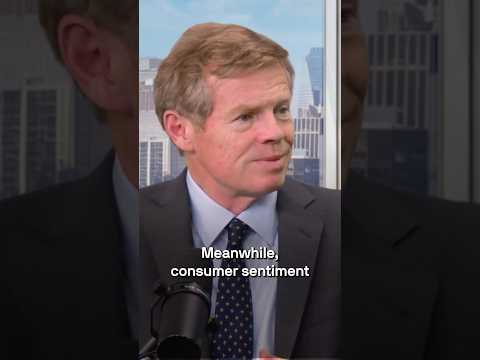
The speaker says J.P. Morgan Asset Management uses a five-year expected return valuation framework that has been in use for close to four decades. The point of the clip is that this time-tested process helps them both identify opportunities and maintain sell discipline.

Watch on YouTube ›

Get the market thesis, key claims, assets, contradictions, and follow-up questions from any financial video — then unlock a version personalized to your portfolio, watchlist, and favorite speakers.

Detailed summary

This is a very short, process-focused clip rather than a market call. The speaker’s core message is that J.P. Morgan Asset Management relies on a five-year expected return valuation framework, and that the framework has been used for nearly four decades. The emphasis is on discipline: the process is presented as a way to find opportunities without becoming purely momentum-driven, while also giving the team a rule-based basis for selling. There is no discussion here of a specific asset, sector, macro backdrop, or current market setup. The only concrete evidence offered for the framework’s credibility is longevity — “close to four decades” — and the speaker frames that longevity as proof that the approach is “time-tested.” Because the transcript is only about this investment process, there are no real caveats, counterarguments, or scenario branches stated. …

🔒 The full detailed summary continues — read all of it free with an account. Read the full summary →

Main takeaways

  1. A five-year expected return framework is the central tool described.
  2. The framework has reportedly been used for close to four decades.
  3. Its purpose is both opportunity identification and sell discipline.
  4. The clip is process-oriented, not a live market opinion.

Market read by horizon

Short term

No actionable near-term market view is expressed; the clip only says the firm uses a valuation framework to guide decisions.

  • No immediate trade setup or catalyst is discussed.
Show more
  • No asset, sector, or market level is mentioned.
  • The only actionable signal is that the firm applies a valuation discipline to decisions.
Mid term

The implied medium-term stance is process-first investing anchored to five-year expected returns, but no concrete market path is provided.

  • Over the next several weeks or months, the relevant point is that the team appears to base positioning on longer-horizon expected returns rather than short-term moves.
Show more
  • If this framework is genuinely the operating process, sell decisions should be tied to valuation discipline rather than narrative momentum.
  • No specific medium-term market view can be inferred from the clip alone.
Long term

Structurally, the clip reflects a long-horizon, discipline-based asset-allocation culture that prioritizes valuation and sell discipline over short-term noise.

  • The structural implication is that J.P. Morgan Asset Management presents itself as a process-driven allocator using durable valuation discipline.
Show more
  • The clip suggests a long-standing investment regime built around expected return estimation and sell discipline.
  • That framing matters more for understanding the firm's philosophy than for predicting any single market outcome.

Key claims (3)

NEUTRAL valuation discipline J.P. Morgan Asset Management

The firm uses a five-year expected return valuation framework.

Direct statement of the investment process.

NEUTRAL investment process J.P. Morgan Asset Management

The framework has been used for close to four decades.

Claims longevity and institutional continuity.

NEUTRAL portfolio discipline J.P. Morgan Asset Management

The framework helps the firm find opportunities and maintain sell discipline.

States the practical benefit of the process.

Speakers

SPEAKER Unknown speaker

Where this transcript pushes against consensus

  • The clip asserts the framework is 'time-tested' based mainly on longevity, but does not provide performance evidence or failure cases.
  • No specifics are given on how the five-year expected return framework works, so its practical edge cannot be evaluated from this transcript alone.

Topics

valuation frameworkexpected returnsinvestment disciplinesell discipline

Create your free research agent

Unlock the full claims, asset map, scores, related transcripts, follow-up questions, and AI chat — shaped around your portfolio, watchlist, favorite speakers, and risks.
  • Full claims and asset map
  • Personalized relevance to your watchlist
  • Follow-up questions you can track
  • Related transcripts from your workspace
  • AI chat about this video
Create your free research agent
TRANSCRIPTAGENT.AI