TranscriptAgent
Try it free
TRANSCRIPTAGENT.AI · transcript analysis

The Historic Shift in How America Deals With the Rest of the World

Channel: The Wolf Of All Streets Published: 2026-06-23 13:05
The Wolf Of All Streets

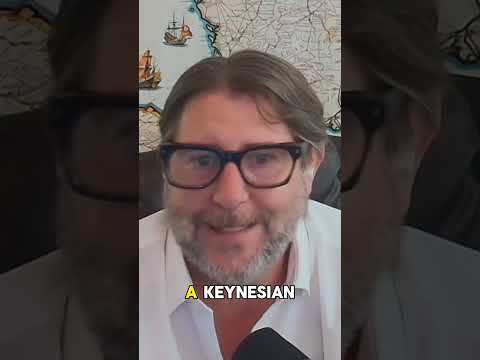
The speaker argues the U.S. has shifted from a post–World War II, rules-based multilateral system to a much more overt America-first approach under Trump. In that framework, the Fed and Treasury may increasingly prioritize U.S. interests even when that disadvantages the rest of the world.

Watch on YouTube ›

Get the market thesis, key claims, assets, contradictions, and follow-up questions from any financial video — then unlock a version personalized to your portfolio, watchlist, and favorite speakers.

Detailed summary

The speaker’s core thesis is that America’s foreign-economic posture has undergone a historic shift. He contrasts the post–World War II order — Bretton Woods, the IMF, World Bank, UN, WTO, and multilateral negotiation — with what he describes as a newer “America first” system under Trump. In his framing, the earlier model was still centered on a broader “greater good” logic, even if it ultimately benefited the West and the U.S. most. He argues that the practical implication is a change in how U.S. institutions behave. In particular, he says the Fed no longer has to act for the greater good and can instead coordinate with the Treasury on policies that benefit the United States even if they hurt the rest of the world. He extends that point to crisis management, suggesting the U.S. …

🔒 The full detailed summary continues — read all of it free with an account. Read the full summary →

Main takeaways

  1. The U.S. is framed as moving away from multilateral, rules-based global coordination.
  2. Trump is presented as the key driver of an America-first policy regime.
  3. The Fed/Treasury relationship may increasingly favor U.S. outcomes over global stability.
  4. The speaker implies less willingness to support the rest of the world in future crises.
  5. The argument is conditional, not absolute: it depends on Trump remaining influential.

Market read by horizon

Short term

Immediate focus is on the policy tone: if the U.S. keeps emphasizing domestic priority, expect less confidence in automatic global backstops. That matters most during any near-term stress event where markets would normally assume U.S. stabilization.

  • Near term, the key issue is whether U.S. policy language continues to sound explicitly America-first.
Show more
  • Any signs of tighter coordination between the Fed and Treasury would reinforce the speaker’s view.
  • The immediate risk to the rest of the world is reduced expectation of quick U.S. rescue in stress periods.
Mid term

Over the next few months, watch for whether Fed/Treasury actions consistently align around domestic advantage rather than multilateral support. The thesis strengthens if foreign partners and markets begin treating U.S. rescue behavior as less reliable.

  • Over the next several weeks or months, the thesis would be confirmed if U.S. institutions repeatedly prioritize domestic benefit over multilateral coordination.
Show more
  • If foreign governments or markets begin pricing less reliable U.S. backstops, that would validate the speaker’s framing.
  • The view weakens if U.S. policy reverts toward broad-based international stabilization or explicit multilateral cooperation.
Long term

The structural view is that the postwar rules-based global order may be giving way to a more transactional U.S. regime. If that persists, the long-run assumption of the Fed as a global stabilizer becomes weaker.

  • The structural implication is a break from the postwar multilateral order toward a more openly national-interest-driven U.S. regime.
Show more
  • If durable, that would alter expectations for the Fed’s global role and for U.S. leadership in crises.
  • The longer-run thesis is less about one administration and more about whether America’s institutions permanently normalize selective international support.
Unlock the full horizon read See the full short-term, mid-term, and long-term implications with confirmation and invalidation signals. Unlock horizon read

Key claims (2)

BEARISH US geopolitical shift / America First policy

The Trump administration has abandoned the post-WWII rules-based multilateral order in favor of an 'America First' approach where US policy decisions are made solely based on US benefit, not global good.

The speaker contrasts the post-war Keynesian/multilateral system (Bretton Woods, IMF, WTO, UN) with Trump's approach of prioritizing US interests exclusively.

BEARISH Fed policy shift under America First

Under the America First paradigm, the Federal Reserve will no longer feel obligated to use monetary policy to rescue the rest of the world and can prioritize US interests even at the expense of other countries.

The speaker argues that because the US has abandoned the 'greater good' framework, the Fed will shift from global crisis response to policies that benefit the US alone.

Where this transcript pushes against consensus

  • The argument is asserted without examples or evidence of specific policy changes.
  • It treats the postwar system as broadly cooperative while downplaying how much it already served U.S. interests.
  • The claim that the Fed can simply stop acting for the greater good is stylized and may overstate institutional discretion.
  • The transcript does not explain which mechanisms would transmit this shift into markets or growth.

Topics

U.S. foreign policyBretton Woodsrules-based orderAmerica FirstFed and Treasurymultilateral institutionsglobal crisis support

Create your free research agent

Unlock the full claims, asset map, scores, related transcripts, follow-up questions, and AI chat — shaped around your portfolio, watchlist, favorite speakers, and risks.

  • Full claims and asset map
  • Personalized relevance to your watchlist
  • Follow-up questions you can track
  • Related transcripts from your workspace
  • AI chat about this video
Create your free research agent
TRANSCRIPTAGENT.AI