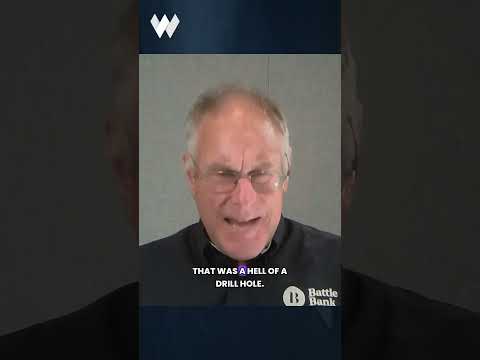
Don Durrett argues that the Fed is really focused on market stability and liquidity, not its stated 2% inflation/full-employment mandate, and that this hidden priority is why the bond market matters most. His core thesis is that gold and silver are being held back until the broader “uncertainty trade” arrives—when stocks and bonds are actually perceived as at risk—and that the real trigger for a major gold move is weakness in U.S. bonds and eventually a falling S&P relative to gold.
Watch on YouTube ›Get the market thesis, key claims, assets, contradictions, and follow-up questions from any financial video — then unlock a version personalized to your portfolio, watchlist, and favorite speakers.
Don Durrett’s central argument is that the Federal Reserve’s real job is not the public one it advertises. He says the dual mandate of stable prices and full employment is “baloney,” and that in practice the Fed is trying to preserve stability—specifically to keep both the stock market and bond market from crashing. In his framing, Fed communication is intentionally opaque because officials cannot openly say they are managing market stability without creating panic. He ties that view directly to his own positioning: “The only reason I own gold and silver is because of the weakness in the US bond market.” He then shifts to gold’s role in a crisis. Durrett pushes back on the idea that gold is a near-term hedge against inflation or geopolitical tension, saying it often goes down during crises and is not a reliable short-term shock absorber. …
Tactically, the setup is constructive for gold only if bond weakness persists and the S&P starts to crack; without that, he thinks near-term gold upside can stay choppy. The immediate watchpoints are 7,000 on the S&P and whether fear broadens beyond a bond-market concern.
Over the next few months, he expects gold to gain traction only as stocks lose momentum and the gold/S&P ratio improves toward parity. If equities stay buoyant, his thesis remains early; if the S&P breaks into the 6,200–6,000 zone, he thinks the precious-metals bid could accelerate.
His structural view is that debt-dependent stability management cannot last forever, and hard assets eventually benefit when stock-and-bond wealth is no longer trusted. The lasting implication is a regime shift where gold can overtake equities as the preferred reserve asset in stress.
The Fed's actual objective in their meetings is financial stability — preventing stock and bond market crashes — not their stated dual mandate of stable prices and full employment.
The speaker asserts that behind closed doors, Fed discussions center on market stability/manipulation to avoid a crash, not on inflation or employment targets.
The most important chart for gold and silver investors is the ratio of gold to the S&P 500, which needs to rise above 1.0 for gold to truly outperform.
Speaker explains that historically gold outperformed stocks in crisis decades, and the current low ratio (0.6) means the 'uncertainty trade' hasn't arrived yet.
Gold is not a short-term hedge against inflation or geopolitical risk; it is a hedge only when the broad stock and bond market system collapses.
Speaker explains gold's typical short-term behavior of declining during crises and argues its real value emerges when massive stock/bond wealth is at risk.
What do you mean by 'stability' being the Fed's real focus instead of their stated dual mandate?
Stability means ensuring the stock market and bond market don't crash, not price stability or full employment. The Fed is manipulating markets to prevent everything from burning down, which is unsustainable. Eventually the 'last Jenga peg' will come out.
Is Jim Cramer bearish on stocks, and what's the real reason?
Yes, Cramer is bearish on stocks. He gave four surface reasons on his show but the real reason is that we've been living off debt and that model isn't working anymore. The lack of transparency means you don't learn the truth from TV.
You look at gold as a geopolitical hedge over a longer time frame rather than weeks — is that correct?
Yes. Gold is not a near-term hedge against inflation or geopolitical risk. In a crisis gold goes down initially. Gold is a hedge when the entire system — the $250 trillion in stocks and bonds — becomes at risk and people run for safety. The current gold bull market is unusual because the stock market keeps hitting all-time highs, suppressing the uncertainty trade.
Unlock the full claims, asset map, scores, related transcripts, follow-up questions, and AI chat — shaped around your portfolio, watchlist, favorite speakers, and risks.