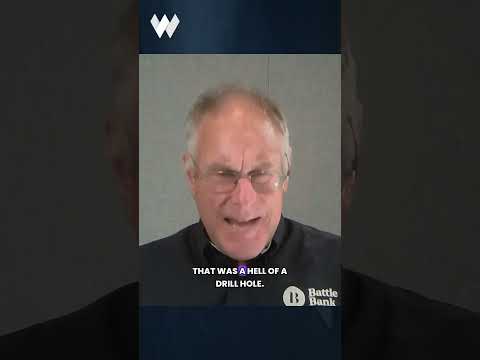
The speaker’s thesis is simple: he owns gold and silver only because he sees weakness in the U.S. bond market. He argues that if the bond market fails, gold becomes the winner because U.S. bonds are the “heartbeat” of the economy in a debt-dependent system.
Watch on YouTube ›Get the market thesis, key claims, assets, contradictions, and follow-up questions from any financial video — then unlock a version personalized to your portfolio, watchlist, and favorite speakers.
This is a very short, single-idea transcript, so the read is necessarily narrow. The speaker says he owns gold and silver for one reason only: weakness in the U.S. bond market. His core argument is that the bond market is foundational to the U.S. economy, and if it breaks down, gold would be the beneficiary. He frames bonds as the “heartbeat of the U.S. economy” because, in his words, “we live off of debt.” There is no broader setup, timing framework, or price target here—just a blunt macro thesis. The support is conceptual rather than data-driven: bond-market fragility is treated as the key risk, and gold/silver are presented as the hedge or alternative store of value. …
Tactically, the only actionable read is that bond-market weakness is the immediate risk being hedged with gold and silver. There are no levels or catalysts, so the setup is purely defensive and conditional.
Over the next few weeks or months, the trade depends on whether bond-market stress persists enough to keep precious metals in favor. If bond conditions stabilize, the rationale loses urgency; if they deteriorate, the gold case strengthens.
Structurally, the speaker is arguing that debt dependence makes sovereign-bond fragility a recurring regime risk. In that world, gold remains the preferred store of value when confidence in the bond system erodes.
The US bond market failing would cause gold to be the winning asset because US bonds are the heartbeat of the US economy.
Unlock the full claims, asset map, scores, related transcripts, follow-up questions, and AI chat — shaped around your portfolio, watchlist, favorite speakers, and risks.