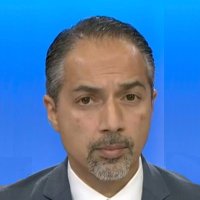
Trita Parsi argues that Israel is being forced into tighter limits in Lebanon and Gaza by the United States, even if Israeli leaders resist loudly. He says the practical outcome is likely a phased Israeli withdrawal from Lebanon, a more constrained Israeli operating environment, and continued friction as both sides test the new rules. He also argues the Iran war has accelerated a broader regional shift: Arab states are moving toward a new security architecture less dependent on the U.S., which could eventually improve the odds of progress on the Palestinian issue.
Watch on YouTube ›Get the market thesis, key claims, assets, contradictions, and follow-up questions from any financial video — then unlock a version personalized to your portfolio, watchlist, and favorite speakers.
This is an interview centered on Lebanon, Gaza, Iran, and the changing regional security order. The core thesis from Trita Parsi is that Israel’s margin of maneuver is shrinking because the U.S. is no longer granting it the same unrestricted operational freedom, especially in Lebanon, and that this is likely to lead to an eventual Israeli exit from Lebanon in a phased way. He frames the Israeli political backlash as real but largely tactical: Israeli leaders may “do so kicking and screaming,” but he thinks Washington is signaling that the era of unlimited Israeli action is over and that behind-the-scenes pressure is already happening. Parsi repeatedly points to recent reporting as evidence. …
Near term, the actionable setup is a tense but potentially de-escalatory Lebanon track: if U.S. pressure holds, Israeli maneuverability looks narrower, but any skirmish could still unwind the arrangement quickly. The immediate risk is that political rhetoric in Israel outpaces what the military actually does.
Over the next few months, the base case is a phased attempt to lock in a Lebanon ceasefire and a more constrained Israeli posture, while the U.S. and Arab states test a broader regional security arrangement. The view breaks if Israel successfully widens its latitude in Gaza or if Washington retreats from enforcing limits.
Structurally, the interview argues the region is moving toward a less U.S.-dependent security order, with Arab states and Iran both trying to shape a post-unipolar framework. If that persists, Israel’s freedom of action and the United States’ ability to bypass the Palestine question both diminish over time.
There will be no real peace in the Middle East until the Palestinian issue is resolved.
The speaker argues October 7th was a reminder that the Palestinian issue cannot be bypassed, and that the Abraham Accords attempted to do exactly that.
The Trump administration's era of unlimited Israeli operational freedom in Lebanon and other fronts is over, and new limitations have been imposed.
Speaker cites a Channel 13 report that Trump officials communicated to Israel that its previous unrestricted operational freedom is over, backed by new IDF directives limiting operations.
Israel will ultimately withdraw from Lebanon because it's a stark red line for Iran and the US, and there will be no US-Iran deal otherwise.
Speaker reasons that the US has made Israel's withdrawal from Lebanon a precondition for a US-Iran deal, and Israel will comply 'kicking and screaming' but ultimately exit.
What do you make of the developments in Lebanon and the rhetoric coming from Israel — including from the defense minister, the opposition leader, and Ben Gvir?
The guest says Israel will not happily agree to U.S. demands but will eventually withdraw from Lebanon, as this is a red line for Iran and the U.S. He notes JD Vance is framing a regional ceasefire as an American desire, not an Iranian demand, and that Channel 13 reported Trump officials have told Israelis their era of unlimited maneuverability is over. Behind-the-scenes pressure is likely happening, and while the U.S. doesn't want a break with Israel, they are signaling real pressure if needed. The opposition in Israel (Bennett) is using this to attack Netanyahu, but once in power Bennett would likely talk differently.
What does 'kicking and screaming' look like from Israel — given their influence in the U.S., the donors Trump listens to, and the fact they managed to go to war with Iran?
The guest explains that part of what Israel will do is try to leverage donors and create skirmishes in Lebanon where it's unclear who started it. The new directives prevent Israel from shooting first but allow self-defense, removing the prior impunity where a single soldier could open fire. This restores ceasefire discipline. The Israelis will exit Lebanon in a phased way, and crucially, the U.S. is now accepting Iran's influence in southern Lebanon — which was what Israel was fighting to erase — causing a panic in Israel.
Have you looked into Israel's claims that journalists they've killed in Gaza were members of Hamas — is there any truth to that when it applies to some journalists, and has the Quincy Institute done a deep dive into this?
The guest says he's not aware of that specific story, but states that in many cases where Israel has killed journalists and made that accusation, the accusation has been false. He says the Israelis have a 'very loose definition' — calling everyone Hamas or Hezbollah — which is not compatible with how international law sees the situation. He notes that working for a TV station does not automatically make someone a fighter, and that being a fighter in the past then becoming a journalist doesn't mean they're no longer a journalist.
Unlock the full claims, asset map, scores, related transcripts, follow-up questions, and AI chat — shaped around your portfolio, watchlist, favorite speakers, and risks.