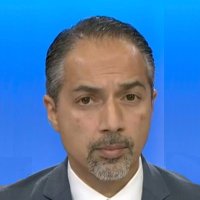
Trita Parsi argues that the latest Iran-US dynamics amount to a de facto acceptance of Iranian influence in southern Lebanon, which he says is a major reversal from Israel’s prior goal of eliminating that influence. He also says Israel’s reaction reflects real panic, and he links the broader regional conflict to the unresolved Palestine issue, arguing there can be no durable peace while Palestinians remain sidelined.
Watch on YouTube ›Get the market thesis, key claims, assets, contradictions, and follow-up questions from any financial video — then unlock a version personalized to your portfolio, watchlist, and favorite speakers.
This interview centers on two connected claims: first, that Iran’s position in Lebanon has effectively been accepted by both Tehran and Washington; second, that the regional war can’t be understood apart from the Palestine question. Parsi says the old Israeli objective was to erase any Iranian influence in southern Lebanon, but that this has now been “reversed,” and he frames the result as a justified “full-on panic and meltdown” in Israel. He does not treat this as a minor tactical adjustment; he presents it as a broader diplomatic and strategic shift. A substantial part of the discussion is about Israel’s treatment of journalists in Gaza and Lebanon. Mario Nawfal presses Parsi on whether Israel’s claims that some journalists were actually Hamas or Hezbollah members have merit. …
Tactically, the market-relevant read is a higher Middle East risk premium if the Lebanon settlement is unstable or if Gaza rhetoric escalates again; the immediate setup is headline-driven. The near-term danger is that public claims and counterclaims keep amplifying volatility rather than clarifying the situation.
Over the coming weeks and months, the more important question is whether the Lebanon outcome becomes a durable bargaining point or just another temporary ceasefire dynamic. If the Palestine issue remains outside the settlement framework, the region likely stays prone to recurring escalation and recurring risk repricing.
Structurally, the transcript argues that the region cannot settle into a stable order while the Palestinian question is bypassed. If that framing holds, the long-run implication is persistent geopolitical risk, with Iran, Israel, Lebanon, and Gaza remaining linked in a single unresolved security regime.
There will be no real peace in the Middle East until the Palestinian issue is resolved.
The speaker agrees with a statement by foreign ministers of Qatar, Egypt, and Pakistan, citing October 7th as evidence that sidelining Palestinians leads to backlash.
There is now an acceptance of Iran's influence in southern Lebanon, reversing Israel's previous goal of erasing any trace of Iranian influence there.
The speaker asserts that Israeli policy on Iranian influence in Lebanon has been reversed by both Iran and the US.
Israel deliberately made Gaza uninhabitable through massive destruction as an explicit objective.
The speaker argues it's difficult to conclude otherwise given Israeli officials simultaneously saying they would reconquer Gaza and make it a beach resort.
Have you looked into Israel's claims that journalists they've killed in Gaza are members of Hamas or Hezbollah, and has the Quincy Institute ever done a deep dive into this?
The guest says they are not aware of that specific story, but notes that in many cases where Israel has made such accusations against journalists they killed, those accusations have been proven false. He says Hezbollah has its own TV station (Al-Manar), and Israel has openly said they kill people because they're part of that network, but working for a TV station does not automatically make someone a fighter under international law. He says if the person was actively shooting with a gun when killed that's different, but just being something at some point and then becoming a journalist doesn't prove anything.
Now that Iran has won this war, do you think that could have an impact on Gaza as it's having on Lebanon? And do you agree that there won't be peace in the region unless the Palestine issue is resolved?
The guest says absolutely — there will be no real peace in the region until there is a resolution to that issue. He explains that October 7th was a reminder of this, noting that Biden believed Hamas acted at least partially to sabotage the expansion of the Abraham Accords, which Kushner designed to bypass the Palestinian issue and take away the last leverage Arab states had for Palestinian statehood. He agrees that Hamas's calculation was to prevent a US trend of skipping the two-state solution.
Unlock the full claims, asset map, scores, related transcripts, follow-up questions, and AI chat — shaped around your portfolio, watchlist, favorite speakers, and risks.