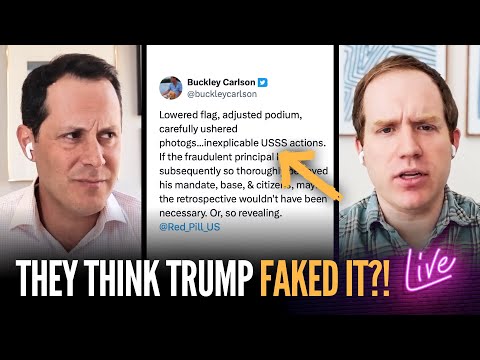
A Bulwark MAGA Monday segment argues that right-wing conspiracy theories about the Butler Trump assassination attempt are unsupported and increasingly driven by anti-Trump dissident MAGA voices. The hosts then pivot to a second major weekend story: The Atlantic’s report that FBI Director Kash Patel’s drinking and erratic work habits are becoming a governance problem.
Watch on YouTube ›Get the market thesis, key claims, assets, contradictions, and follow-up questions from any financial video — then unlock a version personalized to your portfolio, watchlist, and favorite speakers.
The episode opens with a light catch-up between the hosts, then moves quickly into a discussion of renewed online conspiracy theories about the Butler, Pennsylvania, assassination attempt on Donald Trump. The speaker says the conspiracy chatter has resurfaced among conservatives and is notable because it now comes from the right, unlike the earlier post-shooting conspiracy theories that mostly came from liberals. He cites Marjorie Taylor Greene, Tucker Carlson, Tim Dillon, and Joe Kent as examples of dissident MAGA figures raising questions about whether the attempt was staged or covered up. The hosts then unpack why they do not believe the staged-assassination theory. …
No immediate market setup is really present here. The only near-term actionable angle is sentiment around Trump-aligned media and institutions: conspiracy chatter and Patel reporting can drive short-lived volatility in political names and attention cycles.
Over the next few weeks, the key question is whether the Butler conspiracy story fades as a niche MAGA-faction signal or becomes a persistent marker of distrust inside the right. The Kash Patel report could matter more if it turns into a larger credibility problem for the FBI leadership team.
Structurally, the segment points to a regime of deteriorating institutional trust and factionalized narrative control within the Trump coalition. If that persists, political shocks will be interpreted less through evidence and more through loyalty-based storytelling.
Right-wing figures are now promoting theories that the Butler assassination attempt on Trump was staged rather than a left-wing plot to kill him.
The speakers contrast the current wave of conspiracists with the 2024 version and cite MTG, Tucker Carlson, Tim Dillon, and Joe Kent.
The speaker does not believe the staged-assassination theory, but says he wants more transparency and investigation around the Butler incident.
He explicitly says he does not believe the conspiracy and frames himself as open to more investigative journalism.
The attack is implausible as a staged operation because it would have required Biden-era Secret Service, DOJ, and FBI cooperation or failure.
The speaker argues the security apparatus was controlled by Biden-era institutions at the time of the attack.
Are you able to unplug on vacation, or do you still follow the internet and news?
He says he mostly cannot fully unplug because his young kids keep him busy, which lowers his screen time during the day. He catches up in the evenings, when he checks what happened online and feels back in touch with work and news.
Why are conservatives now treating the Butler Trump assassination attempt as suspicious or staged?
He says a dissident wing of MAGA has increasingly embraced theories that either a deep-state attempt was covered up or the whole thing was staged to help Trump. He thinks recent developments, especially Joe Kent's public comments, have encouraged that shift and that it reflects growing disaffection with Trump on the right.
Why are people bringing up these conspiracy theories now?
He says the timing is partly about growing dissatisfaction with Trump and partly about Joe Kent validating the subject by speaking out. In his view, the Butler attempt became such an important MAGA myth that questioning it now also signals frustration with Trump's current unpopularity.
Unlock the full claims, asset map, scores, related transcripts, follow-up questions, and AI chat — shaped around your portfolio, watchlist, favorite speakers, and risks.