TranscriptAgent
Try it free
TRANSCRIPTAGENT.AI · transcript analysis

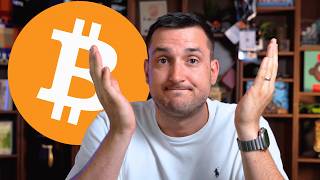
Ben Cowen: "Why Bitcoin Can Rally While The Fed Raises Rates

Channel: 100XClub Published: 2026-06-25 10:00
100XClub

Ben Cowen discusses Kevin Warsh's new role as Fed chair, arguing inflation is a policy choice driven by money printing. He lays out a counterintuitive thesis: Bitcoin can rally even if the Fed hikes rates, because hikes would signal a strong economy. He expects a market correction in H2 2026, sees Bitcoin's four-year cycle bottom potentially in October (or summer), and frames the current crypto selloff as pricing in rate-hike fears that may not materialize.

Watch on YouTube ›

Get the market thesis, key claims, assets, contradictions, and follow-up questions from any financial video — then unlock a version personalized to your portfolio, watchlist, and favorite speakers.

Detailed summary

This is an interview between the 100XClub host and Ben Cowen, focused on the implications of Kevin Warsh becoming Fed chair, the inflation outlook, and how monetary policy flows through to crypto. **Core thesis:** Cowen's central argument is that Bitcoin can rally whether the Fed hikes or doesn't hike. If the Fed doesn't hike, the market reprices Bitcoin higher because the rate-hike fears that crushed crypto were overblown. If the Fed does hike, that signals the economy is still strong — and historically Bitcoin has risen during rate-hiking cycles (he cites 2023-2024). The late-1990s analogue is key: the Fed cut, reignited "animal spirits," then had to hike seven or eight times, and stocks kept rising anyway. …

🔒 The full detailed summary continues — read all of it free with an account. Read the full summary →

Main takeaways

  1. Bitcoin can rally whether the Fed hikes or doesn't hike — if they don't hike, the fear was overblown and BTC reprices higher; if they do hike, it signals a strong economy which is also bullish for risk assets
  2. Inflation is a policy choice driven by money printing — the 40% M2 expansion during COVID directly caused ~40% housing inflation, and the Fed has been unwilling to allow lower asset prices
  3. Cowen expects a market correction in H2 2026 as markets 'test' the new Fed chair, a pattern he says is common after leadership transitions
  4. The crypto selloff is already pricing in rate-hike fears — by the time hikes actually happen (if they do), the crypto bear market could be over
  5. Bitcoin's four-year cycle bottom is projected around October 2026, with a possible earlier summer bottom
  6. The labor market isn't actually weak — layoffs are at pre-pandemic levels; companies that struggled to hire during COVID have been slow to fire
  7. Topping is a process (months), bottoming is an event (capitulation) — wait for the stock market to give a topping signal rather than trying to predict the recession date

Market read by horizon

Short term

Near-term risk-off: Cowen expects H2 2026 to bring a market correction as equities 'test' the new Fed chair, and crypto is already pricing rate-hike fears aggressively. Tactically, the pain may be front-loaded, with a potential bottom window opening around October (or summer) as the four-year Bitcoin cycle matures.

  • Markets likely to 'test' new Fed chair Kevin Warsh in H2 2026 with a correction — Cowen sees this as a pattern after Fed leadership transitions
Show more
  • Rate-hike fears are already priced into crypto; the current selloff may overshoot the actual policy outcome, creating a potential tactical bottom
  • Bitcoin four-year cycle bottom expected around October 2026, with summer as an alternative earlier low — these are the tactical windows Cowen is watching
Mid term

Base case over the next several months is that rate-hike fears prove overblown — either the Fed doesn't hike and risk assets reprice higher, or it does hike but the economy holds up well enough that the hike signals strength rather than stress. The Middle East situation is the wildcard that could force the Fed's hand either way.

  • If the Fed doesn't hike later this year, Bitcoin should reprice higher as the market realizes rate-hike fears were unfounded — this is the base case recovery path
Show more
  • If the Fed does hike, the key question becomes whether the economy is strong enough to sustain risk assets through the hiking cycle, as happened in 2023-2024 and the late 1990s
  • The Fed's hawkish shift was driven by the Middle East geopolitical conflict; resolution or escalation there is a binary that could swing the rate path in either direction over the next several months
Long term

Structurally, Cowen sees persistent monetary expansion as the default regime (inflation as a policy choice), which favors nominal asset prices over the long arc. The business cycle will eventually roll over into recession, but the topping process will be protracted and the market will signal it — don't try to front-run the turn.

  • Inflation remains a structural policy choice — governments have printed aggressively for decades and wars are unlikely to change that trajectory, meaning the long-run bias is toward more money creation and higher nominal asset prices
Show more
  • The business cycle will end in recession eventually, as all cycles do, but timing it precisely is a fool's errand; the market will signal the top through a prolonged topping process (months of sideways/marginally higher action in stocks)
  • Crypto could be the 'animal spirits' vector of this cycle — if Bitcoin begins a new four-year cycle in late 2026, it may lift the broader market with it, analogous to how tech lifted equities in the late 1990s during Fed tightening

Key claims (7)

BULLISH risk-on rally Bitcoin

If the Fed hikes rates, it signals the economy is still strong, not collapsing, which could be bullish for Bitcoin.

The speaker points to historical precedent (late 1990s) where the Fed raised rates while stocks rose, and argues Bitcoin could similarly rally. Bitcoin rose in 2023-2024 while the Fed was raising rates.

BULLISH recession risk

The economy has been fine and it is premature to call for a recession until you see lower asset prices that stay lower for a while.

The speaker points to labor market data (initial claims, hiring) being at pre-pandemic levels and companies being slow to lay people off.

BEARISH crypto bear market

Crypto markets are getting annihilated because rate hikes are getting priced in, regardless of whether actual hikes occur.

The speaker argues the anticipation of rate hikes is driving crypto lower, not the actual rate decision.

Unlock 4 more claims See the full bullish, bearish, and counter-consensus argument map extracted from the transcript. Unlock all claims

Assets discussed (6)

Bitcoin — BTC
MIXED crypto

He says Bitcoin is already getting hit by rate-hike pricing, but can still rally whether hikes happen, don’t happen, or turn into cuts.

stock market
MIXED index

He thinks the market may correct in the second half of the year, but also says equities can rise during rate hikes if the economy remains strong.

Unlock the full asset map (4 more) See all assets mentioned, their directional bias, and the exact reasoning. Unlock asset map

Interview (5 Q&A)

warsh view

What does Kevin Warsh’s view on inflation and rates imply for stocks and crypto?

He says inflation is a choice because policymakers choose money printing, and that avoiding inflation would require accepting lower asset prices. He thinks Warsh is smart, but that the Fed is stuck because inflation is still too high, which makes rate cuts difficult and could pressure markets and crypto.

crypto rates

How would a lack of rate hikes or a future cut affect crypto?

He says if the Fed does not hike, Bitcoin could reprice higher because people are worried about something that is not happening. If the Fed does hike, crypto can still do well if the hikes signal a strong economy and the market has already priced them in.

bitcoin rates

Why might Bitcoin rally even if the Fed keeps hiking?

He argues that if the Fed can keep hiking, the economy is probably still strong, since the Fed does not hike into a collapsing economy. He points to the late 1990s, when stocks kept rising through multiple hikes, and suggests Bitcoin could be the next source of animal spirits.

Unlock the full interview (2 more Q&A) Every question, answer summary, and YouTube timestamp. Unlock full Q&A

Where this transcript pushes against consensus

  • The 'inflation is a choice' framing oversimplifies — while M2 expansion explains housing, it doesn't account for supply-chain shocks, energy prices, or the structural drivers that kept inflation sticky even as M2 growth normalized post-2022
  • Cowen's 'BTC can rally on hikes because it means the economy is strong' thesis assumes a clean signal from rate hikes, but in practice the Fed hiking into a weakening labor market (even if layoffs look 'pre-pandemic') could produce a very different outcome than the late-1990s analogue
  • The 1998-99 analogue may not map cleanly — that era had a productivity boom (internet infrastructure) driving genuine earnings growth; Cowen doesn't establish what the equivalent fundamental driver would be for crypto in 2026-2027 beyond the mechanical four-year cycle
  • Cowen walks back his initial negative reaction to Warsh dropping the dot plot by saying he shouldn't second-guess a Fed chair — but then proceeds to speculate about Warsh's intentions anyway, which is a tension in his reasoning

Topics

Kevin Warsh Fed chairInflation as policy choiceBitcoin four-year cycleFed rate hike probabilityMarket correction H2 2026Labor market conditionsAnimal spirits and cryptoLate 1990s Fed analogueTopping vs bottoming dynamicsEnd of QT and crypto expectations

Create your free research agent

Unlock the full claims, asset map, scores, related transcripts, follow-up questions, and AI chat — shaped around your portfolio, watchlist, favorite speakers, and risks.

  • Full claims and asset map
  • Personalized relevance to your watchlist
  • Follow-up questions you can track
  • Related transcripts from your workspace
  • AI chat about this video
Create your free research agent
TRANSCRIPTAGENT.AI