TranscriptAgent
Try it free
TRANSCRIPTAGENT.AI · transcript analysis

2026 Mid-Year Outlook: Crosscurrents and Divergence Amid an Increasing AI Surge

Channel: J.P. Morgan Asset Management Published: 2026-06-25 09:55
J.P. Morgan Asset Management

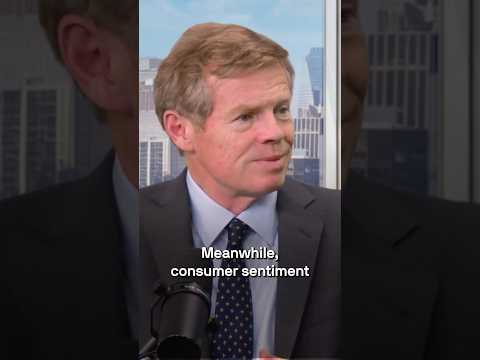
Gabriela Santos and David Kelly frame the 2026 mid-year outlook around a fairly steady U.S. growth backdrop, but with higher inflation and sharper divergences than expected. The biggest shocks were stronger-than-expected AI capex and a war in Iran that pushed energy prices up, lifted inflation, and kept the Fed on hold.

Watch on YouTube ›

Get the market thesis, key claims, assets, contradictions, and follow-up questions from any financial video — then unlock a version personalized to your portfolio, watchlist, and favorite speakers.

Detailed summary

This episode is an interview-style mid-year outlook discussion from J.P. Morgan Asset Management. Gabriela Santos, chief market strategist for the Americas, introduces the theme as a chance to revisit what the firm got right and wrong at the halfway point of the year, then brings in David Kelly, Chief Global Strategist, to update the U.S. and global macro outlook. Kelly’s core view is that the economy still looks like a “2-0-3-4” version of the old “2-0-2-4” setup: roughly 2% growth, no recession, and unemployment around 4%, but inflation is proving stickier and may end the year closer to 3% rather than 2%. …

🔒 The full detailed summary continues — read all of it free with an account. Read the full summary →

Main takeaways

  1. The U.S. base case is still modest growth without recession, but inflation is more stubborn than expected.
  2. AI capex is the biggest positive surprise and is broadening beyond the mega-cap technology names.
  3. The Iran war is the biggest macro shock, pushing up energy prices and global inflation.
  4. The Fed is expected to stay on hold for now, with no clear case for immediate hikes or cuts.
  5. International markets are outperforming, but EM leadership is highly concentrated in a few semiconductor names.
  6. Short-duration fixed income looks more attractive than long duration given current yields and fiscal uncertainty.
  7. Diversification is harder because AI is now affecting equities, credit, and even some global markets.
  8. Europe looks softer than Asia, while any easing in Gulf tensions could help Europe catch up.

Market read by horizon

Short term

Near term, the actionable setup is to favor short-duration fixed income and stay with AI-linked leaders while the market continues to price energy shocks and a higher-for-longer inflation backdrop. The immediate risk is a renewed spike in inflation or rates if Middle East tensions do not ease.

  • Watch whether the Middle East situation eases; that is the key near-term inflation and energy catalyst.
Show more
  • The two-year Treasury move and pricing around Fed hikes make short-duration bonds more attractive than cash.
  • AI-related beneficiaries in semis, industrial equipment, power, and parts of Asia remain the immediate market leaders.
Mid term

Over the next few months, the base case is modest growth with gradually easing inflation if oil and energy prices normalize, which could allow some rotation beyond the most crowded AI winners. If fiscal or political gridlock deepens, growth should soften further and the market may shift toward defense, quality, and shorter duration.

  • Over the next several months, the base case is continued 2%ish U.S. growth with softer inflation if energy stabilizes.
Show more
  • If fiscal gridlock increases after the elections, growth and inflation could both fade in 2027-2028.
  • The AI theme may broaden from pure capex winners to second-order beneficiaries and disruptors, making stock selection more important.
Long term

Structurally, the transcript argues for a world of persistent divergence: AI as a long-lived capital cycle, U.S. fiscal fragility, and a likely weakening dollar if global central banks diverge. The durable implication is that portfolios may need to diversify across themes and regions rather than assume broad beta will do the job.

  • The transcript argues for a structurally more divergent market regime: winners and losers are separating across consumers, sectors, and regions.
Show more
  • AI is presented as a durable secular force that is reshaping earnings, capital spending, and even credit markets.
  • Persistent U.S. fiscal strain means long-duration sovereign exposure may remain vulnerable absent a major policy shift.
Unlock the full horizon read See the full short-term, mid-term, and long-term implications with confirmation and invalidation signals. Unlock horizon read

Key claims (12)

BULLISH AI capex / tech earnings boom

AI-related capital expenditure is driving explosive earnings growth of 50% in tech and 350% in memory, with the magnitude even bigger than expected.

Earnings expectations have been revised up 15 percentage points since start of year instead of coming down, and emerging market earnings expectations moved higher by 35 percentage points, all tied to AI CapEx.

NEUTRAL US economic growth

US GDP will average about 2% growth for the full year.

Based on offsetting forces — consumer slightly weaker, investment spending stronger — but the war in the Middle East has added uncertainty.

NEUTRAL Federal Reserve policy

The Federal Reserve will do nothing on rates for the rest of the year — no cuts and no hikes.

Inflation running at 3% makes it hard to justify easing, but rates are not too high to justify a hike. Fiscal gridlock could bring inflation and growth down in 2027-28, enabling cuts later.

Unlock 9 more claims See the full bullish, bearish, and counter-consensus argument map extracted from the transcript. Unlock all claims

Assets discussed (15)

U.S. equities
BULLISH stock

Described as hitting all-time highs and benefiting from AI-related earnings strength.

AI theme
BULLISH other

Presented as the dominant market and earnings driver across sectors and regions.

Unlock the full asset map (13 more) See all assets mentioned, their directional bias, and the exact reasoning. Unlock asset map

Speakers

GUEST David Kelly HOST Gabriela Santos

Interview (10 Q&A)

outlook

What surprised you most compared with your year-ahead outlook?

He says the economy still looks like a roughly 2% growth, no-recession year, but inflation is running hotter than expected. The biggest drivers were weaker-than-expected tax refunds, a stronger-than-expected AI investment surge, and the war in Iran pushing up energy prices and inflation.

divergence

How do growth, jobs, and inflation look overall, and where are the big divergences?

He says the average economy looks okay, but there is a sharp K-shaped split. Stocks, corporate profits, and AI-linked investment are strong while consumer sentiment is very weak, and political polarization adds another layer of risk and volatility.

midterms

Could the midterm election change the economic outlook?

Yes. He argues a divided government would likely mean more gridlock and less chance of further fiscal stimulus, while single-party control could mean stronger growth but also more inflation. He thinks House control may shift to Democrats, while Republicans are more likely to keep the Senate.

Unlock the full interview (7 more Q&A) Every question, answer summary, and YouTube timestamp. Unlock full Q&A

Where this transcript pushes against consensus

  • The forecast assumes the Iran-driven inflation shock is temporary; if energy disruptions persist, the 3% year-end inflation view may prove too low.
  • Kelly dismisses the possibility of Fed hikes, but futures pricing and the persistent inflation backdrop suggest the market is less confident than he is.
  • He treats wage growth as too weak to generate inflation, but that could miss non-wage sources of sticky services inflation.
  • The idea that AI dominates broadly may understate how much of the earnings revision is concentrated in a narrow set of firms.
  • The claim that Europe will not enter recession is plausible but not strongly evidenced in the transcript.
  • The discussion of fiscal outcomes after the midterms depends on political assumptions that could easily change.

Topics

U.S. growth and inflation outlookAI capital spending surgeIran war and energy pricesFederal Reserve policyLabor market and wagesEurope vs Asia growth divergenceInternational equities and emerging marketsFixed income positioningPortfolio diversificationFiscal deficits and debt

Create your free research agent

Unlock the full claims, asset map, scores, related transcripts, follow-up questions, and AI chat — shaped around your portfolio, watchlist, favorite speakers, and risks.
  • Full claims and asset map
  • Personalized relevance to your watchlist
  • Follow-up questions you can track
  • Related transcripts from your workspace
  • AI chat about this video
Create your free research agent
TRANSCRIPTAGENT.AI