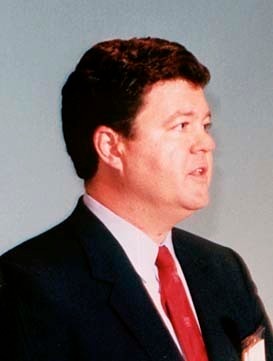
Dr. Mark Thornton argues the economy remains in a long Fed-distorted boom, with asset owners benefiting while wage earners lose purchasing power. He expects gold, silver, and the broader commodity complex to make new highs, though he sees near-term volatility from oil, war, and shifting Fed rhetoric.
Watch on YouTube ›Get the market thesis, key claims, assets, contradictions, and follow-up questions from any financial video — then unlock a version personalized to your portfolio, watchlist, and favorite speakers.
This interview is built around Thornton’s Austrian-school macro framework. He says the US is still in the middle-to-late stages of a long boom created by Fed money and credit expansion, with artificially low interest rates inflating stocks and other assets for roughly 16 years. In his view, that process redistributes wealth toward existing asset holders and away from households without assets, creating a K-shaped economy and eroding real wages. Thornton identifies likely fault lines for a future crisis in the parts of finance where risk can be hidden or delayed: private equity, private credit, banks, insurance companies, pension funds, and AI/data-center-related investment. …
Near term, metals and commodities are supported but choppy: oil, war headlines, and CPI can still force a temporary pullback before any breakout. Tactical positioning should account for volatility rather than assume a straight-line move higher.
Over the next few months, the base case is a slow upward drift in commodities if inflation and debt pressures keep the Fed from staying restrictive indefinitely. The setup strengthens if credit stress deepens and rate-cut expectations reappear.
Structurally, Thornton is arguing that fiat credit expansion eventually destabilizes the system by inflating assets, widening inequality, and forcing a reckoning. In that regime, gold and broad commodities function as expressions of distrust in the monetary order.
The economy is still in a long Fed-driven boom that has lasted about 16 years and has pushed stocks and asset prices to records.
Thornton directly links the long stock-market rise and new highs to money and credit expansion and artificially low interest rates.
Austrian business cycle theory explains that Fed credit expansion creates asset inflation and wealth effects that mainly benefit existing asset owners.
He says lower rates raise asset prices and advantage people at the top who already own assets, while others face higher prices and lower real wages.
The most likely hidden risks are in AI, data centers, banks, insurance, private equity, private credit, and pension-linked investments.
He says credit tends to create overinvestment and that black swans often emerge from opaque, sequestered capital areas such as private equity and private credit.
What is your big picture macro outlook now that we're halfway through April? What's been on your radar and how are you thinking about the economy and markets?
Dr. Thornton frames the outlook through the Austrian business cycle theory, pointing to a 16-year structural boom fueled by Fed money and credit expansion. He argues this has created rising asset prices benefiting the wealthy while hurting those at the bottom, and predicts a crisis is coming eventually, though we are somewhere in the middle of the cycle.
What are the signposts that are most worrisome to you right now? Where do you see potential black swans?
Dr. Thornton says the Austrian theory points to systemic risk anywhere there is credit, but he is especially watching artificial intelligence/data centers and the private equity/private credit sector, which he calls 'sequestered capital' where problems can fester unobserved. He notes the black swan could emerge from anywhere and that artificially low interest rates send false signals to all investors.
How did you get drawn into the Austrian School of Economics and what keeps you fired up about it today?
Dr. Thornton explains that Austrian economists are a small group not in the mainstream, seen as 'anti-economics' and outside the Fed/Treasury/government establishment. He portrays them as inheritors of classical economics (Adam Smith, limited government), while the mainstream profession is funded by government and sells the idea that government must control and regulate.
Unlock the full claims, asset map, scores, related transcripts, follow-up questions, and AI chat — shaped around your portfolio, watchlist, favorite speakers, and risks.