TranscriptAgent
Try it free
TRANSCRIPTAGENT.AI · transcript analysis

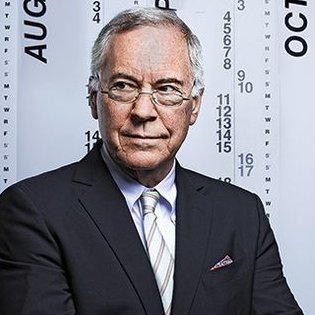
The Silicon Valley AI Trap And Why Hard Assets Will Dominate | Steve Hanke

Channel: Kitco NEWS Published: 2026-04-23 13:11
Kitco NEWS

Steve Hanke argues markets are complacent because they are misreading inflation, bank lending, and debt dynamics; he expects stronger bank credit growth to feed inflation, favors hard assets over bonds, and sees a continuing bull case for gold, silver, and certain critical materials, while dismissing the AI-deflation narrative as overhyped.

Watch on YouTube ›

Get the market thesis, key claims, assets, contradictions, and follow-up questions from any financial video — then unlock a version personalized to your portfolio, watchlist, and favorite speakers.

Detailed summary

This Kitco News interview features Jeremy Saffron hosting economist Steve Hanke. Hanke says the market is too complacent and is focusing on the wrong inflation story. In his view, the key driver of inflation is broad money creation by commercial banks, not oil prices or commodity spikes. He argues that strong bank earnings and looser bank regulations increase bank capital and reserve capacity, which can expand lending, deposits, and ultimately the money supply. He says bank loan growth is already running elevated and could accelerate further, making inflation worse. Hanke criticizes the Fed and other central banks for ignoring money-supply growth and for relying too much on interest-rate policy. He frames bank regulations such as Dodd-Frank and Basel 3 as major monetary-policy levers because they influence bank lending capacity. …

🔒 The full detailed summary continues — read all of it free with an account. Read the full summary →

Main takeaways

  1. Hanke’s core framework is quantity theory: money growth, especially through commercial bank lending, drives inflation more than oil or AI narratives.
  2. He thinks bank earnings and looser regulations are creating conditions for faster credit growth, which could reaccelerate inflation.
  3. He is bullish on gold, silver, and commodities broadly, and expects a continuing secular uptrend.
  4. He believes the market is too complacent on inflation, debt, and geopolitical supply risk.
  5. He dismisses the AI productivity story as overstated and insufficient to offset monetary expansion.
  6. He is negative on bonds and prefers hard assets over duration exposure.

Market read by horizon

Short term

Near term, the setup favors hard assets over duration: if bank credit growth keeps firming and inflation data stays hot, bonds look vulnerable and precious metals should remain supported. The immediate risk is a complacent market still assuming inflation is temporary.

  • Watch for further evidence that bank loan growth is accelerating; Hanke sees that as the immediate inflation risk.
Show more
  • He views the recent gold and silver pullback as a consolidation that may have shaken out weak hands, not a trend break.
  • He expects commodities to stay volatile but biased higher if geopolitical tensions keep prompting precautionary inventory buying.
Mid term

Over the next few months, the base case is a higher-inflation regime than the consensus expects if bank lending accelerates and regulations stay looser. That would keep gold, silver, and commodity exposure favored, while pressuring long-duration bonds.

  • Over the next several weeks to months, Hanke’s base case is that stronger bank lending plus looser regulations should keep money growth firm and push inflation higher.
Show more
  • If loan growth moves toward his stated 10% concern zone, he would treat that as evidence of a new loosening cycle.
  • He expects gold and silver to resume their advance after consolidation, with gold eventually moving toward his $6,000-$7,000 target zone.
Long term

Structurally, Hanke is describing a regime where broad money creation by banks dominates macro outcomes and hard assets outperform paper claims when policy, debt, and credit expansion align. In that world, the old bond bull market is over and AI does not change the monetary laws governing inflation.

  • Hanke’s structural thesis is that commercial banks, not central banks alone, are the dominant creators of broad money and therefore the key inflation engine.
Show more
  • He sees the post-2008 and current regulatory environment as major regime variables because bank capital and reserve rules shape money creation.
  • He thinks the bond bull market that began in 1980 is over, implying a long-lived change in the interest-rate regime.
Unlock the full horizon read See the full short-term, mid-term, and long-term implications with confirmation and invalidation signals. Unlock horizon read

Key claims (10)

BEARISH Market complacency

The market is very complacent across the board.

Hanke explicitly says markets are complacent and investors are underestimating the risks.

BEARISH Money supply and bank credit

Bank earnings can translate into more bank capital, more lending, more deposits, and eventually more inflation.

He links bank profitability to credit creation and money-supply growth.

NEUTRAL Money creation

Commercial banks create about 80% of broad money in the U.S. and most other countries.

He uses this to argue the Fed is not the main money creator.

Unlock 7 more claims See the full bullish, bearish, and counter-consensus argument map extracted from the transcript. Unlock all claims

Assets discussed (10)

Gold
BULLISH commodity

Hanke says the secular bull market is intact and expects gold to ultimately peak around $6,000–$7,000/oz.

Silver
BULLISH commodity

He says silver is in the same bullish setup as gold and has had weak hands shaken out.

Unlock the full asset map (8 more) See all assets mentioned, their directional bias, and the exact reasoning. Unlock asset map

Interview (12 Q&A)

market complacency

What are investors still not seeing in this market that they should be worried about?

Steve says markets are very complacent across the board, partly because earnings especially bank earnings have been so strong. But strong bank earnings increase bank capital and reserves, giving banks more firepower to extend loans, which increases the money supply (checking accounts) and eventually feeds through to inflation. So the inflation genie won't get back in the bottle. He notes the headline CPI already jumped from 2.4% to 3.3%, which he saw coming from money supply acceleration over the last 18 months, based on the quantity theory of money.

productive vs inflationary credit

If strong earnings and more lending can reflect a healthy economy, not just inflation risk, how do you tell the difference?

Steve addresses the healthy-economy angle as part of his broader answer on distinguishing productive from inflationary credit growth, covered in the second Q&A above.

credit growth vs inflation

How do you distinguish between productive credit growth and credit growth that ends up debasing purchasing power?

Steve explains that banks are extending credit for bankable projects where the debtor has enough free cash flow to amortize the loan — in principle productive, and if systematically unproductive the bank goes bankrupt. The inflation problem arises when lending grows at an excessive rate, roughly over 6% per annum in the US. He warns loan growth could hit 10% because of two loosening factors: strong bank earnings increasing capital/firepower, and bank regulations being loosened (post-Dodd-Frank tightening is being reversed). This combination means a loosening cycle is coming regardless of whether it's explicit policy.

Unlock the full interview (9 more Q&A) Every question, answer summary, and YouTube timestamp. Unlock full Q&A

Where this transcript pushes against consensus

  • Hanke treats bank lending growth as the main inflation driver, but does not quantify how much of current CPI acceleration is already explained by credit conditions versus other factors.
  • His claim that AI productivity is mostly hype rests partly on current data weakness, but he does not engage deeply with lagged adoption effects or sector-specific productivity gains.
  • The gold $6,000-$7,000 target is stated with conviction but without a detailed path, valuation framework, or time horizon.
  • He downplays oil as a cause of inflation, which is conceptually consistent with his framework, but the practical interaction between supply shocks and inflation expectations is left underexplained.
  • He says Treasury buybacks are routine, yet also frames the debt environment as increasingly problematic; the boundary between routine management and structural support is not fully developed.

Topics

inflationmoney supplycommercial banksbank regulationgoldsilvercommoditiesAI productivityTreasury yieldshard assets

Create your free research agent

Unlock the full claims, asset map, scores, related transcripts, follow-up questions, and AI chat — shaped around your portfolio, watchlist, favorite speakers, and risks.
  • Full claims and asset map
  • Personalized relevance to your watchlist
  • Follow-up questions you can track
  • Related transcripts from your workspace
  • AI chat about this video
Create your free research agent
TRANSCRIPTAGENT.AI