TranscriptAgent
Try it free
TRANSCRIPTAGENT.AI · transcript analysis

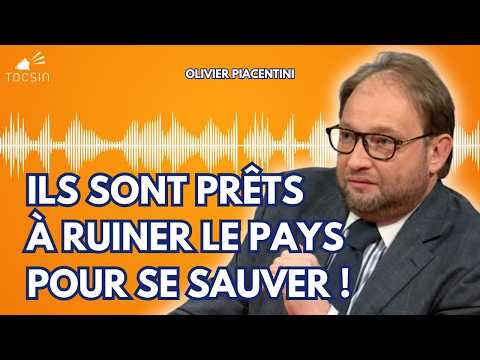
Olivier Piacentini explique le coup stratégique de Trump sur le pétrole mondial !

Channel: Tocsin Published: 2026-04-24 06:01
Tocsin

Olivier Piacentini argues that oil prices are distorted by geopolitics, state action, and financial market mechanics, then pivots to a strongly bearish view on France’s fiscal sustainability and the EU’s long-run stability.

Watch on YouTube ›

Get the market thesis, key claims, assets, contradictions, and follow-up questions from any financial video — then unlock a version personalized to your portfolio, watchlist, and favorite speakers.

Detailed summary

The interview begins with a question about whether oil prices and oil-paper markets are manipulated. Olivier answers that they are, especially because oil is an essential input to the economy and therefore attracts heavy financial speculation and price distortions. He argues that modern markets are dominated by large investment and pension funds using powerful computers to make money from very short-term price changes, so volatility itself becomes the business model. In his framing, oil is especially vulnerable because it is crucial, widely traded, and highly sensitive to headlines. He uses the Trump/Iran situation as an example of how political messaging can move prices rapidly. According to Olivier, Trump’s statements about resolving the Iran conflict caused oil prices to fall immediately because markets interpreted the news as reducing supply risk. …

🔒 The full detailed summary continues — read all of it free with an account. Read the full summary →

Main takeaways

  1. Oil is portrayed as a highly tradeable, politically sensitive market where headlines and state actions can move prices quickly.
  2. Olivier sees financialization and algorithmic trading as central to oil-price distortion and market volatility.
  3. He treats government reserve releases, tax cuts, and windfall taxes as real tools that can change near-term energy prices.
  4. His core macro view is that France’s fiscal position is deteriorating because debt service is rising and political incentives prevent meaningful adjustment.
  5. He believes high taxes and regulation are already crushing transport, retail, agriculture, and small business margins.
  6. He is very bearish on the EU’s long-term economic and political durability.

Market read by horizon

Short term

Near term, the trade is volatility: oil is sensitive to geopolitics, reserve actions, and headline risk, so sharp swings are more likely than a clean trend.

  • Oil remains highly headline-driven; any new Trump/Iran development could trigger another sharp move.
Show more
  • Strategic reserve releases and temporary fuel-tax measures can quickly soften fuel-price pressure.
  • The immediate setup is volatile rather than stable, with traders and media reactions amplifying moves.
Mid term

Over the next several weeks to months, the base case is continued pressure on French households and businesses if energy costs remain high and fiscal policy does not improve; the view would weaken only if meaningful spending restraint or tax relief actually shows up.

  • Over the coming weeks to months, Olivier expects oil pricing to stay driven by geopolitics, policy intervention, and market reaction functions.
Show more
  • His base case for France is continued fiscal stress as higher borrowing costs flow through to the budget.
  • He expects the real economy to keep weakening if taxes and regulation stay in place, especially for transport, retail, and agriculture.
Long term

Structurally, the transcript argues that France faces a slow-burn sovereign-fiscal problem and that the EU is increasingly seen as a constraint on growth. If that diagnosis is right, the long-run issue is a regime shift toward lower trust in the current economic model, not just a cyclical slowdown.

  • Structurally, Olivier believes oil pricing has been permanently altered by financialization, fast trading, and state intervention.
Show more
  • He sees France as entering a sovereign-fiscal regime where debt rollover and interest costs become increasingly punitive.
  • His broader thesis is that persistent tax and regulatory pressure can erode competitiveness and eventually push a country toward crisis.
Unlock the full horizon read See the full short-term, mid-term, and long-term implications with confirmation and invalidation signals. Unlock horizon read

Key claims (11)

MIXED commodity pricing pétrole

The oil price is manipulated because oil is an essential commodity and therefore a target for profit-seeking manipulation.

He says oil is indispensable and that importance creates opportunities for manipulation.

MIXED market structure pétrole

Modern oil prices are driven by volatile financial markets, not just by production costs and normal supply-demand logic.

He contrasts a classic cost-plus pricing model with market pricing on financial venues.

BEARISH geopolitics pétrole

Trump’s announcement about resolving the Iran conflict caused oil prices to drop immediately because markets reacted to the headline.

He attributes a specific price move to Trump signaling that the conflict would be resolved.

Unlock 8 more claims See the full bullish, bearish, and counter-consensus argument map extracted from the transcript. Unlock all claims

Assets discussed (6)

pétrole
MIXED commodity

Presented as manipulated and highly volatile; the speaker argues prices can be pushed down by market structure, reserves, and political announcements, but also acknowledges genuine supply risk and strategic importance.

baril de pétrole
MIXED commodity

The speaker discusses both wholesale and retail barrel pricing, saying it can fall quickly on headlines and strategic sales, but retail prices adjust with a lag.

Unlock the full asset map (4 more) See all assets mentioned, their directional bias, and the exact reasoning. Unlock asset map

Speakers

HOST Nicolas GUEST Olivier Piacentini

Interview (5 Q&A)

oil price manipulation

Le prix du pétrole, le prix du baril du pétrole et le prix des marchés pétrole notamment pétrole papier, est-ce qu’il est manipulé ?

Olivier says yes, arguing that oil is an essential commodity and therefore a target for manipulation through market structure and financial speculation.

state intervention in fuel prices

L'État aurait quand même une marge pour pouvoir intervenir sur le prix du pétrole ?

Olivier says states can act through strategic reserves, fuel tax cuts, and windfall taxes; he argues the U.S. and several European countries have already done so.

French tax burden and growth

Le coût des taxes sur le pétrole ne fait-il pas plonger l'économie française ?

Olivier says yes, arguing that higher energy taxes and costs hit transport, agriculture, small business, and consumers, while the state benefits from more revenue.

Unlock the full interview (2 more Q&A) Every question, answer summary, and YouTube timestamp. Unlock full Q&A

Where this transcript pushes against consensus

  • The manipulation thesis for oil is asserted broadly, but the transcript provides limited hard evidence of coordinated manipulation rather than normal speculative and hedging behavior.
  • The claim that Trump released 172 million barrels is presented as a striking fact, but the transcript does not provide context or sourcing for that figure.
  • The forecast that France will resemble Greece within four years is very strong and highly deterministic relative to the evidence cited.
  • The argument sometimes compresses several causes into one story, especially by attributing broad economic weakness mainly to taxes, regulation, and EU rules.
  • Political claims about Macron’s ties to large companies are stated as fact-like conclusions without supporting detail in the transcript.
  • Some market observations are directionally plausible but simplified into a single narrative of manipulation rather than a fuller explanation of inventories, hedging, and pass-through timing.

Topics

oil price manipulationTrump and Iranstrategic petroleum reservesfuel taxesFrance debtdebt service coststax burdenbusiness competitivenessEU regulationsovereign crisis risk

Create your free research agent

Unlock the full claims, asset map, scores, related transcripts, follow-up questions, and AI chat — shaped around your portfolio, watchlist, favorite speakers, and risks.

  • Full claims and asset map
  • Personalized relevance to your watchlist
  • Follow-up questions you can track
  • Related transcripts from your workspace
  • AI chat about this video
Create your free research agent
TRANSCRIPTAGENT.AI