TranscriptAgent
Try it free
TRANSCRIPTAGENT.AI · transcript analysis

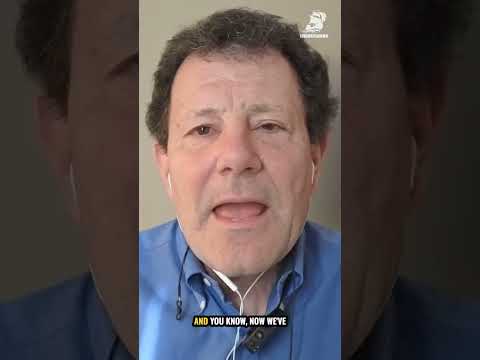
Nick Kristof on U.S. policy abandoning the Iranian protesters it claimed to support

Channel: The Bulwark Published: 2026-04-24 19:15
The Bulwark

Nick Kristof argues that U.S. claims of helping Iranian protesters were empty, and that the recent bombing campaign likely strengthened a more repressive regime while harming civilians most.

Watch on YouTube ›

Get the market thesis, key claims, assets, contradictions, and follow-up questions from any financial video — then unlock a version personalized to your portfolio, watchlist, and favorite speakers.

Detailed summary

The transcript is a short, focused political commentary on Iran and the consequences of U.S. action. The speaker says the situation began with the massacre of Iranian protesters in January, and that there was supposedly an effort to help them, but in practice 'no help was' delivered. He expresses admiration for Iranian women lawyers and other activists who risk prison and brutality for change, emphasizing their courage and sacrifice. The core argument is that after the U.S. said 'help is on the way,' it then bombed Iran, including a girl's school and a volleyball team, and in doing so made the population's situation worse. He concludes that the result is a more oppressive, harder-line regime that is likely to last longer than it would have otherwise, and that Iranian civilians have been largely forgotten in broader political and international discussion. …

🔒 The full detailed summary continues — read all of it free with an account. Read the full summary →

Main takeaways

  1. The speaker says U.S. policy abandoned Iranian protesters it had claimed to support.
  2. He believes the bombing campaign worsened conditions for ordinary Iranians rather than helping them.
  3. He argues the resulting regime is more oppressive and may endure longer.
  4. The transcript centers on moral and geopolitical consequences, not trade ideas or price targets.
  5. Iranian civilians, especially activists and women, are framed as the main victims.

Market read by horizon

Short term

Near term, the actionable read is geopolitical risk around Iran, but the clip offers no tradable catalyst, level, or timing. The immediate concern is simply that escalation and repression are likely to keep sentiment fragile.

  • Immediate risk is further deterioration in Iran’s internal situation after the bombing and crackdown.
Show more
  • The speaker sees the near-term effect as strengthening the hard-line regime rather than weakening it.
  • For any market lens, this implies heightened geopolitical risk around Iran and possible volatility in regional assets, but the transcript gives no trade setup or levels.
Mid term

Over the next few weeks or months, the speaker expects the hard-line Iranian state to remain in control and the protest movement to stay weakened. The setup only improves if there is a visible shift away from repression or renewed external support for civil society.

  • Over the next several weeks to months, the speaker’s base case is that the regime becomes more entrenched and the protest movement is further suppressed.
Show more
  • Validation would come from continued repression and the absence of meaningful external support for protesters.
  • The view would change only if the political settlement inside Iran became less hard-line or if the protest movement regained momentum, neither of which is discussed as likely.
Long term

Structurally, the clip argues that intervention can backfire by hardening the regime it was meant to weaken. The durable implication is a damaged U.S. credibility and a more entrenched authoritarian order in Iran.

  • The lasting implication is that U.S. credibility on supporting dissidents is damaged.
Show more
  • The speaker suggests a durable regime shift toward a harder-line Iranian state, with civilian activists paying the price.
  • Structurally, the transcript argues that military intervention can undercut stated pro-democracy goals and leave authoritarian systems stronger.

Key claims (5)

BEARISH Iran protests Iran

The situation began with the massacre of Iranian protesters in January.

The speaker directly states this as the starting point of the episode being discussed.

BEARISH U.S. foreign policy Iran

The U.S. said it would help Iranian protesters but failed to deliver any real help.

He contrasts 'help is on the way' with 'no help was' delivered.

BEARISH Iran protests Iran

U.S. bombing made Iranian civilians suffer and worsened the situation for protesters.

He says 'now we bomb them' and that civilians are the ones suffering most.

Unlock 2 more claims See the full bullish, bearish, and counter-consensus argument map extracted from the transcript. Unlock all claims

Speakers

GUEST Nick Kristof

Where this transcript pushes against consensus

  • The claim that bombing a girl's school and a volleyball team is asserted without context, sourcing, or clarification of what was actually hit.
  • The speaker assumes the U.S. intervention directly led to a more oppressive regime being more likely to last 5 years, but does not explain the causal chain.
  • The transcript provides no evidence or specifics for the January massacre reference or for the claimed policy sequence.
  • This is a strongly emotive passage with little analytic detail, so the geopolitical conclusion is under-supported within the transcript.

Topics

Iran protestsU.S. foreign policyregime repressioncivilian harmhuman rights

Create your free research agent

Unlock the full claims, asset map, scores, related transcripts, follow-up questions, and AI chat — shaped around your portfolio, watchlist, favorite speakers, and risks.

  • Full claims and asset map
  • Personalized relevance to your watchlist
  • Follow-up questions you can track
  • Related transcripts from your workspace
  • AI chat about this video
Create your free research agent
TRANSCRIPTAGENT.AI