TranscriptAgent
Try it free
TRANSCRIPTAGENT.AI · transcript analysis

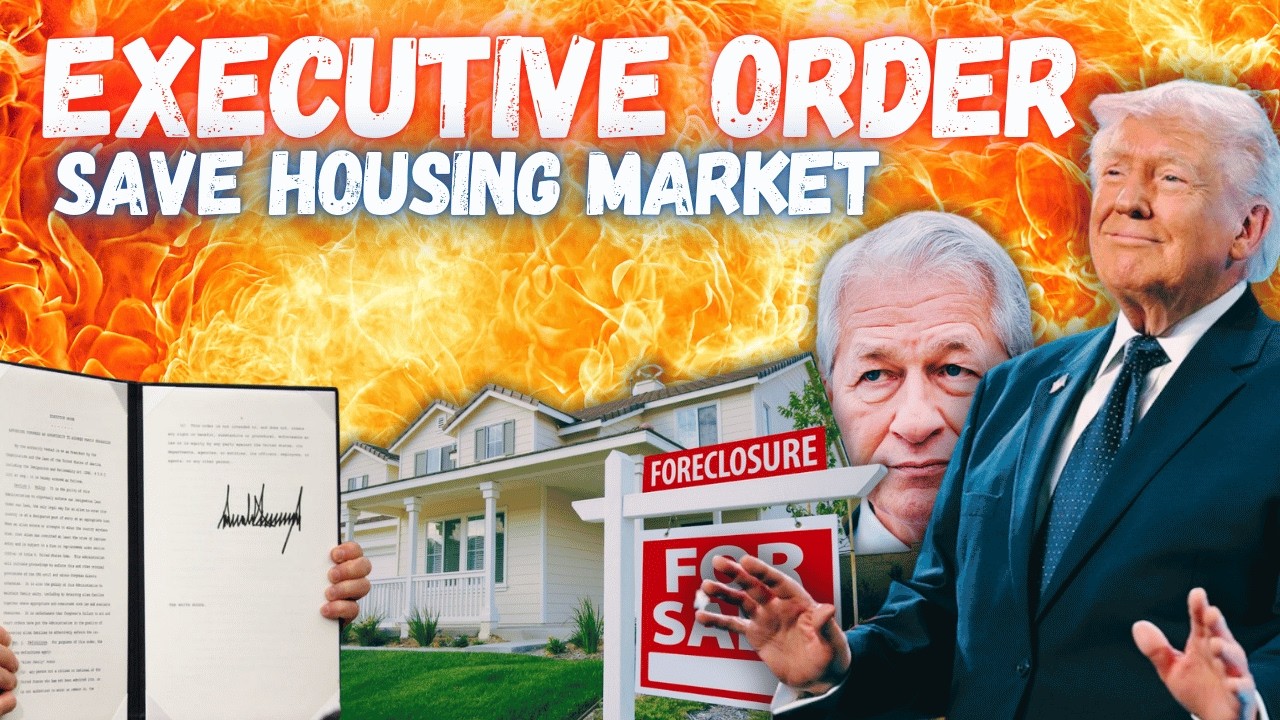
🚨TRUMP: Housing Market Emergency

Channel: Real Estate Mindset Published: 2026-03-17 19:06
Real Estate Mindset

The video argues that Trump’s housing executive orders are mostly narrative management and deregulation, not a real affordability fix. The speaker says housing remains deeply unaffordable because prices, insurance, taxes, and construction costs have outpaced incomes, while transaction volumes and affordability metrics remain weak.

Watch on YouTube ›

Get the market thesis, key claims, assets, contradictions, and follow-up questions from any financial video — then unlock a version personalized to your portfolio, watchlist, and favorite speakers.

Detailed summary

This is a housing-market commentary built around President Trump’s remarks on two executive orders: one aimed at bringing community banks back into mortgage lending and another aimed at cutting regulations to lower construction costs. The channel’s host immediately disputes Trump’s claim that mortgage rates hit a five-year low and argues the policy is really designed to help banks and preserve the housing bubble rather than make homes cheaper for buyers. The guest/second speaker, Mitch, frames the issue as systemic financial distortion: banks act as originators and distributors of loans rather than keeping risk, regulation has been weakened over time, and the government is trying to manage perceptions rather than fix underlying affordability. …

🔒 The full detailed summary continues — read all of it free with an account. Read the full summary →

Main takeaways

  1. Trump’s housing orders are presented as pro-affordability, but the speakers say they mainly help banks, builders, and narrative management.
  2. The host argues mortgage rates are not at a true five-year low and that the policy response does little if prices stay too high.
  3. Housing affordability is described as broken because insurance, property taxes, interest costs, and fees have risen much faster than incomes.
  4. Pending sales and transaction volume are portrayed as very weak despite recent rate declines.
  5. The speakers believe new-home supply remains elevated and builders are discounting aggressively, but sales are still not clearing.
  6. Mitch’s central thesis is that the system is loaded with hidden liabilities, bond risk, and moral hazard that could trigger a fast crisis of confidence.
  7. The host and guest disagree on the remedy: the guest favors deregulation and tax reform, while the host argues for more regulation and consumer protection.

Market read by horizon

Short term

Tactically, the housing tape still looks fragile: lower rates or policy headlines may spark attention, but demand is unlikely to improve materially unless monthly payments fall meaningfully. Builders and sellers may keep leaning on incentives, which argues for continued caution rather than chasing the narrative.

  • The immediate setup is around Trump’s executive orders and whether markets treat them as a real housing catalyst or just rhetoric.
Show more
  • Watch mortgage rates and builder incentives closely; the speaker believes lower rates alone will not revive demand if prices remain elevated.
  • Near-term risk centers on heavy discounting in new homes and weak sales despite affordability headlines.
Mid term

Over the next few months, the likely path is still a slow grind rather than a clean rebound. The setup only turns constructive if income growth, payment affordability, and transaction volumes improve together; otherwise, weaker sales and discounting should persist.

  • Over the next several weeks to months, the base case in the video is continued housing stagnation: prices may soften, but affordability may still not improve enough to restore normal turnover.
Show more
  • Validation would come from sustained declines in total monthly payment burden, not just lower nominal home prices or slightly lower rates.
  • If insurance, taxes, and fees keep rising faster than income, the speakers expect demand to stay muted and inventory to remain sticky.
Long term

Structurally, the video’s thesis is that housing has become a debt-and-tax affordability regime, not a simple rate cycle. If that is right, the durable implication is a lower-for-longer ceiling on home prices relative to income, with periodic repricing whenever financing, taxes, or credit conditions tighten.

  • Structurally, the video argues the U.S. housing market is no longer just a rate story; it is a leverage, tax, and affordability regime problem.
Show more
  • The guest’s long-run thesis is that institutionalized moral hazard, cross-collateralized lending, and public liabilities have created a fragile system prone to rapid repricing.
  • If the income base does not catch up, the speakers believe housing will remain inaccessible for many households and vulnerable to periodic corrections.
Unlock the full horizon read See the full short-term, mid-term, and long-term implications with confirmation and invalidation signals. Unlock horizon read

Key claims (9)

BULLISH housing affordability U.S. housing market

Trump’s housing executive orders are aimed at making housing more affordable by boosting community-bank mortgage lending and lowering construction costs.

This is the explicit policy framing in Trump’s speech excerpt.

BEARISH rates mortgage rates

The 'five-year low' mortgage-rate claim is exaggerated; the speaker says rates were closer to a three-year low around 5.99%.

The host directly challenges Trump’s statement and cites recent rate levels.

BEARISH affordability U.S. housing market

Lower mortgage rates have not meaningfully revived housing activity because price level matters more than interest-rate changes.

The host argues that lower rates did little for transactions and affordability.

Unlock 6 more claims See the full bullish, bearish, and counter-consensus argument map extracted from the transcript. Unlock all claims

Assets discussed (6)

U.S. mortgage rates
BEARISH other

The host says the 'five-year low' claim is exaggerated and argues lower rates have not fixed affordability or transactions.

Pending home sales
BEARISH other

Described as being 'in the gutter' and at historical lows despite lower rates.

Unlock the full asset map (4 more) See all assets mentioned, their directional bias, and the exact reasoning. Unlock asset map

Speakers

HOST Unnamed speaker GUEST Mitch

Interview (7 Q&A)

deregulation

Why does the president sound like a banker and favor deregulating community banks?

Mitch says the administration is trying to manage public perception and that deregulation is just another sign that earlier safeguards were never truly effective. He argues the real problem is a broader, systemic debt and pension crisis, not community banks themselves.

credit supply

Would deregulating community banks create more credit in the housing market?

Mitch says deregulation would mainly lead to more money printing, not a healthy expansion of credit. He adds that banks operate like middlemen who originate loans and sell them rather than keeping them, which is part of the systemic moral hazard.

housing affordability

How can making banks more profitable make homes more affordable?

Mitch says it does not make economic sense. He argues the policy is being used to prop up a broken system rather than address the underlying housing and debt problems.

Unlock the full interview (4 more Q&A) Every question, answer summary, and YouTube timestamp. Unlock full Q&A

Where this transcript pushes against consensus

  • The host says more regulation is needed; Mitch says deregulation and tax reform are the solution.
  • The host frames Trump’s policy as helping banks at the expense of buyers; Mitch says the government is managing perception and avoiding underlying liability issues.
  • The host sees current affordability data as evidence of an overstretched market; Mitch expands that into a broader bond-and-pension insolvency thesis that is less directly supported by the housing data shown.
  • The host questions the claim that mortgage rates are at a five-year low and says the statement is exaggerated.
  • Several claims about hidden or underreported inventory, fraudulent school-district debt, and exact bankruptcy losses are asserted forcefully but not independently evidenced in the video.

Topics

Trump housing executive orderscommunity banks and mortgage lendinghousing affordabilityproperty taxes and insurancepending home salesnew-home supplyLennar and builder discountsmunicipal and school bond liabilitiespensions and unfunded liabilitiesregulation vs deregulation

Create your free research agent

Unlock the full claims, asset map, scores, related transcripts, follow-up questions, and AI chat — shaped around your portfolio, watchlist, favorite speakers, and risks.

  • Full claims and asset map
  • Personalized relevance to your watchlist
  • Follow-up questions you can track
  • Related transcripts from your workspace
  • AI chat about this video
Create your free research agent
TRANSCRIPTAGENT.AI